Category: Anticapitalism

  • The Capitalist Attitude Towards the Homelessness Crisis

    The unfairness and absurdity of modern homelessness can be summed up in a single number: there are 28 vacant homes for every homeless person. Although this fact diminishes the complexity of homelessness, its simple cruelty reveals America’s greatest contradiction: a nation of abundance and a nation of destitution. Society holds in its hands the ability to provide for all, yet chooses not to. The inherent inequality of the economy only deepens its inhumanity as prices rise, real wages stagnate, and social services are cut. Homelessness is growing at record rates, mostly among the youth and elderly, and disproportionately affecting racial and sexual minorities. Government services often fail to address the root issue of the problem, if it exists at all. It is not enough that capitalism should subject one part of society to be without a place to stay; governments viciously criminalize homelessness and maniacally inflict pain through anti-homeless architecture. Why does capitalism force one part of the population into abject poverty at their most needed? And why does this unignorable inequality not anger society more and more every day? The answer is rooted in capitalism’s need for a reserve army of labor and dominance as the base for society, including our thoughts and feelings about the world around us.

    Homelessness and unemployment are not solely symptoms of capitalism but a necessary element in order to further exploit workers and lower wages through the immiseration of the lowest strata of society. The underhoused and unhoused are part of a group Marx termed the reserve army of labor. This reserve army acts as a potential replacement for employed wage workers, forcing them to accept worse working conditions and lower wages in fear of losing their jobs. The largest supply of workers with the lowest demand for labor allows employers to increase exploitation of workers, as people become desperate for any job at all. Increased competition between those needing employment divides the working class, making them fight over the scraps instead of banding together to bring about change. This supply grows ever larger as capital concentrates in fewer hands and more people are pushed into the proletariat, seen in the record high rates of homelessness and wealth inequality in the U.S. Capitalism and bourgeois society have no desire or reason to end homelessness as it needs the reserve army to be so large and conditions for the unemployed so miserable to keep workers subservient to wages. As Marx said, “accumulation of wealth is at the same time accumulation of misery, agony of toil, slavery, ignorance, brutality, mental degradation, at the opposite pole.”

    Capitalism was built and continues to be supported by the forced unhousing of sectors of society and the creation of the reserve army. British industrialism exploded rapidly in urban areas due to the enclosure of farming and grazing land. Peasants were kicked off the soil to create privately owned land, and forced off in droves to the cities. Vagrancy and homelessness became criminalized, and former peasants had to take the worst possible jobs. The reserve army helped keep the plantation system and the exploitation of black labor alive in the post-Reconstruction South. By arresting unemployed freed slaves, the black population was given a choice between quasi-slavery in sharecropping or legal slavery in the prison system. And in modern times, legislation and government policy criminalizes homelessness in order to sweep away the issue and punish the victims without any concern for the root cause.The landmark Grants Pass v Johnson SCOTUS case in 2024 overturned protections for homeless encampments even if the unhoused had nowhere else to go, combining with other statues and ordinances that make it illegal to sleep in public. As affordability and welfare cuts make permanent housing harder and harder to obtain, the state punishes those caught in these unavoidable situations with nowhere else to turn. Cemented is the rule of capitalism: work or suffer.

    The reserve army of labor explains why capitalism impoverishes the most needy. But the system permeates deeper: into societal thoughts and feelings towards the unhoused. Certainly, hateful, hyper-exaggerated, and largely false stereotypes play their role, but what lies deeper? Societal attitudes towards the homeless, ideas of who they are in relation to the employed, and theories on how to confront the issue cannot be boiled down to malicious disparagement or apathetic pity. Instead, they are shaped by the foundations of capitalism and bourgeois society.

    First, the unhoused lie outside the capitalist system of production. They are not laboring in order to create surplus-value or profit. Capitalism defines people as wage-workers who live solely to create capital; therefore, the non-worker lives for nothing, a burden that “provides” nothing. Production of capital, as the foundation of society, becomes the measure of human “value.” We can see this exemplified in current unhoused aid practices and social services. With the prevalence of employment dependent help or simple job training, help comes only if people engage in, or are seeking to engage in, producing surplus-value. Aid without concern for how much the person contributed to capital is reserved for those who can’t work at all. While the right parrots the idea of laziness being the cause of poverty more and more as a justification for policy, these ideas remain in the minds of all. The connection between labor and human value lies at the core of our species. Marx writes, “it is just in his work upon, the objective world, therefore, that man first really proves himself to be a species being”. Labor is humanity’s purpose, what separates man from animal, and defines us as a species. But under capitalism, labor comes under the harsh master of capital, as the only form labor can take. The worker is alienated from his labor, his species-being, his humanity. Since the unhoused are not laboring for capital, they are viewed to not contribute to society, viewed as not to be fulfilling our greater purpose. Capital defines society, and the unhoused are not in its service, viewed to be not in its society. Humans define themselves and others through labor and work. However, as labor is dominated by the tyranny of capital, our ideas of humanity and human value are dominated by the tyranny of capital.

    Secondly, the unhoused not only buck capitalist production but it’s necessary counterpart-consumption. The existence of a dominant consumer society is widely known. But modern adoration for commodities is more than a want for better and more stuff. Not only does capitalism alienate people from their labor but also the products of that labor. When we make something, we are impressing part of ourselves into the material world. In the object we pour our sweat, effort, ideas, feeling, and being. Yet capitalism takes us from the fruit of our work- we don’t own what we make. Instead, we receive wages, which in turn buy commodities- the replacement for our stolen, objectified labor. Mass modern economies hide the relations of production from the common eye, so we do not see the relationship between labor and commodity hidden by the chaotic world encompassing scale of modern industry. Value is believed to be inherent in the commodity itself and not a result of the labor congealed in it. Commodities as value become personal power, social power, and a mark of value presentable to the larger society. We become what we own, we can choose who we are by buying back the lost objectification of our labor through commodities. The less commodities owned, the less you are, the less you can express yourself, the less you can be. Commodity fetishism runs deep. The desire for commodities innate in our economic system, in the base of society, directly supervenes on not only politics or religion but into our conceptions of the world around us, other people, and even morality and philosophy. While we might not realize it, the base mechanics of capitalism- the need for commodities to be used to make profit- makes it seem that this is one the base mechanics of human society as a whole. The unhoused, as non consumers, become social pariahs, outside the value system. This goes hand in hand with their status as non-producers. Commodities become the value we create in our labor. The unhoused neither produce value nor own value in the eyes of capital. Property is the highest form of social power and ownership-based value. To have privacy, a place to call your own, is to have a false objective self in the physical and social world. Commodities start to gain power over us, the ability to “own” us as the physical realization of self through labor. Those who lack commodities are the ones cast aside by society and only helped again if they work to create and own more. Capitalism and its unending want for more stuff makes ownership of commodities a key part of day to day life. By being unable or limited to join this system of commodity fetishism, the unhoused appear to stand separate from the rest of capitalist society. They are the ones who force society to look reality in the eye and listen- “look what you have done.”

    Capitalism’s influence on the material base on society leads to an influence in the ideological base- in the core evaluations and appreciations of humanity, the purpose of human life, and the value of human life. Because current society revolves around the creation of surplus-value through labor and the exchange of wages for commodities, dominant ideas about people revolve around these same poles. This is not the immediate, interpersonal feelings one might have or not have about the homelessness. This ideological base is the subconscious building block of beliefs about people that guides larger ideas about the world and our place in it, leading to real-world opinions and justifications that play back into the capitalist system. Understanding where attitudes about this issue stem from allows us to undermine these infiltrations. By realizing where capitalism thwarts ideas towards inequality and cruelty, we can build new ideas of equity, compassion, and humanity that will help us grow towards a new society.
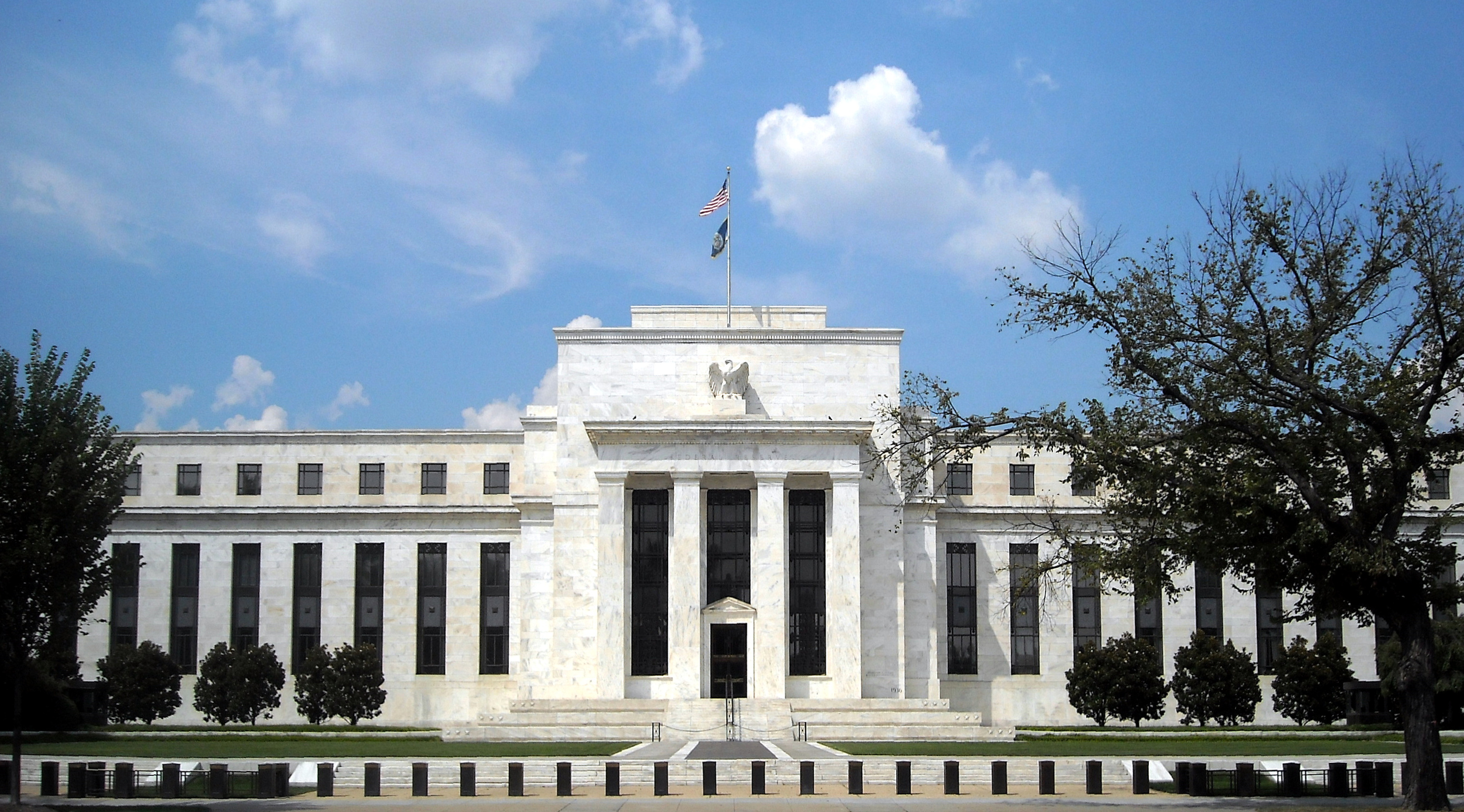
  • On Interest Rates and Central Banks

    On Interest Rates and Central Banks

    I want to make the case that democratic socialists should care about interest rates set by central banks. While I do not worship capitalism, or trust the stock market at all, I do see the value to our society in having central banks. The US Federal Reserve was created, as almost all the US government’s “deep state” institutions have been – Social Security, the Federal Deposit Insurance Corporation, and Medicare are other examples – as a response to repeated failures of capitalism. Financial panics in 1857, 1873, 1893 and 1907 were distressing enough to the investor class, not to mention ruinous to many workers, that in 1913 they pushed Congress and President Wilson to create a central coordinating institution for banking. The wisdom of not tying the value of money to shiny metallic elements would have to wait about sixty more years.

    Apparently one thing Jeffrey Epstein believed strongly in was the virtue of negative interest rates. And for quite a while, the world was accommodating to him in this regard as in others, with the Federal Reserve under Ben Bernanke embracing a zero-interest-rate philosophy, and the central bank of Japan wedded to it for an even longer stretch (raising interest rates barely above zero only in March 2024). I turned 26 years old in 2008 and I remember how we were all told (by Bernanke and Larry Summers and every other Wall Street man) that slashing interest rates would “stabilize the economy,” create jobs jobs jobs, encourage every poor striving youngster to take entrepreneurial risks, cure cancer faster … What it actually did do, unquestionably, was stimulate the construction of new coal plants, usually in the Global South; encourage predatory subprime lending to people whose incomes were very precarious (the subprime rate always being substantially higher than the central bank one); and generally enable already mega-rich men to embark on vainglorious capital-intensive boondoggles that caused harm to the environment and surrounding communities (like Elon Musk’s “city” complex Starbase, which the Obama-era EPA could probably have done something about if it really wanted to). Because as soon as interest rates fall below zero, it is more profitable to spend one’s money on anything at all than store it in the bank. Of course, paying one’s workers more rarely if ever spontaneously enters the thoughts of those possessing this money, despite some economists’ claims that wage increases are “organic” or “natural” in a growing economy.

    Morally speaking – and this may just be my inherited Scottish thrift speaking – I feel that saving is not the same as hoarding. Still, I also feel that wealth inequality has reached hyper-outrageous levels. Therefore, I think a wealth tax on all assets above $50 million, as Saikat Chakrabarti has proposed, is absolutely justified. I also think raising the FDIC insurance cap on deposits to half a million dollars is a very good idea, because young adults should be able to save up for homeownership in Dane County with one bank account without fear of bank failure during the next panic. The problem here is that if interest rates on CD savings accounts are zero or even less than one percent, as Kevin Warsh appears to want to push for with all the fervor of a recent convert to Trumpist orthodoxy, there is little to no financial incentive to save the sums required for a house or any similarly large purchase. Young people may even be (more) tempted to sign up for ICE or CBP and grab a quick signing bonus, hoping that they will not be asked to do anything too atrocious in the next three years. Quite a way to compound the systemic evil of the carceral state.

    I am not a Marxist and I do not believe in a final, total abolition of capitalism. I think if we are going to have a central bank like the Fed (and despite the paranoid rantings of Rand Paul-aligned libertarians, I think we should) it should maintain a robust interest rate, not so high as to make borrowing impossible but not so low as to promote the creation of Starbases and Fyre Festivals and other spectacular wastes of financial resources – and no, the money Netflix made off the Fyre Festival documentary does not redeem that project. The evil of capitalism cannot be changed by loosening regulations, refusing to use preferred pronouns, or cutting borrowing costs – this is the false promise of which Trump is always trotting out new variations – it can only be reduced, and reduced very substantially, by strong enforcement of an equitable rule of law and applying brakes in the form of central bank monetary policies. To my mind, keeping interest rates well above zero is one of those brakes.

  • Abolish Borders: Why we can’t stop at ICE

    Abolish Borders: Why we can’t stop at ICE

    The government and ICE are using the threat of deportation to strike fear into our hearts. It is because they want to stop people and workers like us from working together — from trying to create genuine positive material change in our lives and workplaces. How and why does the owning class align with and use the state to prevent our unity? They know that when we are divided is when we are most exploitable.

    They want to convince us that immigrants and citizens are somehow fundamentally different, despite immigrants living and working in the same community as us. They want us to think that immigrants are aliens or foreigners, when they call the same cities home. The ruling class enforces a border and ever-stricter legal barriers on movement from country to country to keep us divided, when the only real difference between citizens and immigrants is that immigrants are forced into fear of deportation should they speak up or try to organize when their employers or the state exploit them.

    While the extraction of labor value is inherent to capitalism, immigrants are much more exploited, being paid less and subjected to significantly worse conditions.

    Immigrants are forced into submission and squeezed for every last droplet of profit.

    Every moment they step outside, there could be a ‘legally’ armed swarm of masked bandits to abduct them.

    This is not acceptable.

    This is fascism, and this is our reality.

    The owning class has a long history of implementing the divide and conquer strategy towards workers, legally and socially supporting racial segregation, and racializing immigrant groups as somehow different from citizens. It has been done to exploit existing populations, as with Irish immigrants entering into “whiteness” to gain a position of social superiority over Black workers. It has been done to exploit incoming populations, as with Chinese immigrants in California during the 19th century. This strategy has been used repeatedly, around the United States and worldwide. Our history is a history of exploitation fueled by the profit motive.

    Let us consider why there are so many immigrants here from Latin America today. What economic and personal hardship could they be fleeing, or what greater opportunity does the U.S. provide?

    Consider that the U.S. has repeatedly destabilized Latin America for centuries. The U.S. has sent its agents to coup any government that might turn against U.S. hegemony. It has turned Latin America into an economy of extraction, with resources being exported and very little money flowing back in.

    U.S. imperialism, another extension of capitalism’s need to expand and find more exploitable methods to drive higher profit margins, has created the migration that the imperialists and fascists now portray as invasion.

    We created this displacement crisis, and because climate change disproportionately affects the overexploited global south, there will be significantly more people seeking refuge and a place to start over. 

    Yet the U.S. stops immigrants at our arbitrary border and says, “Even if you enter, you will not be free.”

    You are marked for life, and unless you want ICE to come knocking on your door, you can never protest, you can never fight back. 

    You will never be free.

    Never forget that those who endlessly scapegoat immigrants for all of the inevitable horrors of capitalism are the cause of their own problem. Capitalism is a gluttonous system. It cannot help but decay, because infinite growth is not possible, when there is nobody left to exploit here or abroad, and when all limited resources are inevitably extracted.

    First, fascists find a target, be it immigrants, queer people, or any marginalized group. Then, the fascists attack those groups because it is an easy narrative to say: “Immigrants are the ones taking your jobs and bringing wages down.” The narrative that immigrants drive down wages because “they will work for less” has to be defeated. Immigrants do not voluntarily choose to work for less than the full value of their labor; exploitative work is the only option offered to them. Additionally, wages are only “brought down” when a manager or a member of the owning class chooses to lower them.

    It is easy to blame every societal problem on already marginalized groups, because it gives the masses an easy out, a narrative to follow, rather than forcing themselves to come to terms with the full scale of their oppression. It is easy for the fascists to create their own “problem” and then use the promise of solving it to gain power. Anyone who has studied the Holocaust understands this to be the case. This is the same method the Nazi party gained support in Weimar Germany, and it is the same method the Trump administration used to gain power today.

    They want us to accept their narratives rather than face the reality that immigrants are the same as all legal citizens — they are people, they are workers, they deserve endless kindness, love, and respect, they deserve the same access to education, welfare, and basic amenities as we all do.

    We must understand that immigrants are often the most exploited workers, and that liberals and conservatives alike use their immigration status as a means to force them into low-paying jobs. The narrative that we only accept immigrants because they “do the jobs citizens don’t want to do” must be eradicated. It is the justification for using immigrants as what amounts to a slave class: people only allowed in society as long as they engage in the most exploitative labor.

    All immigrants are welcome. We must eradicate the narrative that any immigrant is more valuable than any other because of how long they have been involved in their current community, or how much they have produced within it. These factors are irrelevant. All immigrants deserve to have their needs met, just as every other human does.

    The idea that we must organize society from each according to their ability, to each according to their need, does not stop at an arbitrary national distinction. It does not stop at the racial border perpetuated in our minds. 

    We must understand that immigrants would not be illegal if those in power did not make them illegal. They decide to arbitrarily restrict movement and to create national boundaries. They choose the criteria for legal entry and set the threshold as high as they wish.

    The abolitionist struggle cannot stop at state policing, incarceration, or ICE.

    We must abolish borders as well. 

    Likewise, the socialist struggle cannot stop at capitalism or imperialism.

    We must abolish borders as well.

    Today, we must come to a realization. Immigration was never the problem. Borders themselves are the problem.

    They exist for no reason but to divide us — to divide the people so that we may not rise up together against our oppressors.

    If the owning class can drive us apart by nationality and race, then they can exploit us. If the owning class can tie these with immigration status, they can and will use ICE to destroy our communities.

    We will no longer let that happen.

    As organizer and author, Harsha Walia writes in the conclusion to Border and Rule:

    We understand that “man-made borders shall never fully thwart human movements compelled by the upheavals of our era.”

    We fight for the idea that “the freedom to stay and the freedom to move are revolutionary corollaries refusing imperial bordered sovereignties, with home as our shared horizon.”

    Abolish ICE!

    Abolish Borders!

    None of us are free until all of us are free.

    Sources:

    Border and Rule by Harsha Walia (Ch. 4; Conclusion)

    Walia, Harsha. Border and Rule: Global Migration, Capitalism and the Rise of Racist Nationalism. Haymarket Books, 2021.

    How the Irish became White by Noel Ignatiev (Introduction)

    Ignatiev, Noel. How The Irish Became White. Routledge, 2009.

    Settlers: The Mythology of the White Proletariat by J. Sakai (Ch. 4, s. 3)

    J. Sakai. Settlers: the Mythology of the White Proletariat. Morningstar Press, 1989.

    Open Veins of Latin America: Five Centuries of the Pillage of a Continent by Eduardo Galeano (Part 1, Ch. 3)

    Galeano, Eduardo. Open Veins of Latin America: Five Centuries of the Pillage of a Continent. Monthly Review Press. 1973.

  • Seasons of Retail

    On stocking Christmas merchandise when it’s 80 degrees in October

    I grew up in Southern Illinois, at the very tip where you’re closer to Memphis than Chicago. The summers of my youth were brutal and swampy: far worse than those my parents remembered, and god awful to my delicate sensibilities. Heat waves would hover over 100 degrees for days, only letting up after a cold front kept the tornado sirens running all night long. As such, summer became a season of indoor fun. My preferred pastimes were reading books, going to movies, and playing video games.

    I developed certain habits during these heatwaves. A preference for “cold” video games. Skiing simulators, ice levels, jingling bell soundtracks. It might have been boiling outside but there I sat in front of the TV, blasted with AC to the point of needing a blanket and forcing Mario through some slippery Christmas-themed torments. No discomfort required. The draw of video games is often escapism, to slip into a different, more enjoyable version of reality for a while. It can give you something your current environment lacks.

    This isn’t an inherently bad thing. The purpose of fiction is to provide an emotional outlet: to give catharsis, provide comfort, and reflect complicated parts of life. However, the nature of video games, movies, and so on as a commodity makes this analysis more complicated. They are designed to make a profit. Individual designers and creatives working on products may put passion and depth into their work, but it is still filtered through the lens of commercial viability and consumer dependence on producers. This goes beyond the entertainment industry, and captures general trends in today’s consumer culture. I am haunted by the eagerness of corporations to steal our world, and sell us hollow replicas.

    As an adult, I work a retail job in Madison. Early each week, shipment arrives. We sort through
    the boxes, stock the shelves, and find homes for overstocked items. In the latter half, we set up new displays and put out signage for upcoming sales. The weekend brings the largest crowds, so we focus on selling.

    I have a complicated relationship with this work. As a lover of things, there is something
    gratifying in opening up shipments and seeing new inventory. This year, the Halloween shipment arrived in July, during the hottest week of the year. We unboxed bat-themed tchotchkes and pumpkin spice scents with sweat rolling down our legs and visible pit stains (seasonal attire not permitted by the corporate dress code). I felt a sense of relief seeing these items. They promised cooler weather, changing seasons, and passing calendar landmarks.

    But the heat didn’t let up. September came, and – despite a few chilly days– it was
    indistinguishable from Summer. October as well. Christmas merchandise started arriving a few weeks after the Halloween junk, and remained steady throughout the whole Fall. The season was marked not by changing weather or migrating birds but by consumption and waste. What will be bought next, what will it be replaced with. Constantly anticipating the next milestone, ignoring the outdoor reality. Our merchandise arrived improperly priced; shifting tariffs and political instability increased the price of some stock by double. This added an extra unpleasant layer to the work, if you thought about what those numbers represented. Did the workers making these items see any of the profit? The workers shipping and delivering the boxes? It certainly wasn’t reflected in what I was paid, nor any additional spending money lining our customers’ pockets.

    Peeling price stickers off of holiday ornaments and replacing them with more expensive ones gives a fellow lots of time to ruminate. No matter what the weather was like outside, I was surrounded by reminders of an impending season. One associated with crimson leaves, chilly breezes, longer nights and the sweet flavors of holidays. How much of that could be turned into a product? Fragrances, colors, and flavors can replicate these senses. Visual cues hit the viewer with instant nostalgia. “Ah, it’s a bat! I love Halloween and childhood memories and seasonally-allotted whimsy. This purchase will align my external consumption habits with my internal identity of a alienated, sensitive weirdo!” Nevermind the stagnant weather, nevermind the damage done by the system that produces so much excess, nevermind the whole, independent person you were before you felt the need for a bat figurine. None of our seasons depend on the weather actually changing, on anything marked on the calendar other than quarterly reviews. They are no longer defined by the time of year, but by the items you expect to find on the shelf.

    Which is convenient, given how unreliably seasons behave at our current point of climate catastrophe. No matter what the weather is doing tomorrow, a pumpkin spice candle remains static. Smelling like memories and the abstract impression of food made with love. Costing only $19.99, on sale, ending this week, get one before they’re gone. Don’t look at the trees, still green well into October. This towel is the right shade of orange, with a pretty leaf print. You’re allowed exactly 5 seconds to grumble about the price before you decide whether or not it’s worth it. Don’t think about who made it, or where, or how it got to the store. Don’t think about why it was so cheap before. You deserve this. You deserve empty luxury, surrounded by inanimate reminders of a world you pretend still exists.

    If our corporate masters found a way, they’d rip our faces off and sell them right back. They’d make us thank them for it.