Tag: Feat-Nov 2020

  • The Fight Against Trumpism Must Continue Even After Trump is Gone

    The Fight Against Trumpism Must Continue Even After Trump is Gone

    By Greg Geboski

    In the weeks leading up to Tuesday, November 3, election, Donald Trump repeatedly threatened to ignore the results of the election if he lost. Well, he is trying that—and he is still getting a disturbing amount of support from the Republican Party and his die-hard followers. For the most part, though, it’s not working. A record of just under 80 million voters cast their ballot for Democrats Joe Biden and Kamala Harris, and their subsequent selection by the archaic and undemocratic Electoral College seems secure, for now. Rational capitalists, all sectors of the corporate media, and even the President’s own family are urging the notoriously pigheaded Trump to get out of the way. Surprises aside—and this is Trump we’re talking about, so rule nothing out—the brutal, lying, clowning grifter who by the end of his term had embraced overt fascism is, to use Trump’s own favorite insult, nothing but a loser.

    Kevin Gundlach of SCFL
    at the November 7 press
    conference. Photo by
    Greg Geboski.

    In Madison, on Saturday, November 7, an early-morning press conference at the state capitol called by organized labor and a number of political action groups was interrupted by the announcement that CNN had declared Biden the victor. A crowd grew through the morning, and a celebration continued through the afternoon, with anti-Trump chants mixing with cheers for a Biden-Harris administration. This contradiction was mostly ignored, at least for a day of celebration. How this plays out—solidarity around the defeat (at least for the moment) of Donald Trump and fascism but division between liberals and socialists over support of the passive, conservative corporate agenda of a new Biden-Harris administration—will be key to whether anything like democracy in the US, let alone solutions to the myriad crises facing the vast majority of its people, will continue beyond a happy blip in 2020.

    It’s hard to remember the feeling of potential crisis around the November 3, 2020, election from even a few weeks ago. The potential for a direct attack on democracy was, however, real. Weeks before the election, Madison DSA was out front in the key swing state of Wisconsin in planning a response to any threat to a democratic election here. Madison DSA put out a call to political, labor, and community groups throughout Madison and the state. Through a series of meetings and initiatives the Defend Democracy Alliance was formed, a coalition declaring that ‘the threat of a second Trump term, especially one stolen through anti-democratic means, must be countered by massive opposition.’

    The Alliance focused on the necessity of defeating Trump at and after the election, while also understanding the equally grave necessity of then countering whatever failed capitalist business-as-usual regime is bound to follow.

    The Alliance focused on the necessity of defeating Trump at and after the election, while also understanding the equally grave necessity of then countering whatever failed capitalist business-as-usual regime is bound to follow. The Alliance organized or publicized a series of Madison-area actions leading up to and following Tuesday’s election, tied together by a post-election online forum.

    The week of actions by the Alliance included an immigrant rights rally on Sunday, a pre-election forum organized by Madison DSA on Monday, actions to protect the polls led by Freedom Inc on Tuesday, an outdoor Tuesday night post-election watch party organized by Sunrise Madison, an after-election rally held Wednesday afternoon at the capitol by Freedom Inc, a car caravan to the capitol organized by Allies for Black Lives in the late afternoon, capped off by an early Wednesday evening rally at the capitol to Defend the Vote, organized by Our Wisconsin Revolution, Socialist Alternative, Indivisible Madison, and Madison DSA. The rally was hosted by Juliet DePaula of Socialist Alternative and Andre Walton of OWR, and among the many speakers were immigrant rights activist Larissa Joanna and Benji Ramirez of Madison DSA. An all-day online forum, covering both the events in Madison and featuring speakers from throughout the country and Wisconsin, was produced and broadcast by the organization WI Will Win, led by Madison DSA co-chair Laura Valderrama.

    Maya Banks of Sunrise Madison
    and DSA speaks on the Capitol steps
    November 7. Photo by Greg Geboski.

    The Defend Democracy Alliance met on November 8, the Sunday after the election, and will meet again on December 6. The Alliance agreed to continue in operation until Trump is finally removed from office, and, depending on the result of future discussions, maybe beyond that.

    Despite the seemingly decisive electoral defeat of Trump, there were clear and ominous signs that his brand of fascism is strong and has wide popular support in the US. Trump brags that he received more votes in an election than any sitting president–and, unlike so much of what he claims, this is correct. The Biden campaign followed the lead of the unsuccessful Hillary Clinton campaign of 2016, targeting high-voting white professionals in the suburbs who were expected to be disgusted with Trump. This time, after four years of Trump’s lies, embrace of white supremacy, and criminal negligence which has now caused over a quarter million COVID-19 deaths, there was enough disgust to push Biden over. But a clear majority of white people across all age groups still voted for Trump, including 55% of white women. And although a striking number of women voters overall favored Biden over Trump, it is a fair conclusion that an unspoken campaign of “our accused rapist is better than your accused rapist” was unlikely to have contributed. 

    As in 2016, the Democratic presidential candidate counted on Black, Latinx, and union organizers to organize their voters for the election. This succeeded spectacularly, but the Democrats’ contemptuous strategy of assuming these votes shows signs of potential collapse without a Trump to organize against. Almost unbelievably, Trump somehow managed to increase his share of the Black and Latinx vote, with only the large turnouts providing a clear net gain over 2016. As both congratulatory and critical mainstream media analyses have shown, Biden’s suburban electoral coalition is a weak one that has voted Republican before and will likely do so again, barring the choice of an incompetent like Trump.

    Continued failure to address the stark economic, health, racial, and environmental crises that stare the US in the face will lead to a successful push for power by the Right in the coming years, this time with fascists who know what they are doing.
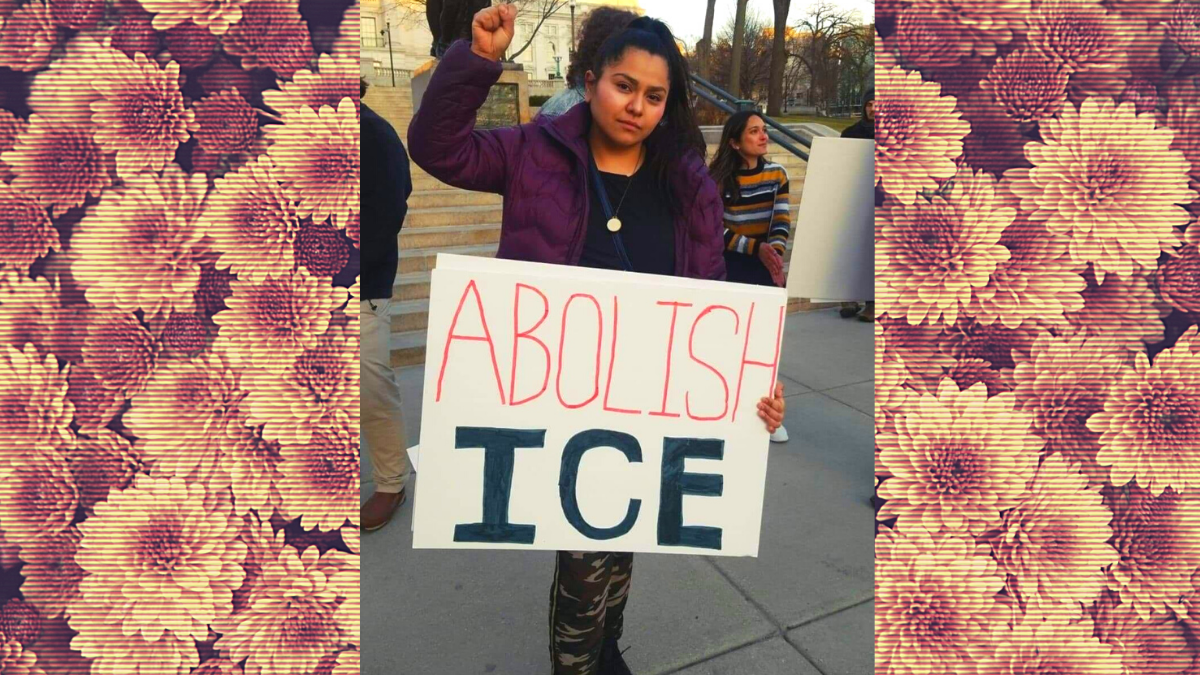
    So although the Donald Trump threat appears over, the Trumpist fascist threat is far from it. And more of the same will only allow it to rise to power again.  Socialists must push for Medicare for All, a Green New Deal, and guaranteed housing for everyone. We must fight for defunding the current police, mass incarceration, and Gestapo-like immigration systems, and for rebuilding the justice system from the ground up. We must defund, dismantle, and redistribute the wealth of the US imperial war machine. It is clear that an end to climate and public health crises will arise only through international cooperation, and the US must act accordingly. The Biden administration must not only finally stop the pandemic but give direct cash payments to everyone until this crisis is solved. The new administration must be held to its promises of expanding worker and union rights, and raising the minimum wage to at least $15 an hour; socialists should demand that it rise even above that.

    And we shouldn’t stop there. Continued failure to address the stark economic, health, racial, and environmental crises that stare the US in the face will lead to a successful push for power by the Right in the coming years, this time with fascists who know what they are doing.

  • Together With Joanna Love

    Together With Joanna Love

    An interview with Joanna Love by Benji Ramirez Gomez

    BRG: What can you tell me about the current uprising?

    JL: It’s happening. We’re making changes already here in our city. It’s so obvious, we have so many cities all over the country on fire for this because it’s not okay, because we’re tired of giving up to the injustice that we continue to go through. Things continue to happen. Ice continues to violate human rights, parental rights, children rights, women rights. ICE continues to attack our communities, all over the state and country as we speak. The police continue to murder black people, the police continue to get away with shit. 

    These are things that have solutions, these are problems that are man made that can be man un-made. We’re only here for solutions to make this world a better place for everyone especially those most vulnerable right now those who have been more affected for longer. Communities are screaming right now we need to make sure we come together and support each other so we can create a solution together.

    BRG: What is your role in the revolution?

    JL: I am an activist who’s going hard in every space that I can, everywhere I am. If I can do something from wherever I am, I’ll get it done because I know it’s important.

    There’s a lot of organizing that I personally get into. A lot of things at the local level especially.  It’s something that I’m really invested in, moving local ordinance. Push or encourage officials to pass or advocate against other ordinances because it benefits our communities. Things like that are really important because there’s decisions that they’re making all the time. They don’t want us to know that it’s happening, because they don’t want us to have a voice in those decisions and we should have a voice. We need to raise our voice up, and make sure that they know how we agree or not about certain things.

    I am a manager at a restaurant. Myself and a group of other people started the Restaurant Worker Coalition, right when the pandemic started because we realized that we have to come together and get ready. We didn’t know what we were really heading into. We just wanted to make sure we kept restaurant workers connected and supported with resources and everything that we need to get some basic workers’ rights in our jobs. It was really important to make sure to have that out there for workers to stay safe. This is the group of people that are here with you and we will make it through this together.

    I’m also on the board of directors of Our Wisconsin Revolution. That’s only been since this summer. It has been great. I personally like OWR a lot, but now I feel like the Board is actually pushing to do bigger things that are happening right now. To support things that are happening in this moment like much of the racial injustice going on and everything with COVID and basic human rights, like healthcare for instance and housing. I can go on and on.

    The board is made [up} of straight-up activists. They are inspiring. Most of these people came together late last year when we started creating the Wisconsin For Bernie coalition. That was really exciting. I had never really met people who were so invested in their community and making this world a better place for everyone, fighting for all of this stuff that technically was there in the Bernie Sanders platform. So a lot of these people came together from all over Wisconsin, activists and people who were encouraged by each other to run for something. Let’s get it done. At the very end of the day, like Bernie Sanders says it’s not him, it’s us.

    BRG: How did you feel about Sanders’ run?

    JL: When Bernie Sanders dropped [out], it was really depressing. It’d be nice to have a leader as president, that says these things are wrong and provides basic human rights to people. That doesn’t mean these older politicians will do it. It’s us who have to make change. We understood that we have to continue to work together and do something wherever we are, even with the pandemic. A lot of people ran for office, a lot of us took over boards of organizations and used that capacity that they have – the public, the members, the supporters – all these organizations, we have to hold them accountable as well.

    I am so ready to start moving things at the legislature, as soon as they come to work in January and February of 2021, because there is a pack of legislation that was written over the summer after the BLM protests started, and they technically criminalize protesters. There were about nine bills that were written in June and July, and we need to start advocating against those, and [advocating] for laws in our state that will actually protect our communities and hold accountable people who brutalize our communities, like the police. 

    We need to make sure there are act like the Hands Up Act, Breonna Taylor’s law, all of this legislation that we can start moving when the state House is ready to start working for us. We need to make sure we’re there everyday to give them the struggle that they give us. We need to make sure that they don’t get no peace just like we don’t, until we get justice that we deserve. That’s coming together, doing it together. We’re doing it.

    There are so many things that we have to push for, that we have to stay informed for. Especially right now with elections, see who are our representatives, who will be speaking in Congress for us? Even if it’s a person we don’t like, we have to make sure we come to an agreement, we have to make sure they are working for us. Because even if we didn’t vote for that person we have to make sure that they are being held accountable for not doing their job, for not working for the people. When a person gets elected they should work for everyone. [So if] that’s not how we’re moving forward, we need to make sure we’re working with these politicians, that we’re calling them out, we run against them, we build a coalition to hold them accountable if we have to and to make sure that they do their job.

    BRG: It sounds like you’ve found some community among OWR and other grassroot orgs. What does community mean to you?

    JL: There are so many organizations out here that are actually doing the work, providing that support for whoever in whatever situation might need. There are so many situations. If you’re going through anything. If you’re going through domestic abuse, there’s an organization that’s willing to support you. If you’re not getting enough food at your house there’s an organization that can do something to support you. To me that’s community coming together like that. Providing these resources, not turning our backs to the people we say we serve and are here for. We are supporting each other. That’s how you become stronger, whatever you’re going through, you instantly get some faith in humanity that things will be okay, and I am so grateful for that. 

    Ever since I was really young and dealing with the ICE situation in my family, with my dad, remembering how my community and other communities came together to say, “This shit is wrong.” Just to continue to fight and be a voice for other people who don’t feel brave enough for their fair reasons. It’s so much just to survive. It’s painful to go through stuff, seeing other people going through stuff, seeing how we get treated, and seeing that, for instance, in this pandemic a lot of us have been neglected by people who think they’re better than other humans. What I call the rich and the privileged, all of those people that can stay home during the pandemic, while we’re essential workers, and we have to survive all the struggles that are happening. That really gets to me. Especially being a mom, I think of everyone as someone’s child and someone would like for everyone to be looked out for, we all deserve not to struggle.

    We need to fight for each other, even if it’s not the same struggle, it’s a struggle. “Tu lucha es mi lucha.” Your struggle is my struggle, and we need to fight together. That’s what community really is; not only helping each other survive, but fighting and coming together with a plan to fight this government and the laws that already exist or the ones that they are trying to pass and will only affect us even more than they already are. It’s coming from the same place, from the same group of people, the same officials making these decisions for us.

    We can only win together, we can only move forward together, we can only get it done if we really wanna get it done. We need to come together and for that, once we do, which is happening, which is why this is a revolution because it’s happening because more people are listening more people are willing to understand the pain that you are going through. I see that everyday in my personal life, and it feels great it feels like I am the voice, but maybe I am just amplifying more voices. To me, that’s the revolution right there, having more voices and having more ears out there to speak for you and to listen to you, to me that’s what democracy building is like right now. 

    BRG: Speaking of democracy, how do you feel about the election so far?

    JL: I’m glad you’re asking me that today. Apparently we’re a blue state now, not by a lot. By just a little bit. We barely made it. What that meant was that the biggest percentage of us say we are not okay with racism in this state, and we’re willing to fight it. To me that tells me we need to find all of those people because even though we have gotten so many people out here since George Floyd’s murder and the protests started, I don’t think its the amount of people who went out to vote. Even with the people doing stuff from home and out in the street, I don’t think we’ve seen that capacity, we need to find those people, we need to make that our job, and we need to make sure that they are also advocating. For those other people to come to this agreement with us that we do need to fight together for justice.

    What that told me yesterday, when Wisconsin became blue is that we’re heading in the right direction. Now there’s a lot of people. A lot of people were probably racist in silence and now they’re like, “Well maybe I should think about this, it’s kinda wrong.” To me it’s about making racism wrong again, cause everybody says, “Yeah racism is wrong, but it’s always been a thing,” but it’s never been so bad. It’s never been as bad as Trump. 

    If all of these people who have been silently racist can start thinking about how they can be a better person, all of those people need to come to this agreement where we can be this community where we don’t have to like each other, but we support each and make sure everyone has basic human rights without bothering each other. We don’t have to go out of their way, we just have to come together and make sure that everyone has the same privilege and not just white people. White people need to use their voice more than ever. It’s okay to do it, it’s okay to stand up for other people.

    BRG: How can everyone get involved?

    JL: People can do things out here, obviously there’s protests, marches, rallies that are going on almost every week. There’s groups out here that have not stopped, because it’s not worth it to stop, because they need to continue to hear us.

    If you can come out here in person, do it, get out here. Always stop by the Capitol, check it out to see what’s going on out here.

    Follow groups that are out organizing. There are so many organizations, follow all of them: Follow Freedom Inc., Black Umbrella, Madison for Black Lives, the list goes on and on and on. At this point they’re all coming together. It’s a coalition of groups and organizations just willing to support each other and come out on the streets even if it’s a small group of ten, twenty people. Let them know that we still out here, we’re still in pain, we still screaming.

    You can do things from home like writing emails, making phone calls, sending letters. I’ve heard handwritten letters are even more appreciated.

    Be present at meetings that will be happening, these meetings are happening through video calls, over zoom. You can do it from home. I always say, “Start from whatever is easier, whatever is near to you.” The people that you know, the things you have access to. There is something you can do everywhere you are. If you’re at work, literally during your break you can use five minutes, three minutes of your break to write a short email, two or three sentences, “I don’t agree with this, this hurts my community.” Send it to your mayor, send it to your common council, stuff like that, encouraging people to do more.

  • LINK: Grassroots Organizing for the Houseless

    LINK: Grassroots Organizing for the Houseless

    An interview with LINK organizers Julia and Sean by Benji Ramirez Gomez

    In this interview, Julia and Sean of LINK tell us about the work they’ve done since the uprising following Geoge Floyd’s murder.

    BRG: Tell me about LINK and the work you do.

    J: The thing about us is we’re a group of friends. We don’t see ourselves as this concrete set-in-stone organization. It was kinda just like, ok how do we want to contribute to what’s happening right now, especially here in Madison? We decided to do something that can help people that are houseless. Some of the people who formed LINK had experienced homelessness previously, so there was that special connection to that direct experience of what that feels like.

    We had the idea to pull up to the capitol with some speakers and a microphone and to see what would happen cause we felt like we literally needed some type of  amplification to express anger about what was happening at the time. We had this vision of this happening at the capitol and we pulled all our resources together and found speakers, found a table, and we found a microphone.

    S: There were already a lot of people who were already up there at the Capitol within that community. That’s what really pushed us into helping out with that. We started to explore what we can do with the resources we have at our disposal for these folks.

    “We felt like that’s really important, and the connecting piece in organizing and movements. Having a place where you can feel safe.”

    J : Then it kind of evolved to like the mission being a focus on community. Community building, mainly with the Kickbacks, but most importantly creating a space for Black people and POC to access that downtown area. That was the main thing, building that community, or hoped to build that community. We felt like that’s really important, and the connecting piece in organizing and movements. Having a place where you can feel safe.

    S:  And now a lot of those people we started seeing regularly at every protest, every single event, so of course you start to build community with folks and then learn a little bit more about people’s stories. That’s kinda how we started fund raising for those folks, getting hotel rooms and things like that.

    BRG: What kind of services were you able to provide to the houseless?

    J: Obviously housing people is really hard. You can’t just house people like that, it’s not that easy.

    S: It’s harder than just raising $5,000 for somebody and thinking that it’ll be enough to at least work something out with the hotel or work something out with a sublet.

    J: Getting hotels for people is possible, but there’s more limitations to that. A lot of these hotels really discriminate against these people and they have these ban lists that really don’t make sense. They put people on ban lists for really minor things, like smelling like cigarettes. They know these people are homeless.

    S: Yeah there’s a lot of discriminatory policies in the hotels. They all talk to each other too. If you have a bad experience at one hotel and try to drive down the street to a different one, they’re gonna know about it already because that manager called them up and said, “Hey, they’re gonna head down to your place.” It’s nuts.  It was literally hotel shopping in the middle of the night after a kickback. We’d be driving hotel to hotel, cause one has this person on the list, or one requires ID. Everybody needs an ID, even the person paying.

    J: That was another too, the payments method. They make it so hard to pay with a card. The person on the card needs to show up and they need to have their ID. Otherwise this room isn’t going to get booked.

    S:  Then this person has nowhere left to go. There aren’t that many shelters in town. None that have rooms available, that’s for sure. With the Salvation Army, if you’re not there in time, good luck. They only have what, twenty beds in there? If you don’t even have a cell phone, then that’s it. That’s really what LINK got into. There’s all these barriers, what can we do to make it a bit easier.

    J: We were able to provide them cell phones which we think were really important especially now in 2020. If you don’t have a phone, you’re disconnected from the world even more and it just makes things harder. A lot of folks got phones, which is really awesome, that’s how we would connect with them, and then they would call us or text us, “hey I really need this within the next couple days, are you able?” And we would respond yes or no. Things like food, we would try and do that consistently, like “hey I’m hungry.” ok cool, we’ll send some delivery to you, or ‘oh we’re in the area, we can drop off some cash.” We got other people gear that allows them to carry their things if they’re sleeping outside. Sleeping bags, clothes, bus passes.

    S: I mean for a few months we were putting two or three different people up every night in a hotel room every single night. And it would just be two of us driving them.

    BRG: That’s super impressive that you were able to do all this. What were some of the most difficult parts of the work?

    J: We’re always learning what that need is. We’re not professionals. We’re not case managers, we’re not counselors. I’m a student. I worked on farms for fun, that kind of stuff.  It’s just really sad and frustrating knowing that there’s this stigma and judgements towards people part of the subculture of houseless people. How they’re treated and dehumanized by everyday people.

    Oftentimes people don’t realize the impacts of literally not having something comfortable to sleep on at night. You don’t sleep well, then you don’t think right. You’re probably going to be cranky, probably going to be more emotional. I can’t even imagine the impacts of being on the streets for four years, seven years, ten years.

    S: Twenty even!

    J: There’s really deep things that happen to people without houses. Understanding that and exercising that if there’s a conflict, like “this isn’t a terrible person, they’re just experiencing something really traumatic.” I expect them not to always be in this chipper, happy attitude. Life’s not going well for you, I would be mad, too.

    S: A lot of this is just respect. Common respect. Respect for people, and also respect for space where they are living. I think that’s one thing a lot of organizers, protesters, people in general across Madison don’t realize. This space you are walking in and the street you’re walking down.

    J: Like State street.

    S: Or the Capitol Square, that’s somebody’s actual home. So when you’re spilling your drink all over the street, or making garbage and stuff, some of these folks take offense to that. That’s something that you have to remember, wherever you’re walking, that’s not your land, that’s not your space. Be conscious and respectful of that.

    BRG: What’s something else you wish Madison knew?

    S: Madison has this liberal identity but we’re in the most segregated county in the most segregated, most racist state in the entire country and that’s evident by the hypocrisy of the city government, the hypocrisy of the state government, and how they treat your average citizen and any citizen that’s experiencing poverty or homelessness. Even though Madison is small and really is a bubble, its own microcosm, it almost feels like a testing ground for all the terrible racist policies that are enacted everywhere in this country. I’m from out of state, I’m not from Wisconsin originally, so in my eyes that’s what it feels like.

    J: I really wish the entire city of Madison understood all these barriers and really nuanced things that make housing people really hard here. The resources here in Madison to help people with houselessness are underfunded. It’s so crazy to me. For example, section 8 housing, the waitlist for that doesn’t open. Ever. It doesn’t move. So why aren’t we concerned about these things? People are more concerned about a homeless person in “their” neighborhood park sleeping in a tent, than housing that person! Why aren’t people more concerned about why there are 100, 300, 400, 500 hundred people sleeping on the streets in your city, then somebody popping up a tent to survive?

    “Even though Madison is small and really is a bubble, its own microcosm, it almost feels like a testing ground for all the terrible racist policies that are enacted everywhere in this country. I’m from out of state, I’m not from Wisconsin originally, so in my eyes that’s what it feels like.”

    S: The average citizen just wants to push it somewhere else. They just don’t want to see it. McPike park here in Madison, you’re around all these happening streets, Willy St. and everything. It’s just hidden, perfectly hidden from all these people, it’s why nobody gives a shit it feels like. It gets me pissed off having to go by that everyday when the city claims that housing is a human right and they don’t follow that up with anything. That’s one of our biggest frustrations and why we do what we do.

    BRG: How has the city worked against you?

    J: We didn’t need a generator at first.

    S: I think it was around kickback #20 when they shut off the power up at the Capitol. It wasn’t that far in, that was probably around July. Literally the day-of was when we pulled up with the generator, we happened to have the generator, cause we were thinking one of these days it’s going to happen, and we were like perfect, we have it in the truck

    BRG: Can you tell me what the role of grassroots organizing has played in your work?

    J: The grassroots group is a really awesome resource that we have. They  are people that we personally know and trust. Not just with reliability, but with physical safety. We trust them with words and action.

    S: These are people we’ve worked with all summer. They’ve been out there everyplace.

    J: Usually it’s just us pulling up and a bunch of people being like “What can I help with?”  It’s already taken care of. It’s that community thing, and it’s so cool to see that. That’s something that will keep growing, it’s not something that’s going away just because everything is dying down. I would say that is definitely something to be proud of, not just for us, but for everybody that has been out there.

    S: The only org we normally co-sponsor or show up with is Black Umbrella and Reparations Thrift. They’re the ones who were always at the kickbacks. You scratch my back, I’ll scratch yours kinda vibes.

    BRG: What’s next for LINK ?

    J: Now we’re just thinking harder of how we can sustainably exist and do the kind of work that we think would really help individuals. We’re not trying to do this super large-scale thing because we know it’s not in our capacity due to being just a few individuals, but what we can do that is impactful, but still within the means of what we’re able to provide people. Not just services, but literally our time.

    S: Some of our work is evolving, it’s starting to look at how we can put more pressure on the people that need to have pressure on them in the city government in order to make these changes, and actually stand by their word of housing people.

    J: Organizing is probably the most important tool in order to do something about the things we want to see changed, and obviously protesting, being the streets is one of those, but also we need to organize, we all need to organize especially in this kind of place like Madison, Wisconsin.

    BRG: How can people rally to support your work?

    J: Supporting LINK is supporting the people we try to connect with support. The Go Fund Me’s we have? Those are real people that really need help, that’s why they’ve asked us to fundraise from the community. They don’t have it. They have no other way. If we can be that outlet for potential support that’s easy work. “Hey everybody this person needs help.” Blast this, donate if you can share this at least. That’s definitely the preferred way to help LINK.

    S: If you have the money, donate to the Go Fund Me’s, get it directly to these people. We don’t pay ourselves, we don’t get any money or any reimbursement for the things we do. All the funds from the Go Fund Me’s go directly  to that person. If you got it, give it. Whether it’s time, money or even material resources like when we do call outs for the Art shows and things like that.

    J: Otherwise supporting in the winter would be keeping up with our socials. Share things we share, get the word out. We like to share other peoples’ events. We like to share people’s things in the Madison area. Show up. Reparations.

    S: DM us on Instagram.

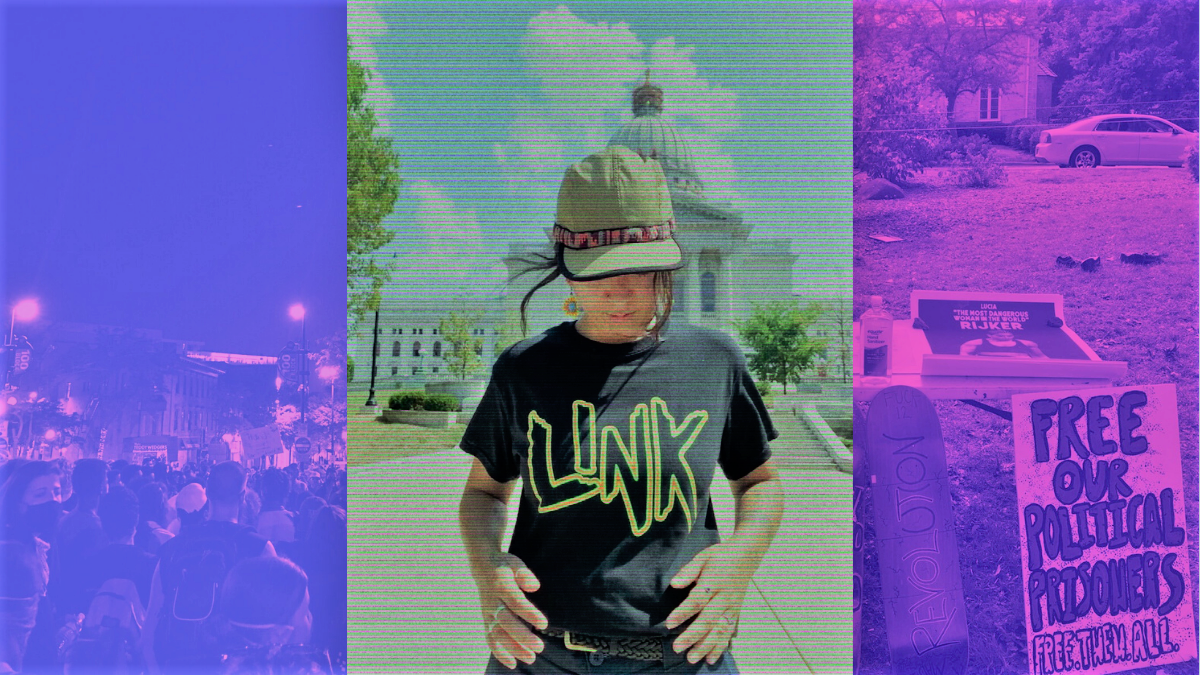
    You can follow LINK on Instagram. Check here for other ways to contribute to LINK’s work, including directly supporting community members who need assistance.

  • Demanding the bare minimum on COVID in Wisconsin’s prisons

    Demanding the bare minimum on COVID in Wisconsin’s prisons

    by Scott Gordon

    This article was produced in partnership with Tone Madison.

    Advocates for Wisconsin’s incarcerated people are losing patience with Governor Tony Evers as COVID-19 spreads throughout the state’s prisons and jails. Evers and the Wisconsin Department of Corrections have made some modest efforts since March to slow prison admissions and release people who were in prison for parole violations. This is only a fraction of what the Governor has the power to do—especially a Governor who ran on a proposal to reduce Wisconsin’s prison population. It hasn’t prevented major outbreaks at prisons including Waupun Correctional Institution in Dodge County and Kettle Moraine Correctional Institution in Sheboygan County. Local jails, including Dane County’s, have also had outbreaks. The DOC’s own numbers show that more than 5,000 incarcerated people and more than 1,100 staff have tested positive since March. State prison officials report that 10 incarcerated people have died, though activists say this might be lowballing it, due to some technicalities in how deaths are reported.

    After months of letters, phone calls, a petition hand-delivered to Evers, and June’s “Drive to Decarcerate” protest in Madison, Evers failed to take further action or even come out publicly to acknowledge the problem. So organizers at WISDOM, a Milwaukee-based interfaith group working to end mass incarceration in Wisconsin, launched a vigil-like protest this October outside the Governor’s Mansion in Maple Bluff, a small affluent village that borders Madison. WISDOM’s goal is to post at least two protestors in front of the mansion every day, until Evers holds a press conference drawing attention to the problem. Those interested in taking part can sign up for shifts.

    “All we’re asking right now is for the Governor to at least acknowledge that there’s a problem, and acknowledge that this is really a serious issue, and to state if he intends to do anything else about it,” says David Liners, State Director for WISDOM. 

    Rulings from the Wisconsin Supreme Court and stubborn inaction from the Republican-led Wisconsin Legislature have frustrated many of Evers’ efforts to contain COVID-19. But when it comes to prisons, Evers can act quickly and unilaterally. He can’t blame other branches of government for getting in the way—thanks to the Governor’s ability to issue pardons and commute sentences.

    “This is an area where the Governor has enormous power,” Liners says. “The Governor has the power to commute sentences. There was a recent opinion by the Legislative Reference Bureau basically saying that the legislature and the courts have no standing to review those decisions.” Overall, Liners thinks well of Evers’ COVID response, “but when it comes to the prisons, he sounds the way his political opponents sound about COVID for everybody—a big shoulder shrug.”

    On a recent Thursday afternoon at the Governor’s Mansion, Ellen Magee and Dan Fitch (a Madison DSA member and a friend of mine) were holding down the fort.

    “I’ve been very concerned about COVID in the jails and the prisons,” Magee says. “I’ve written quite a few letters about it, and I have enough risk factors that I can’t really feel safe going to big protests, so this felt like a safe way to protest.” Magee also published a letter in The Capital Times this April calling attention to the role of ICE in mass incarceration in the pandemic context.

    Harsh sentencing measures, Wisconsin’s aggressive use of revocation holds for people accused of parole or probation violations, and the vulnerabilities of sick or elderly incarcerated people have contributed to the COVID crisis in Wisconsin’s prisons. Not to mention that infected prison staff are going back into their communities, likely contributing to the state’s continually nightmarish level of cases and deaths. Prison staff could also be carrying it in—a real danger in all Wisconsin communities, and especially in areas where people flout COVID precautions as a political gesture.

    “There’s people in there that really the judges didn’t intend to stay… those cases would be so easy to, I don’t know what you need to do, just pardon them or whatever you can do,” Magee says. “There’s people that are even bedridden in prison. Duh!”

    “There’s people who are near the end of their sentences that could be released. There’s people who are elderly and more at risk that could be released. We’re not making the world more safe by keeping these people in prison.”

    COVID in prisons is a nationwide crisis, one that underscores the inherent inhumanity of the carceral system. Even so, it doesn’t have to be as bad as it is in Wisconsin. State and local officials around the country have taken steps, some more effective than others, to reduce prison and jail populations during the pandemic. (A research project at UCLA Law has documented in great detail how different states are responding to COVID in prisons.)

    “Republican Governors in other states have done more than [Evers] has, and that’s bizarre to me,” Fitch says. “There’s people who are near the end of their sentences that could be released. There’s people who are elderly and more at risk that could be released. We’re not making the world more safe by keeping these people in prison.”

    The protests are less about size or volume than about steady, sustained insistence. The Wisconsin Governor’s Mansion can feel like an odd place for a protest, because it’s so tucked away on a quiet street in one of Dane County’s enclaves of wealth. Maple Bluff might be comparatively liberal for such an expensive area, but it’s still not the first place you’d go looking for supporters of radical de-carceration.

    “I mean, about half the people give us a thumbs-up. Most people just pretend like we’re not here,” Magee says.

    “And there’s a few people who give you the shake of the head, or ‘I disagree’ or ‘never gonna happen,’” Fitch adds.

    Strangely enough, both Liners and Peggy West-Schroder, Statewide Campaign Coordinator for WISDOM’s Ex Incarcerated People Organizing, are actually heartened by the response they’ve experienced from Maple Bluffers. “We had a couple of people who even kind of argued with us and then came back another day and said, ‘You know what? I looked into this and I understand what you guys are saying. How can I help?’” Liners recalls.

    “I feel like the neighbors have been our number-one cheerleaders,” West-Schroder says. “I feel like if the neighbors could help us at all, they have, or they would. They stop by, they ask why we’re standing out there, they kind of ask sometimes why we have skin in the game, and then they ask how they can help, and then we always tell them that we want for them to call the Governor and ask the Governor to release people, and we want for the Governor to hold a press conference regarding his handling of COVID of our prisons, and [give a] justification as to why he hasn’t released anybody, specifically when there are other states that are doing so much.” (Not all the neighbors are friendly: According to Fitch, Capitol Police told protestors that some have complained and are using a local ordinance in an attempt to take down signs protestors have arranged along the mansion’s front fence.)

    Evers has other tools at his disposal here. He could work with the state Parole Commission to speed up the processing of incarcerated people who are already eligible for parole, and in some cases are over-serving their sentences. West-Schroder notes that pressure from activists and families of incarcerated people did get the DOC to release more frequent data updates on COVID cases and deaths in state prisons.

    WISDOM continues to gather its own numbers as well. West-Schroder is glad to see data coming out, but is skeptical about the level of transparency at work here, and with good reason: Prisons and jails are among the most opaque corners of American government. There is also a possible blind spot in the DOC data. It relies on determinations from local medical examiners. But West-Schroder says that a hospital only has to report a death to a medical examiner if it happened within 24 hours of a patient’s admission. That means if an incarcerated person gets transferred to a local hospital with COVID, but stays for longer than 24 hours, then dies, it might not get back to a medical examiner.

    Liners says that WISDOM is willing to keep this quiet, continuous protest going even into the winter if necessary, though he hopes Evers takes action before that. 

    “We’ve had some people say, ‘You’re just being opportunists. You just want to reduce the prison population, and now you’re just using COVID-19 as an excuse,’” Liners says. “And it’s like, no, it’s just another good reason to do something that we should have been doing anyhow… there were several really good reasons, now there’s one more huge reason to do the right thing.”

  • Rural America Isn’t Your Quaint Escape

    Rural America Isn’t Your Quaint Escape

    By Mica Magalska

    The Coronavirus has forced many of us to grapple with new feelings of stress, grief, and anguish that we might not have been prepared for. Many of us have adapted to changes in our everyday lives in order to keep each other safe from this virus that has killed thousands of Americans over the last nine months. We’re also battling virus denialism and quarantine fatigue.

    I grew up in the Upper Peninsula of Northern Michigan. Most people don’t know where I grew up, or where my family lives. And they always have questions. Do we have running water, why are there so many Republicans up there? I hear jokes about people from rural areas being backward, uneducated, like people with missing teeth, poor people. Sometimes people are surprised I am smart and educated. I come from a small city. We have art, music, a university, and liberalism. In fact, the county I grew up in has voted blue since Reagan. We do have racism, just like everywhere else in the US. But it is a place where people live. 

    I could be biased, but I find it to be one of the most beautiful places I have seen. You can travel a few minutes outside of town and be alone for miles, with only the sound of your voice and the echo of the trees surrounding you. It is dense with trees.  The beauty of the region calls people from near and far to see the changing of the leaves in the fall, and to swim in the cold but pristine Lake Superior during the summer. Some people have property that has been in their family since the late 1800s. We locals always found tourism a kind of a necessary evil, because most industry, mining, and logging, was not feeding families anymore. When I was growing up, many families lost their main source of income and were plunged into poverty when the iron ore and copper mines were depleted and closed. My family has generally been lucky, working in different industries to put food on our tables. But like most young people, I left because the opportunities were sparse. 

    The people of the UP, Yoopers as we like to call ourselves, are proud of where we come from. A lot of my family and friends still remain in the Upper Peninsula. They remain for a number of reasons, to care for aging family members, for the beauty of the land. Some left and moved to big cities, and later returned to their childhood homes, a place where they found themselves happy.  Many of my friends are the descendants of Finnish and Italian settlers who came over in the late 1800s to work in the British-owned mines. Many people are proud of their heritage. Finns found the UP similar to their homeland in Europe and were able to survive, despite exploitation by many of the rich mine owners. In some ways, there is a kinship with those who live in Appalachia and were exploited by the wealthy coal mine owners. For over 50 years, my hometown hosted the only Finnish language and culturally specific television show. I grew up knowing people who spoke Finnish in their homes. 

    Residents still need to work. They work in restaurants, gas stations, hotels, and grocery stores because there aren’t other options. They can’t easily change jobs, they can’t work from home, and they know that financial relief stopped at the $1,200 stimulus check earlier this year.

    I understand the draw to the UP. The history and culture are unique in the United States. It is rural and gives people a place to “unplug”. The draw hasn’t stopped during a pandemic. For some reason, people seem to think that because of the rural and vast wilderness of the UP, that is also a place where they can spend their time as they normally do elsewhere: eating in restaurants, going to bars, hiking in the woods without a mask. It is an escape, but for only the people who do not live there. Residents still need to work. They work in restaurants, gas stations, hotels, and grocery stores because there aren’t other options. They can’t easily change jobs, they can’t work from home, and they know that financial relief stopped at the $1,200 stimulus check earlier this year. Much like other times, the UP is forgotten and remembered all at once. Used for pleasure and wealth, but thrown away when not needed anymore. 

    Everyone I talk to from my home sighs and says, “I wish these tourists would stay home.” COVID-19 still is spreading there and it isn’t going well. This secluded area also has limited medical care, an aging population, underinsured people, and limited testing. As I write this, the main hospital for the region is full. The area’s Indigenous communities, like Indigenous communities elsewhere in the US, have been hit hard by the pandemic, without funding to pay for healthcare. 

    My pleas for people to stay home and out of the UP are selfish. I want to see my family again. I want to hug my parents and my sisters, and to see my nephew grow up. I want to hang out with my friends and share childhood memories with them while sitting in front of a bonfire on Gitchi-Gami (Lake Superior). I’ve made the choice to stay in Madison. There is too much at risk if I take a trip up to where I grew up, despite any precautions I could take.

    It isn’t any different in Northern Wisconsin. Borders are invisible lines that were created by people, and diseases don’t care about them. The State of Michigan could close the Mackinac Bridge to people from Lower Michigan, but the UP is still connected to Wisconsin, where cases have skyrocketed due to the inept state legislature and the politicization of the pandemic. This makes traveling to these beautiful regions worse than ever. The interactions tourists have with workers in the small towns they pass through on their way to their destination creates a potential chain of infection that spans the state.

    Northern rural areas are not a playground, especially during a pandemic. They do not exist solely as a backdrop or a photo, or an escape from realities back home. It is not an accident that rural areas are the way they are, without access to a robust healthcare system, high-speed internet, or even an affordable and vast selection of groceries. When we talk about safe activities during COVID in the US, it is always about the safety of the consumer and never about the worker. It is a lottery system and the odds are never in the favor of the worker.