Tag: covid-special

  • I’m Using My Stimulus Check to Pay For An Abortion

    I’m Using My Stimulus Check to Pay For An Abortion

    Shared Anonymously

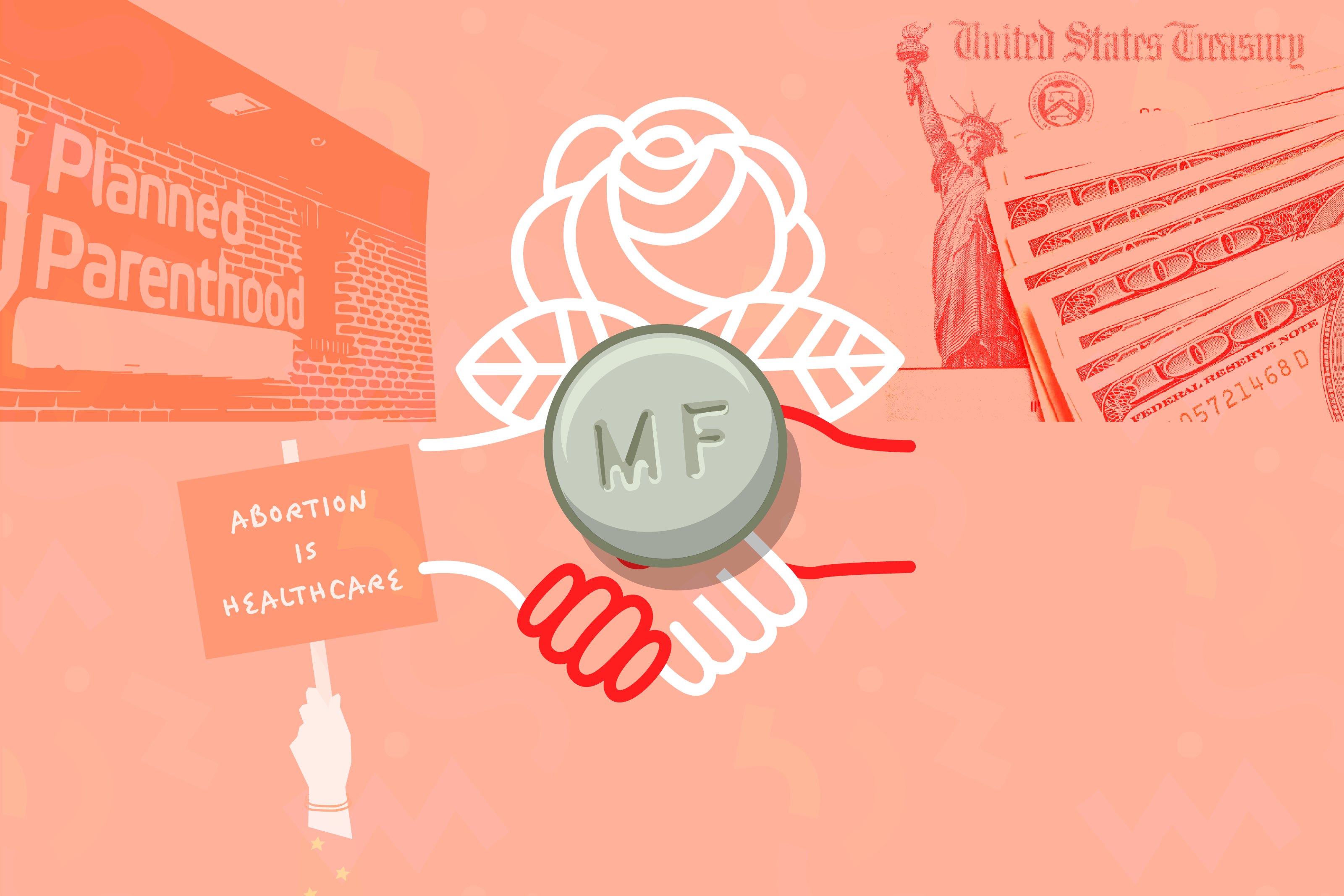
    I am using my stimulus check to pay for an abortion. 

    As I went from Day 35 with no period, to Day 36, 37, 38, I thought seriously about what to do if this wasn’t just a late period. It became very clear that getting an abortion was the right choice for me, my husband, and my family in this moment. We have a 15-month-old and we want a second kid, but the thought of a pregnancy, a birth, and a second baby  amid a pandemic – when we could lose our jobs, when a hospital delivery could be dangerous and isolating, when our out-of-state and elderly parents couldn’t travel to help in those early weeks of parenthood – is terrifying. In fact, were it not for the pandemic, we very well could have made a different decision. As Republican governors across the country question whether abortion is an essential service in these times, I know it absolutely is—all the more so because of these times. 

    Though we made this decision quickly, my husband and I didn’t make it lightly. It didn’t take long for other thoughts to creep in. I felt dumb for getting pregnant: I miscarried two years ago after trying to conceive for a year, and I have a toddler. I know exactly how this works. I felt shame for making this decision: isn’t this a frivolous reason to do something so serious? Aren’t abortions reserved for when you really need it? Of course, my internalized guilt couldn’t specify who should get to determine justified need. Will people I love hate me? That wasn’t even a question, because I knew at least some would. The real question was whether they knew they hated me specifically when they spoke in generalities about the sanctity of life and abortion as murder. Is this the burden that people I love who have had abortions have carried with them for decades? 

    How dare this society make women hate our bodies, make us want to hide them away, perfectly priming me to think I don’t even deserve to control mine?

    As I type this, I hear my husband on the phone with his mom. She loves us and supports us, and also has concerns about the burden of going through with this. Is this how stigma creeps into relationships? Wedging itself, word by loaded word, into conversations? Creating silence and one-word responses where there should be jokes and laughter?

    Also while writing this, I bought myself a swimsuit for Mother’s Day (“for” is generous, quite frankly, that just happened to be the nearest excuse on the calendar for retail therapy). As a mother I am more in awe of my body than ever before. I’ve always hated most of it; on a good day, only parts of it. But my body is amazing. It creates life, it nourishes life, and somehow it keeps me going, too. How dare this society make women hate our bodies, make us want to hide them away, perfectly priming me to think I don’t even deserve to control mine?

    Before moving to Madison I lived in Washington, DC and volunteered as a clinic defense escort at a Planned Parenthood just a few blocks from the White House. I saw Catholics pray in circles in front of the clinic. I witnessed white Anti-choicers harass Black patients with race-baiting arguments. For years, I heard dehumanizing hate spewed along the clinic sidewalk week after week after week. 

    Last week, when I arrived at Madison’s East Side Planned Parenthood, I saw a lone old white man wearing a sandwich board that explained contraception as “chemical pornography.” Of all his slogans, that one was actually the most logical; the others I couldn’t make enough sense of to remember. He yelled when I got out of my car, lazily, in my general direction. I was already  frustrated by the fact that I couldn’t exercise basic autonomy over my body in this moment – by the fact that I had to be treated like a child, forced to wait a week to make sure there were no take-backs – and I was in no mood for this harassment. I stared him down and yelled “Sir you can go straight to hell.” This time, he acknowledged me directly and yelled back: “You think you’ve changed my mind but you haven’t.” I don’t think he got the irony of the moment. I told him “Right back at you,” but I still think it went over his head. When I left the clinic two hours later, he was still there, joined now by an old white woman saying the rosary. I flipped both of them off as I drove home.

    Inside the clinic, the staff was kind, compassionate, and respectful. I was there just for a consultation. Due to a 1996 law I have to wait 24 hours before actually having an abortion. Due to a 2012 law I have to be seen by the same doctor for my consultation and abortion, and because of limited staffing (no doubt due to ideologically-driven funding cuts) that meant the 24-hour waiting period would be a full week.

    During my consultation, a staff person explained the process of a medicated abortion. First, I would take a pill called mifepristone to block hormones from reaching the small, almost invisible cluster of cells inside my uterus (thanks to a 2013 law she was forced to conduct an ultrasound of this cluster of cells and show it to me, though I was not obligated to look. I looked anyway; the flowery covering on the overhead fluorescent light I was staring blankly at made me feel pitied, and I did not want to be pitied.). Then, I would take a pill called misoprostol to tell my uterus to contract and expel those cells. 

    In February 2018, I underwent almost the exact same thing after learning that a pregnancy I desperately wanted had stopped developing at 9 weeks. It was heartbreaking and traumatic, and the physical and emotional memory of that moment will stay with me forever. At the time of my miscarriage, pharmacists from Michigan to Arizona were denying misoprostol for women suffering from the trauma of miscarriage because it is used in abortion. In my consultation, the staff person told me doctors here are also having trouble prescribing mifepristone for other uses because of its link to abortion.

    Mothers know the physical burden of parenting: our bodies are not our own for 9 months as they are sapped and stretched to grow a little human.We know the emotional and mental burden of setting aside every other pressure in life to take care of this vulnerable, frustrating, perfect little one we’ve brought into the world. We know the financial burden of simply trying to survive. 

    Because I had taken misoprostol before, and because surgical abortion can be more than twice as expensive, I opted for the medicated abortion. My insurer stopped covering abortion years ago, so my costs would be out of pocket. My only concern was whether the prescriptions would affect breastfeeding; it’s a question you get used to asking as a nursing mom. The staff person told me it was a common question to ask. Let that sink in for a moment: people seeking abortions commonly ask if the medication they will need to take will interact with breastfeeding, because they already have small children at home. 

    Mothers know the physical burden of parenting: our bodies are not our own for 9 months as they are sapped and stretched to grow a little human; add another 6 months, or year, or more onto that if you nurse your baby. We know the emotional and mental burden of setting aside every other pressure in life to take care of this vulnerable, frustrating, perfect little one we’ve brought into the world. We know the financial burden of simply trying to survive; daycare costs more than my mortgage, and in Madison we were fortunate to even find an opening when we needed one. 

    At the end of my consultation, I met with the doctor who would prescribe my medicated abortion. She was legally required to read a two-and-a-half page document to me, telling me such things as:

    • “The numerical odds of survival for an unborn child delivered at that probable gestational age.” Zero percent.
    • “The probable anatomical and physiological characteristics of the fetus on this date.” Literally none. At just over 5 weeks, I had an embryo inside me, not a fetus, and my mandatory ultrasound showed a gestational sac that even to a trained eye looked empty.
    • “The medical risks associated with the particular abortion procedure that would be used, including the risk of infection, psychological trauma, hemorrhage, endometritis, perforated uterus, incomplete abortion, failed abortion, or danger to subsequent pregnancies and infertility.” I am more worried about the actual trauma of pregnancy and childbirth in COVID than the feigned concern of anti-choice zealots.
    • “That no payment for the procedure may be required from me until at least 24 hours have elapsed after the informed consent consultation has been completed, except if the waiting period is shortened by me because the pregnancy is the result of sexual assult or incest or medical emergency.” What must it be like to pass through the world with a body whose autonomy is not conditional? With a body that demands respect and trust wherever it goes, whatever it does?
    • “A list of providers that would perform the required ultrasound at no cost to me.” Conveniently, there’s a very pink “crisis pregnancy center” just across the street from Planned Parenthood that I’m sure would be thrilled to talk to me. Unfortunately for the “crisis pregnancy center,” I was already seeing an actual healthcare provider—who coincidentally just gave me a mandatory ultrasound.
    • “That the man responsible for pregnancy is liable for providing assistance in supporting my child, if born, even if he has offered to pay for the abortion.” Maybe I’m naive, but I wasn’t expecting racist dog whistles on healthcare paperwork.
    • “That I have the right to receive and review, free of charge, state-printed materials that describe the unborn child and list agencies that offer alternatives to abortion.” I will never understand why lawmakers think a person makes an appointment for an abortion without first considering whether they want an abortion. I am at Planned Parenthood because I want and need their services, not because I’m window shopping.
    • “That I have the right to receive and review, free of charge, information on the availability of public and private agencies and services that provide birth control information including natural family planning information; information on services available for victims or individuals at risk of domestic abuse; information about legal protections for me and my child should I wish to oppose establishment of paternity or to terminate the father’s parental rights; and information on the availability of perinatal hospice.” Republican lawmakers, I would like to inform you that natural family planning is the reason I need an abortion right now. 

    And now, I wait a week. A week of nausea and exhaustion where each time I feel like puking is a reminder that people will think I’m a murderer. A week of waiting where I am acutely aware that this nausea means that what is inside of me could grow into a human – like my son did – or it could grow into a lump of miscarried cells that I would have to pass just as I did over two years ago. A week of feeling selfish, stupid, and every other message people in need of abortions have internalized as a result of decades of anti-choice stigma. This waiting period is not helping me make my decision. This waiting period is making me feel like shit – my body wracked by the early stages of a pregnancy I do not want, my head and heart weighed down by the shame that other people say I should feel. 

    It will be a long week.
  • There Is A Public Health Crisis in Dane County

    There Is A Public Health Crisis in Dane County

    By Liam Manjon

    This was originally published on Free the 350 Bail Fund’s blog and is reprinted here with permission from the author, who is an organizer with Free the 350 Bail Fund and also a member of DSA. To contribute directly to Free the 350 Bail Fund and help free individuals incarcerated at the Dane County Jail visit Free the 350 Bail Fund’s website

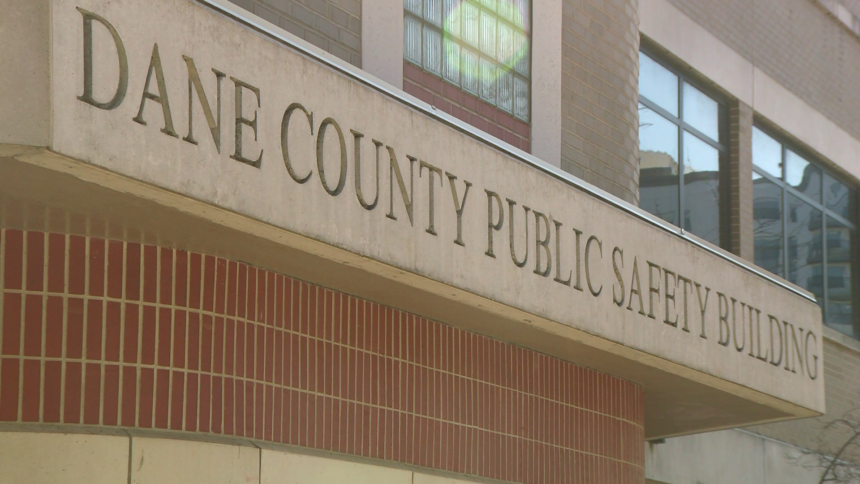
    A public health crisis that was entirely avoidable had elected officials, judges and state department of corrections officials acted proactively to stop the spread of the deadly Covid-19 virus is now underway. After weeks of inaction by the sheriff, there are now myriad folks testing positive for the virus inside the Dane County jail. On Tuesday April 21 it was announced that 16 out of 22 people FROM A SINGLE pod have tested positive for COVID-19 and as a result the Dane County Sheriff has arranged for the National Guard to come into the jail and test everybody.

    In the meantime, there are people who continue to exit and enter the jail, spreading the coronavirus to the broader community, which will result in the deaths of people in our neighborhoods due to the negligence of elected officials, judges, and state Department of Corrections officials. While increased testing being called for by the Sheriff in the jail  is of course needed in order to be able to form cogent public policy to curb the spread of the deadly virus, the need to release people from the jails is imminent and pressing and should not be held off another day. COVID-19 could claim the lives of approximately 100,000 more people across the U.S. than current projections stipulate if jail populations are not dramatically and immediately reduced, according to a new epidemiological model released on April 26 by the ACLU and academic research partners. “The revolving doors of jails make them a tinderbox for COVID-19 spread within our communities.”

    The lives of people in the community are at risk, yet elected officials, judges and Department of Corrections officials continue to drag their feet on what is a no-brainer of a solution – releasing people from the closed quarters of the jail, where social distancing is impossible. And indeed, elected officials, judges and Department of Corrections officials DO have the authority to release people from the jail. The Sheriff can place people on electronic monitoring, the Department of Corrections can release people’s probation/parole holds, the judges can change bails to signature bonds, the District Attorney can drop charges against people, the Dane County Board of Supervisors can reduce the operating budget of the jail, and Governor Evers has the power to commute the sentences of incarcerated people.

    Although the death rate from the virus among the general population is extremely high, due to baked in racism in the systems of our white supremacist patriarchal capitalist society, it is EVEN HIGHER for Black, Indigenous and People of Color, which Dane County consistently, disproportionately, locks up in the Dane County jail. Therefore, it is a life and death proposition when considering whether or not to free people from the jail.

    Folks who are incarcerated are essentially being served a death sentence by leaving them exposed to the virus without the ability to practice life saving social distancing measures and without being provided with sufficient Personal Protective Equipment (PPE). Although the death rate from the virus among the general population is extremely high, due to baked in racism in the systems of our white supremacist patriarchal capitalist society, it is EVEN HIGHER for Black, Indigenous and People of Color, which Dane County consistently, disproportionately, locks up in the Dane County jail. Therefore, it is a life and death proposition when considering whether or not to free people from the jail.

    We have heard that one of the methods that the Sheriff has been utilizing to deal with the virus spreading in the jail is to lock people up in solitary confinement in an attempt to socially isolate them from the rest of the population. Solitary confinement is a form of torture and is considered a human rights abuse by the UN and other international bodies and is an unethical and ineffective tactic to employ during a pandemic.

    Keeping people in close quarter cages during a pandemic is a cruel and unusual punishment, which is protected against in the eighth amendment of the constitution, which the elected officials are apparently ignoring. 

    More than 100 people have died across the countries in the jails and prisons so far, and the number is sure to rise should there continue to be no action taken. 

    The evidence is compelling and undeniable that we must free them all or be responsible for untold deaths. To put the icing on the cake, there is no proof that incarcerating people ACTUALLY reduces crime or violence in society, in fact there is evidence to the contrary, incarcerating people in jails and prisons increases crime and violence so the argument for keeping them in there is non existent.

     Additionally, there is much precedent for freeing people. So far many countries including, Iran, Turkey, Ethiopia, Indonesia, India, Morocco and the UK have freed hundreds of thousands of people from their jails and prisons, recognizing the public health crisis that it poses. California, Washington and Ohio have, or are moving toward, freeing thousands, too, and many cities across the country have also moved to free people.  So tell Sheriff David Mahoney, District Attorney Ismael Ozanne, the judges, the Dane County board of supervisors, the department of corrections and Governor Tony Evers to Free Them All NOW, before their inaction results in untold deaths of our loved ones and community members.

  • We Can’t Just “Bounce Back”

    We Can’t Just “Bounce Back”

    Reopening Requires Science

    An Interview with Dr. Greg Gelembiuk by Dayna Long

    Dr. Gelembiuk is a scientist in Madison. He is also a member of the Community Response Team, which seeks to reduce police use of force and to establish more oversight and accountability over police. He was appointed to the Police Department Policy & Procedure Review Ad Hoc Committee in 2019.

    DL: Folks in Madison might be more familiar with your scientific approach to police accountability and reform than they are with your actual career as a scientist. I was hoping you might tell me a little bit about your background and your work and how it’s prepared you to follow the science around COVID-19?

    GG: I’m a scientist. My doctorate is in Integrative Biology with a minor in Statistics. I worked in virology and oncology for about two decades, predominantly working on DNA tumor viruses. Then subsequently I’ve worked predominantly on evolution and genetics of invasive species. So I’ve got background in a wide variety of areas in the life sciences, including a great deal of background in virology.

    DL: So I have no scientific background, like a lot of people. But at the start of this crisis I was checking the Department of Health Services website and Public Health Madison & Dane County website pretty much every day to look at the numbers. But I realized over time that they didn’t mean that much to me and I so want to hear from you. How useful are those numbers? Should they be taken with a grain of salt and is there something meaningful in those numbers that people can take away from them? 

    GG: They shouldn’t be taken with a grain of salt. However, they also represent a gross underestimate because of undertesting. The actual number of infections is probably roughly an order of magnitude higher than the confirmed number of infections. And undertesting also means that a lot of deaths due to Covid-19 are not being recorded.

    I’ll also mention that I was highly critical of Public Health Madison & Dane County (PHM & DC) at the outset because back in mid-March, they seemed predominantly concerned with reassuring Madison. They had an online poster. The main feature of the poster was a big fat zero, that we had zero cases here, and then accompanying text saying that we were at low risk. This was at a point when I was pressing for immediate enactment of social distancing policies and in my view, PHM & DC was entirely failing to fill its proper role at that point. Any epidemiologist recognized that we were about to be hit and that there probably already was community spread going on here. And yet that was not the messaging that PHM & DC was providing. 

    DL: Have your feelings about folks going to those websites changed at all? Is it useful for me as a person living in Madison to look at the number of cases or the number of deaths every day?

    GG: Deaths are a lagging indicator. If you track the trend of cases that will tell you something. Now again I’ll note that we’re grossly undertesting and constraints on test availability will distort the curve. But still the trajectory of the curve will give you some important information. 

    DL: My understanding as a person following the news was that a lot of people will not even know that they have COVID-19. It seems like a large number of people may not have symptoms at all. But what you’ve been saying is that that’s maybe not the case and that over time more people have had symptoms than was initially reported. What’s your understanding of that picture at this point? 

    GG: With COVID-19, some fraction of people will be true asymptomatics — they’ll never experience symptoms. Now those people may actually have, for example, lung damage if you look with a CT scan, but they won’t be feeling any symptoms yet they’re contributing to transmission. There’s another large segment of people who will be pre-symptomatic, will be transmitting the virus, but will not yet be experiencing symptoms. So for example, the World Health Organization (WHO) noted that looking at numbers from China that people who were tested and were found to be positive and at the time were asymptomatic, about three-quarters of them went on to develop symptoms. 

    The fraction of true asymptomatics who will never develop symptoms is not yet well established. It’s somewhere probably in the range between 7% and 40%. Right now my ballpark guess would be maybe about a quarter (25%). But there are a lot of other people who are pre-symptomatic, so temporarily not experiencing symptoms but then will go on to develop them.  

    The most important take home from all that is that much of the transmission, about half, is from people who, at the time, are not experiencing symptoms. Right now, all of our testing is of people who are experiencing symptoms and usually testing is only available to those who are experiencing severe symptoms. That’s a problem. Because if you don’t test asymptomatics – if you don’t test in a ubiquitous manner – testing all people at pretty high frequency – then you’re not going to be able to suppress the virus. 

    DL: Right, because you can’t track the spread then. That makes sense. 

    GG: Right. There’s some very good public health plans that are coming out. One from Paul Romer, also one from the Rockefeller Foundation, there are good plans for suppressing it with a combination of ubiquitous testing and intensive contact tracing. That’s where we have to go. That’s what South Korea did, very successfully. That’s what we’ve failed to do so far. 

    Now, given how widely it’s spread, there needs to be some kind of technological innovation to be able to test that large a number. That innovation is already well under way. There’s a protocol called SwabSeq that would allow really large, population-scale testing. One lab tech using that protocol could test a thousand samples a day. If you actually use an automated system, like robotic systems, you could test a hundred thousand in a day and that’s just with one machine operated by one tech. I’ve been arguing that this needs to be implemented ASAP and that it would be good to have a pilot program here in Madison. You could test, for example, first responders and healthcare workers since they’re the people who are most likely to transmit if they’re infected, as an initial pilot. It would also be good to include all staff and residents of nursing homes, given their vulnerability. Other methods such as testing using a surface plasmon resonance approach would take slightly longer to work out and deploy at scale, but would allow for cheap, quick testing of everyone with results in only a few minutes.

    DL: Is science also susceptible to pressure by politicians and businesses and their interests? What are some examples you’ve seen of that sort of thing during the COVID-19 crisis? 

    GG: Oh yeah. Science is, unfortunately, susceptible to this. A perfect example is the recent, terrible quality studies that have come out from a group at Stanford. That includes a study of seroprevalence (the level of a pathogen in a population, as measured in blood serum) in Santa Clara County and a study of seroprevalence in Los Angeles County. This group is doing incredibly poor science. If you look at their paper on Santa Clara County, there were simple math errors. There were errors in design, it wasn’t randomized. There were major problems with how they were recruiting people. People who believed they’d been exposed to COVID-19 were much more likely to enter this study. And they lied to recruit test subjects and violated informed consent requirements. Their confidence intervals were just inherently wrong. They were using technology that has not been adequately vetted and that is known to give a high false positive rate. 

    A lot of people seem to misunderstand the logic of epidemiology. The social distancing we’re doing now – all that does is temporarily freezes in place the situation where infection has not swept through the population. That buys us time. It doesn’t resolve the situation. 

    So what they’re putting out is a hot mess. And yet it got a lot of coverage. It got an article in the New York Times where the reporter failed to interview any of the numerous scientists who were pointing out that this study was actually complete trash. [Their study] was widely publicized by conservative media, claiming that Covid-19 was no worse than the flu. Now one of the interesting things I’ll note is that when the same group released the initial tech report that described their Los Angeles study, the place where it was first published was the conservative GOP blog RedState. Now it’s very telling that these scientists chose to first release their publication there. What you’re seeing in some cases like this is far outside the norms of how science is supposed to operate. 

    So you do have a problem with political pressure affecting the science and the public’s understanding of the science. You can see what’s happening with the CDC. I have enormous respect for Dr. Fauci, but you can tell that he has to toe the line to a certain extent and he’s not able to speak entirely freely, to the point where he has had to basically fall on his sword at times. Meanwhile the CDC had been, to a large extent, gutted by the Trump Administration driving out scientists by budget cuts from the current administration. The quality of the work that the CDC has done recently is far inferior to the quality of the work it’s historically done. So yeah, political pressures can have an enormous impact – an unfortunate impact – on the science. 

    DL: Given the potential for science to be distorted for political means, one of my concerns for myself and for other workers is understanding when it’s actually safe to go back to work, because our priorities, like staying healthy and safe, aren’t the same as our employers’ priorities. We’re already seeing a lot of pressure from the Republican party in our state to reopen. Do you have any advice for folks about evaluating the situation for themselves? What things need to happen before we reach a point where that’s a realistic and safe thing for non-essential workers?

    GG: The only way that that could happen is with a program of ubiquitous testing, intensive contact tracing, and then quarantine. Without that, it’s not going to be safe to go back to work. There’s going to hopefully be a vaccine but the earliest I would expect a vaccine availability is maybe eighteen months. 

    A lot of people seem to misunderstand the logic of epidemiology. The social distancing we’re doing now – all that does is temporarily freezes in place the situation where infection has not swept through the population. That buys us time to do other things like testing, contact tracing, developing better therapy, developing a vaccine. That buys us time. It doesn’t resolve the situation. 

    As soon as social distancing is relaxed, the epidemic which has basically been frozen in place at a lower number, will then again take off in an exponential fashion sweeping through the population. There seems to be this widespread misunderstanding that as numbers have plateaued or if numbers are going down, then you can reopen. From an epidemiological perspective, that is wrong. That makes absolutely no sense. You cannot safely reopen, you cannot safely resume your old practices and your usual work conventions until you’ve really suppressed the virus. 

    Right now the only practical means for doing that in the short term is ubiquitous testing and extensive contact tracing. 

    DL: And we don’t have that in Wisconsin, of course.

    GG: No. In fact, it’s not happening anywhere in the US. It’s not close to happening anywhere in the US. For this to happen properly in the US we will need roughly around thirty million tests done a day. That’s possible with the technology that I was mentioning earlier, with a logistical system set in place to really collect and process the samples. So basically you need a situation where, for example, everybody is spitting in a tube and sending it to a test center and tests are being run on [the samples] and you do that, maybe, every week or so. 

    DL: Have you taken a look at the Badger Bounce Back Plan? What do you think of that? 

    GG: Okay, one – I feel some sympathy for the Evers administration given the pressure they’re under, given that the Republicans are now appealing the Stay At Home order to the State Supreme Court. However, the plan as written is garbage. If you look at the plan it does not follow the logic of epidemiology at all. The gating criteria the state is using to determine if we can begin reopening under the plan is a decrease across a fourteen day period in the number of new cases. That’s insane. 

    If you’re at a very high level and you decrease for fourteen days, you’re still at a very high level off the ground. It’s basically equivalent to someone who jumped out of a plane with a parachute, the parachute has slowed their fall, and then they say, “Oh. For a period of time my fall has been slower so I’ll take the parachute off now.” It’s crazy. 

    You know, another criteria in the plan is that there’s been some progress made on the amount of testing. That means nothing. What does it mean to make some progress on the amount of testing? You do a dozen more tests in a week and that’s criteria for reopening? The plan makes no scientific sense. Any reopening plan should be using the World Health Organization criteria, which are well thought out and fully scientifically defensible.

    I’ll mention one other thing. I’ve written correspondence to Evers office. There’s been no reply. There was a letter that I and ten other scientists from the University of Wisconsin, predominantly professors, wrote to the Governor’s office – and sent it to his Chief of Staff as well as the staff for Mandela Barnes. And there’s been zero reply. Among other things, the letter pointed to what needed to be done with testing and also suggested that Evers administration should tap scientists, including UW scientists, to set up a scientific advisory panel, which is really needed, especially if you look at the Badger Bounce Back Plan. 

    I feel sympathy for Evers and want to see substantial support for Evers given the pressure from Republicans. But the only way to deal with this properly is to actually follow the science. 

    DL: What developments in the science around COVID-19 are you looking for? Are there sources that you feel good about that lay people could also follow along with? 

    GG: Scientific developments that I’m looking at: improvements in therapies; progress on potential vaccines, though again, that won’t come out for a very long time; looking at improvements in modeling that can provide more accurate projections. Clinically, improvements in testing methodologies, new developments in serology testing. Those are a few of the things that I’m tracking and that people should keep an eye out for. 

    There are a lot of good sources out there. I would recommend people follow Carl T Bergstrom on Twitter. He’s often got very good analysis. And there are a lot of other scientists on Twitter who are providing good, meaningful analysis: Natalie Dean, Jennifer Nuzzo, Eric Topol, and Mark Lipsitch are some examples. As far as online magazines, the journal Nature is good; Science Magazine is good. There’s a lot of stuff that people can access that really can speak to a mass audience and that provide good analysis and helps people understand what’s going on. 

    Carl Bergstrom especially cuts through the bullshit. And there’s a lot of bullshit out there right now. Like the IHME model, for example, is trash. Yet that has been treated as the most influential model in the US. But it’s fundamentally flawed, it’s not really an epidemiological model at all. It’s based on assumptions that are known to be totally incorrect. Its predictions – on expected number of deaths, on dates to expect peaks, etc. – have consistently been very wrong in both the U.S. and other nations. No-one should be using or referencing it. And Bergstrom has provided very trenchant analysis of the flaws in that model, as well as analysis of a lot of other relevant science.


    Red Madison is grateful to Dr. Gelembiuk for his contributions and encourages more scientists and healthcare professionals to share their knowledge about COVID-19 and help workers navigate pressure to reopen in unsafe conditions. If you are interested in sharing your perspective with Red Madison, you can send us an email at redmadison (at) googlegroups (dot) com.

  • “I’ve Been Trying to Vote All Year”: Wisconsin’s Diseased Democracy

    “I’ve Been Trying to Vote All Year”: Wisconsin’s Diseased Democracy

    A first person account by Mia Noel, with questions from Dayna Long


    DL: Can you share a little bit about yourself? How long have you lived in Milwaukee and what do you do for work?

    MN: I moved to Milwaukee when I was five and aside from college and a short time in North Carolina, have lived here since, so about 30 years. I manage a health education program for youth that are 11-19 years old. Thankfully, I still have my job, so I am working full-time through this pandemic.

    DL: Tell me about your experience trying to vote in this Spring election from start to finish. When did you first try to get a hold of a ballot and how long did you ultimately spend waiting at the polls to vote in person? Any other challenges when it came to voting this year? 

    MN: Spring Election like today, April 7th? Because the whole year has been a farce. Wisconsin removed 200,000 voters from the rolls in January. I received a letter saying I was probably removed from the registered voters list. I re-registered online in January and my polling location moved. 

    On February 18th, the Spring Primary, I went to the website to check my polling location since it was my first time going there and the website was down. It crashed on election day. I shared a pic online and said “This does not bode well for electoral politics in 2020.” 

    For the April 7th election, I knew enough to ask for an absentee ballot back in the middle of March. It never came. Last week, Gov. Evers asked the legislature to meet and move the election, they did nothing so on Sunday, April 5th, I went to try to vote in the early voting drive-up option downtown. The line was 8 blocks long at 3 pm and voting closed at 5 pm. It was crawling along. I took a video to try and show people what was happening and left. I could have stayed but it would have been hours and I hoped Speaker Vos and Senator Fitzgerald would make an ethical decision, that somehow the election would be moved. 

    On Monday, April 6th, when Gov. Evers asked that the election be moved to June, I was so ridiculously relieved that finally something sensible was happening. Then the WI court met VIRTUALLY to decide that the election should continue. In one day, we went from a reasonable election date to needing to scramble to make a plan to vote “safely” (whatever that means) in the middle of a pandemic. 

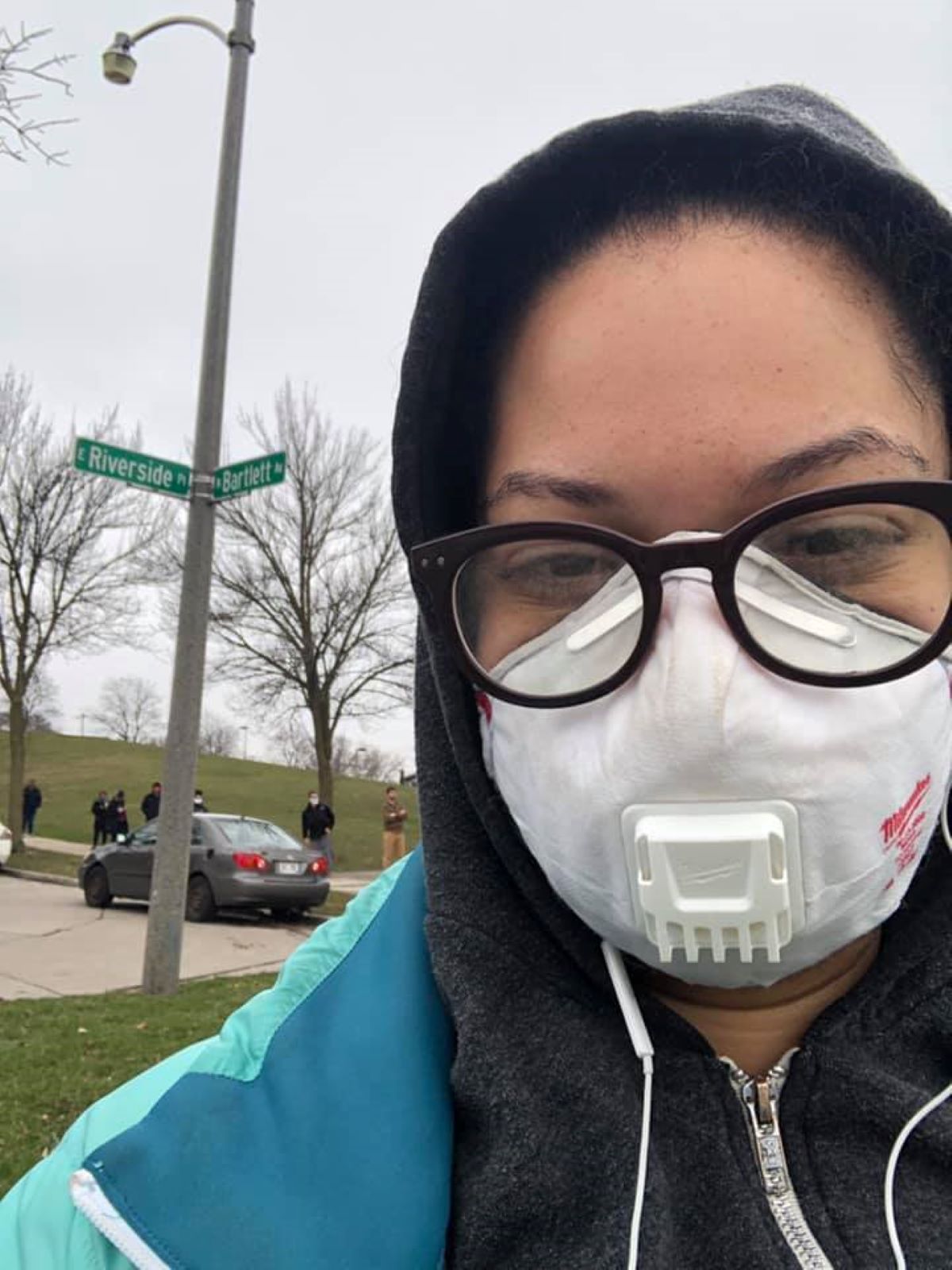
    My partner and I argued about this, actually we are still arguing about this. Aside from grocery shopping for family and friends and walks, I have stayed home since March 13th. Going out in public around hundreds of people was not an easy decision. But even if I hadn’t voted, I would have gone to the polling location to see just how little this state cares about its people. 

    I wore a mask and some gloves. I wore clothes I could easily take off and wash when I got home. I got up early and tried to be one of the first in line. I got there a little after 7am, polls opened at 7. I had to find parking and walk to the end of the line, by the time I got there, the line was 6 blocks long. Everyone standing 6 feet apart. It was absurd. Most wearing masks, or some sort of scarf or fabric over their faces, gloves, all trying to keep themselves and others safe. I waited in line for about 3 hours. It moved really slowly at first. I saw a family carry a collapsible chair so that an older person in their group could sit sometimes. 

    Someone was playing music for us across the street from the park, which I appreciated so much. Poll workers and volunteers came down the line, checking that people were in the right location, that they knew their ward, that they had their own individual pens and masks. Everyone was pleasant and I made sure to tell them all thank you but overall it felt tense. I just was so mad and hopeless about the whole situation. 

    This isn’t brave, this isn’t what democracy is. This is unconscionable. This is an abomination. This is never what democracy should be.

    Once I got to the front of the line, we entered the gym and the line moved much faster. There was obviously a system in place. You stood on an x so you kept 6 ft apart, the workers were efficient, and everything got wiped down between voters. I was probably inside the gym for less than 30 minutes. I tried to let everyone know on Facebook what was happening, I shared pictures and videos. I didn’t want to pressure folks to vote, it’s a risk going out in public today and lots of people could not take that risk. I didn’t want to discourage them either, but I did want them to know what was happening. 

    When I got home I was even angrier. Some folks wrote to me about being brave, this person went down the line at the polls shouting “This is what democracy looks like!” and I was just livid. This isn’t brave, this isn’t what democracy is. This is unconscionable. This is an abomination. This is never what democracy should be. Thousands of voters are being systematically disenfranchised and the ones that voted in person today risked their health and the health of their families, neighbors, roommates, friends. Wisconsin risked extending this health crisis for weeks longer, politicians risked a spike in cases after this, they risked the lives of very real people. I had to weigh risk for myself, but I should have never been in that position. 

    You know, this morning before I left the house, before all of that,  I checked the mail, I was still hoping my absentee ballot would come.

    DL: What was the scene at your polling place this morning? How many people and who did you see? 

    MN: I saw folks with canes walk blocks to vote. I saw plenty of older people out that I would have wanted to be safe at home. I saw an older black couple wait patiently in line with me for all three hours.  I saw young people with bandanas covering their faces, and people with scarves wrapped around their mouth. I saw folks come to the line and then realize how far back it went and get encouragement from others who had been waiting for a while.

    DL: Wisconsin is one of the worst states in the entire country when it comes to racism and racial disparities. How does the state’s decision to hold an in-person election in the middle of a pandemic play into that status and into the history of racist voter suppression in the US generally?

    MN: Wisconsin’s history of voter suppression didn’t start today, or this year and it probably won’t end here either. The clearly biased and partisan redistricting of WI has been going on for years. This travesty of an election highlighted major disparities across the state. I heard that other cities were able to have all drive-up locations. Madison had 62 of their normal 90 polling locations. New Berlin, WI, a city of not even 40,000 mostly white people, had 7 locations open today. 

    Milwaukee has almost 600,000 people, majority people of color, and there were 5 polling locations open today. That’s thousands of people congregating and filing through a handful of locations.

    Wisconsin effectively chose to put hundreds of thousands of people at risk of contracting Covid-19, threatening to overwhelm our already under prepared healthcare system. They are risking these lives because they don’t value them. 

    Additionally, now that Covid-19 is hitting the US, we are seeing the disproportionate impact its having on African-Americans. In Milwaukee,  “African Americans have accounted for nearly half of the more than 1,300 confirmed COVID-19 cases in Milwaukee County, while making up about 27% of the county’s population.” Covid-19 is merely highlighting the various inequities that leave a population more vulnerable. The North side of Milwaukee, which has a high concentration of African-Americans, due to a history of redlining in this city and the surrounding wealthier suburbs, has seen a concerted reduction in healthcare access over the last decades while less populous areas have increased their clinics. Many folks don’t have access to a primary care doctor or regular healthcare and health insurance, which means their underlying health conditions go untreated or unaddressed. 

    Also, staying at home is a privilege. Most low wage workers can’t just stay at home and without financial resources they have to continue working and traveling to jobs that endanger them. Buses have reduced services meaning folks are going to be closer together. No one has received stimulus checks, rent was due, as usual, on April 1st. People need to be able to feed their families and not put their housing at risk in order to stay safely at home. 

    And then on top of all that to hold an election when every other state decided that public health was more important than holding the election on the original dates??! Wisconsin effectively chose to put hundreds of thousands of people at risk of contracting Covid-19, threatening to overwhelm our already under prepared healthcare system. They are risking these lives because they don’t value them. 

    DL: What went into your decision to participate in the election? How did you make your decision and why was it important to you to cast a ballot?

    MN: I’ve been trying to vote all year and at every turn it’s been awful. I vote in every election. I argued with others about going to the polls and up until the time I left, I debated with myself about going. Whether or not it was worth putting my health at risk. 

    I have taken staying at home very seriously. Other than three trips to the grocery store, I haven’t been in an indoor public place since March 13th. No restaurants, no in-person hanging out, I haven’t seen my Mom closer than 6 feet away this whole time. That’s going on four weeks. This wasn’t an easy choice, it’s just all the choices were shitty choices. I tried absentee voting. I gave up on drive-up early voting, (which in retrospect was probably a mistake but I was hoping the election would be canceled.) 

    I went today because I could, because I live alone and I have a healthy immune system and I have a job that I could start at 10 am after spending three hours in line. I wanted to vote for local initiatives, Marsy’s Law was misleadingly worded and I worry people didn’t understand it. Extra funding for Milwaukee Public Schools was on the ballot. The County Executive race and Mayoral race were on the ballot. And honestly fuck Biden. Despite all the chicanery of the DNC, I wanted to vote for Bernie. 

    Voting isn’t the end all be all. I’m not mad at the folks that didn’t go. I’m mad at Speaker Vos and Senator Fitzgerald and Justices Roggensack, Hagedorn, Rebecca Bradley and Ziegler. I’m mad that the US in general failed to prepare for Covid-19 and my community is at risk. Politicians fail us all the time. I voted for Gov. Evers and it didn’t help. Voting is one piece of making people accountable, of identifying gaps and needs and problems, you have to continue after you leave the polls too.

  • Madison-Area COVID-19: Fast Facts and Resources

    Madison-Area COVID-19: Fast Facts and Resources

    Updates about the spread of COVID-19 in our community, the news stories about how it’s affecting Madison, Dane County, and Wisconsin, and information about how to help the situation come at us hard and fast every day. We’ve pulled together key resources and news about how COVID-19 is affecting our civic lives in Madison, and will update the page daily with new data about its spread in Wisconsin. A document with more in-depth news updates and available resources is available here.

    Note: County and State data may not match due to being collected separately, and not shared and updated simultaneously.

    Data as of December 7

    Dane County Data Dashboard

    • Total cases in Dane County: 29,123
    • Total deaths in Dane County: 103
    • Total tests administered in Dane County: 688,581

    Wisconsin COVID-19 Data Dashboard

    • Total cases in Wisconsin: 412,177
    • Total deaths in Wisconsin: 3,719
    • Total tests administered in Wisconsin: 2,608,899

    COVID-19 Planning infographic with demographic information

    News

    Mutual Aid & Relief Efforts