Tag: feat-spring 2021

  • Max Prestigiacomo’s tumultuous year on the Madison Common Council

    Max Prestigiacomo’s tumultuous year on the Madison Common Council

    Interview by K Locher

    The now-former District 8 Alder reflects on his time in office.

    This story was produced in partnership with Red Madison/Tone Madison

    Following a year of protests against police violence, the Spring 2021 elections were a mixed fortune for leftists on the Madison Common Council. Two of the most vocal members of the Council’s left flank departed: District 8 Alder Max Prestigiacomo, who stepped aside to make way for Juliana Bennett’s successful run for the seat, and District 18 Alder Rebecca Kemble, who lost her re-election bid to challenger Charles Myadze. 

    Prestigiacomo had a brief but memorable tenure on the Common Council. He was sworn in in April 2020 to serve the remainder of former Alder Avra Reddy’s term. At the time he took office, the Madison native was a freshman at UW-Madison with a background in youth climate activism. Over the following year he showed an uncommon willingness to criticize fellow Alders and the Council as a whole, took the lead on an unsuccessful attempt to bar the Madison Police Department from using tear gas, and criticized UW-Madison administrators’ response to the COVID-19 pandemic. Prestigiacomo talked with me recently about the challenges of balancing movement building and mental health in office, as well as the challenges of getting city government to acknowledge the complexity of harms in our community. (Note: This interview was edited for clarity and length.)

    Karl Locher  

    Could you talk about how you decided to run for Alder, to start with?

    Max Prestigiacomo  

    Yes, I feel like my understanding of why I ran probably changed a little bit. I would say that, for me, the specific reason I ran was because I considered myself a socialist, a leftist. Completely ignoring the broader political context of how successful leftism can be in electoralism, I saw that District 8 specifically… we have this unique district, that’s just students. Everyone’s always like, “it’s the radical district.” And that was not true. In fact, it was probably the farthest from it. We probably had neoliberal representation for 10, 15 years. The last leftist that we had, I would say, and I confirmed this, was Austin King [who represented the district from 2003 to 2007]. Still, I wouldn’t even consider him the abolitionists that I think like, Juliana, Brandi Grayson, or some other people are. 

    But yeah, I ran because I saw that I had privilege in having grown up in Madison, and knowing all the right people and lots of people in relationships that I had formed. And you know, it was a one-year term, I thought it was a perfect opportunity for someone like me to go in and shift the dynamics in District 8, so that we actually had a guaranteed leftist seat. And I didn’t really care about my reputation or whatever they would call it. That was it for me, was that there was a severe lack in representation for communities that are always plowed over by UW administration, city council leadership, the mayor, state, whatever it is.

    Karl Locher  

    What was the political landscape like going into your term?

    Max Prestigiacomo 

    So obviously, I’m coming in halfway through… I’ll just be honest, and I feel like I need to make the point more to talk about how I have made mistakes. Like I said, I was learning everything. I was trying to be as deliberate as possible to, like, actually reduce harm. On the other side, I’m continuously learning things. And I’m blindsided probably every other week by something I didn’t know about…no one really took it upon themselves to mentor me the way I would have appreciated. It was a difficult time to come on, with everything that happened. And I think that Rebecca] and [District 15 Alder] Grant [Foster] served as good anchors for me to ground myself in some moral center.  

    Karl Locher

    I wonder if you’d be willing to expand on that a little bit. It sounds like there might be mistakes in the sense of, week-to-week or every-other-week you’re blindsided by something. But thinking back a little bit, what were some of the things that you felt like, in your approach to the office, you would have done differently?

    Max Prestigiacomo  

    Oh, gosh, I think, obviously, the elephant in the room is that there are just so many procedures, background understanding, all the moving parts that, like, even [longtime DIstrict 4 Alder] Mike Verveer still doesn’t understand. There’s an ongoing joke that only Mike Verveer and [former District 5 Alder] Shiva Bidar would understand how to actually make amendments to the capital budget. In that sense, I’ve just learned so much since then, that if I went back, I probably would have used parliamentary procedure differently. I would have known when the city attorneys were cheating me out of getting something on the agenda. [They were] lying to me and putting me at a disadvantage. I think I really appreciate that I’ve had the experience, even if it was just one year and I never went into a city building because it’s all remote. There are times where I feel like I’ve gotten caught up in focusing on a problem—that the movement in the street supports—but then there’s always so many moving parts, just to understand something, to get it done. 

    And then obviously, I’m also a student. I do have to do my schoolwork and burnout is real. So I think probably the one thing I would have gone back and changed would be my own mental health, like how I approached working. Because I feel like I did burn out quite quickly because of the workload of COVID and just everything. There’s lots of different mistakes. I’ll call them mistakes because I feel like politicians are always lying [and] saying they don’t make mistakes—vulnerable obviously isn’t something politicians like to be.

    Karl Locher 

    Whether it’s COVID or not, if you’re working full time and you’re trying to be on city council—it is a full time job to be an alder—you have to figure out how you can take care of yourself while also doing that job.

    Max Prestigiacomo  

    Yeah. And that was something also no one really talked about with me. Obviously, I knew it. As an activist and organizer I knew how important mental health and all that stuff was. But it’s so stripped of personality sometimes, the whole process, and it’s a little bit scary at times. I can admit that. It’s a big thing.

    Karl Locher 

    Yeah, it’s as though it doesn’t look like mental health in the moment, it looks like just more work that you have to get done and a feeling that you should be able to get the work done. And you can doubt yourself when setting a boundary on that, like, “Do I just not know how to work hard enough?”

    Max Prestigiacomo  

    Yeah, oh for real.

    Karl Locher  

    You decided to not run for re-election and I wonder what motivated your decision.

    Max Prestigiacomo  

    It’s my duty, like in the movement as a whole, to mentor and train someone. I tried to communicate that as well to some of my colleagues, some of them obviously ran again. I think, obviously, having Rebecca run was something I ended up supporting because of her opponent. But, in a lot of other cases, [District 2 Alder] Patrick Heck, white alders decided to run again, even though they were preaching equity. So I also felt like it was a little bit hypocritical to have me even pursue that route. And it just says something that it dawned upon me, but no one else.  

    Karl Locher  

    There were two people who were running in District 8 who both supported defunding the police, and really seemed to shift the politics of the district. Did this election reflect changes in the politics of students at UW?

    Max Prestigiacomo  

    I almost feel like this constituency has always been there. But obviously activating that takes a candidate [people will want to vote for]. Maybe these people aren’t, ideology-wise, saying “I’m a socialist,” but they are, in terms of the broader sense, like, “Fuck the system.” We’ve all been manipulated by it as young people. I want people in there that’ll shake some things up. 

    Karl Locher  

    Is there an opportunity for something different to come out of electoral politics for students in Madison? You mentioned that Associated Students of Madison, UW-Madison’s student government body, has changed in the last year, certainly the alder seat has changed. And yet a lot of students vote absentee in someplace other than Madison. So there’s relatively low turnout in Madison elections for students in District 8.  Do you think that in the future, electoral politics in District 8 is going to look different at all?

    Max Prestigiacomo  

    I think we’ve got our foot in the door. [Low engagement has] obviously been something that’s been in my brain. It’s so much bigger, unfortunately. Like just how young people are raised in schools and how we’re so often dismissed as not being smart enough to have a valued opinion. And that even manifests in the District 8 alder seat. Like, obviously, we have a guaranteed spot for young people. And like I think a lot of politicians have accepted that. Whereas other cities, you wouldn’t have that. They would be like, “Oh, a young person on the county board? No, we need experienced people.” Here, I think that we’ve accepted that in some sense, but every person on the council has their own idea of like, what I should be, or what should the District 8 Alder be in their own definition. There’s all these systemic issues pushing back. 

    I’m obviously not leaving campus. I’m still in ASM. As we start to build more coalitions and student power, I think we will start to see reduced harm for communities on campus that have just been left out at every step of the way. But in another sense, I think we have something very unique. I am always talking about how we need self-determination for communities. It’s absurd that, like I just said, white people are having opinions on what impacts the black community. I really do think that District 8, what’s happening on campus, can serve as a model for how the Common Council moves forward as a whole. I think that the District 8 Alder seat is a perfect example of how we can have guaranteed representation for communities. Obviously, not every community lives in one physical space. But right now we have that. And we seem like… when there is a voting bloc like that, we can guarantee ourselves a young person at the table. 

    Obviously, it hasn’t benefited everyone. But we have such great bus service, like in certain areas, like we want to have free bus pass for all students, so you can negotiate with the city. And there’s lots of other examples where we’ve gotten some concessions here and there. But obviously, those are benefits for mostly affluent, privileged people, because there are worse problems that are impacting people on campus. If we want to get somewhere in terms of the dynamics between students on campus and all that, we’ll need some systemic push from, you know, whatever power it be. But I just think that we do have a great opportunity to show the city how this has been working, and how we plan to push forward. 

    Someone like Juliana isn’t going to be quiet, is going to be unapologetic about speaking truth to people like the mayor and some of her colleagues. And so far I’ve seen some really great stuff. She’s ready to go to bat for us.

    Karl Locher   

    Are there things where you look at the last year and feel like either they were successes or things that you were proud of? 

    Max Prestigiacomo  

    Yeah, I do think that, overall, I was able to contribute in certain ways. I was proud that we were able to pass something as simple as banning facial recognition, which is why—I didn’t realize part of me was like, why am I doing this? Why was this not done before? You know, it’s a lot of that stuff. I think I was very focused on the campus community coalition and all of that stuff. We helped put together a neighbor association. [UW administrators] do not like it when elected officials come to talk to them. And they were not used to the District 8 Alder specifically speaking up. All my predecessors, they all told me, like, “We don’t really talk about UW, it doesn’t really involve us.” But I have a campus platform, so I use that. 

    I just learned so much about how personal relationships—just relationships as a whole—how that is the process, that is the system. Like how as an Alder, like having to have a relationship with my colleague will influence me in some way. And a lot of times that means it becomes about my own personal uncomfortability or comfortability. So yeah, I think the proudest thing for me is, I was able to kind of put together and map out how uncomfortable votes, what could happen, and how that should play out. We need to be thinking [about] uncomfortable votes, even if that means white people, privileged people sacrificing their definition of safety. Because the other thing I’ve seen too often is how the system… likely, you know, usually the police… will create excuses, that will very likely seem legitimate to everyone on the council. Even if they’re not experts on the topic, they would be like, “Oh, we’re gonna have this much shooting, we’re predicting this much increase in crime if this many cops are taken away.” I’m just so thankful that I had the opportunity to witness that. And now I won’t be wasting time like I was before talking about things that I feel like didn’t really have an input. 

    Karl Locher  

    Talking about the nature of influence: In city politics, there’s a lot of that which is interconnected between the Alders and the relationships with each other. Outside of the Council itself, I’m curious what you see as being the most influential political or community groups or interest groups. Who seemed to have the greatest influence on the politics of the Council?

    Max Prestigiacomo  

    I get asked iterations of that question…and I don’t know if I have a perfect answer, but I think that is a combination of—I’m just gonna label it. I’m gonna label it “property.” Technically everyone is on equal footing when you are emailing or testifying. But I think there’s this skew on the Council, that there is higher value in places like the East Towne Mall, when we’re having a discussion on the homeless shelter. Or like campus neighborhood associations, which are usually run—obviously a privilege, you have to be privileged to get involved, like that’s a non-starter—run by those types of people. Usually, overvaluing NIMBYism and undervaluing the other side—which isn’t even there! Like, unhoused people aren’t coming to testify. There is no opposite to that. Obviously, we are having  people, activists, movements come and testify. But a lot of times too, the most impacted people are not there. 

    So I just think that property at the end of the day always wins out…businesses bring jobs and jobs are human lives. You know, that kind of stuff. Property value means businesses will want to come here and provide good jobs. I’ve rarely heard people say, “screw all that.” What brings people here is quality of life and having housing for all and all that stuff and, you know, abolishing the police so that we actually have street medics and CAHOOTS.  

    Karl Locher  

    Your thinking is that it’s not necessarily one core set of groups, but there’s such an ingrained attitude.  For example, you’re talking about the way the police would say, “Well, if we cut this many positions, crime will go up by such and such an amount.” And when you’re talking about predicting the future, it’s completely an assumption. 

    Max Prestigiacomo  

    Oh, yeah. Arbitrary.

    Karl Locher  

    It’s just a guess. And the same thing happens with jobs. We assume that “better” businesses will bring “better” jobs. What’s not articulated is that “better,” means that mostly White people will come to town. And so that way of thinking about it, and people’s self-interest in wanting to maintain the property they have, is really the sort of influence that is hard to break.

    Max Prestigiacomo  

    It is. It takes more than just one or two Alders. We tried, though.

    Karl Locher  

    So where does that leave leftists? You’re doing movement building through the office.  For example, giving resources and knowledge so that people can continue it on. But what do you think leftists in Madison—whether in District 8 or otherwise—what do we need to be doing to make bigger changes?

    Max Prestigiacomo  

    Yeah, um, got me with that question. I mean, one thing for me is—I mean, I just talked about it—we have all these leftists that want to support someone who they believe in, who they believe will change the system. I just can’t figure it out. I still haven’t. 

    I’m from the west side. A lot of west-side leftist youth were able to elect this former student, recent graduate, to the Middleton Cross Plains school board [Simrnjit Seerha]. And the biggest issue was SROs. And we got her elected. And they were endorsed by the Working Families Party. So we thought we really had a good leftist anchor, at least over where there was no leftist at all. I just point to this because it’s a very recent example. The last meeting, which was last week, this person voted to renew the SRO contract. And so, I am constantly seeing examples of that.

    I’ll just be honest, I think that federal electoralism, state electoralism [is a] lost cause. I’ve always just believed that the important decisions should happen at the local level. I mean, I talked about self-determination for communities. I think we’ve seen examples of how this is the way to go ahead, especially with our climate deadline. And I just think that District 8 is for me, like my focus for now. Because I think that’ll probably lead me somewhere to an understanding of how we can get another district in. 

    I think that groups like DSA, any leftist organization, whatever you want to call yourself, the small district coalitions, community building, hopefully can lead us somewhere. Especially because I, like so many other people, hate electoralism… you know, it is really frustrating. So, hopefully, Juliana too will be another person that joined me and, you know, she’s obviously learning a lot, too. And we do have a few other people. I’ve been pleasantly surprised with [newly elected District 10 Alder] Yannette [Figueroa Cole] on the Common Council. So you know, there’s some hope there. I won’t say I have zero hope.

    Karl Locher  

    You were talking about this earlier on, about the impact of being an Alder on your own mental health. After being an alder for one year, what’s changed for you as a person? 

    Max Prestigiacomo  

    Yeah. So I mean, I alluded to it, but I’ve really realized the importance of relationships, just in non-political spaces as well… I think when I came into elected office, I was like, “I’m not going to talk to people who are pro-cop.” Like, I was just like, “I’m going to tell them to shut the fuck up and leave me alone.” 

    I think I’ve in some ways figured out how to navigate that, as someone who is a person, a human, a part of the community, not a perfect person. And sometimes engaging with people that disagree with me. Which I obviously did, but I don’t think I’ve had enough time to actually cultivate relationships. And I do think that there is a possibility. I’ve seen it happen. I think maybe I was able to do it sometimes, but convincing some of these swing votes. Like for leftists—especially for leftists, with lived experience—which I obviously didn’t have at some times, I do think that that’s something that can be done. Obviously, I don’t like the idea of having politicians that are not for the people. But if we can elect people that can actually engage in some of these relationships without letting that relationship hold them back, it’s really powerful. 

    Karl Locher  

    What should be the focus of attention for city politics? How should we try and influence them?

    Max Prestigiacomo  

    Yeah, obviously the big one I will always say, the first step for everyone should be our focus, at least right now: mutual aid. And it’s likely that once we start seeing more climate disasters, that’ll also be another huge need. It’s unfortunate that we don’t have many, like, citizen-led mechanisms, like a petition to get a referendum on the ballot or something like that thanks to state law.

    Recognizing that electoralism does kind of exist outside of reality at times, if we have opportunities like District 8, like District 4, and District 2, Nada [Elmikashfi]’s campaign [for State Senate District 26 in 2020] is a great example too, just going all in on like, all the accessibility and digital stuff and adapting to the new mediums. Run young people, and get young people on your campaigns, because they will win elections. And it’s annoying, because a lot of these neoliberal alders take campus leaders and be like, “You’re my campaign manager.” And I’m always annoyed that they took time from these young people who could have been put into some other leftist campaign. But I do think that we have some new tools that can help, especially with people waking up. Affluent, white privileged people waking up to the reality that so many people have faced for so long. So I hope that once more young people are entering in this really scary time, you know, we don’t know if they will be entering anything, but jobs, whatever it be, community organizations, that we get more background that can, you know, aid… digital stuff, all that stuff can really help.

    Karl Locher  

    Any other thoughts that you have, as you’re leaving your time on the Common Council?

    Max Prestigiacomo  

    I’ve just been thinking about this a lot too, while we’re talking. Just the power dynamics of it all? And how myself—I, Max Prestagiacomo – am a part of the problem. I think it’s—no one understands it. [Mayor] Satya [Rhodes-Conway], especially, we saw over the summer. 

    I am a leader in the city, or sorry, I was a leader in the city. But like that is something that, like, we hold all the cards. The balance has always tipped in our favor. I will always continuously benefit from it. I can be a part of the solution, but I can also contribute to the problem at the same time. And just that is something that I’m so surprised that, like, no one understood it. They just kind of see it as very rigid, like yes or no, binary. I support you or I don’t. And I wish that was talked about more. That we can have people like me who can be a part of the problem. And that doesn’t necessarily mean I’m cancelled. Like, you know, people automatically take that as “I can’t be vulnerable.” Like I said, politicians aren’t vulnerable. It’s just a huge thing.  Everyone has a difficult time admitting they were wrong. I think that’s one side of it. 

    And I would say it’s hard to admit now, when protests are on the streets. I recognize that. I had to go through that myself. But it needs to be done. And then I think on the other side of it is… you know, we have a city that… we have contracts with Porchlight, and some of these other groups that help unhoused people. [At] the same time, we are taking people out of parks. Right? Actually, I feel like a better example would probably be with police… maybe a police officer did like help someone… but that Matt Kenny is still on the force. And can you think about… what goes through someone’s mind when they know that Matt Kenny is on the force training people? 

    So I don’t know why it is that difficult sometimes. It wasn’t for me, maybe I could have done a better job admitting that I was part of the problem, and be open about that. Maybe it would have helped them change their minds. But I think that’s what I meant by the rigid view is that it has to be either or. And I think that they have an uncomfortable time reckoning with that fact.
  • Forward, Comrades: Red Madison’s new Podcast.

    Forward, Comrades: Red Madison’s new Podcast.

    Red Madison is starting a Podcast!

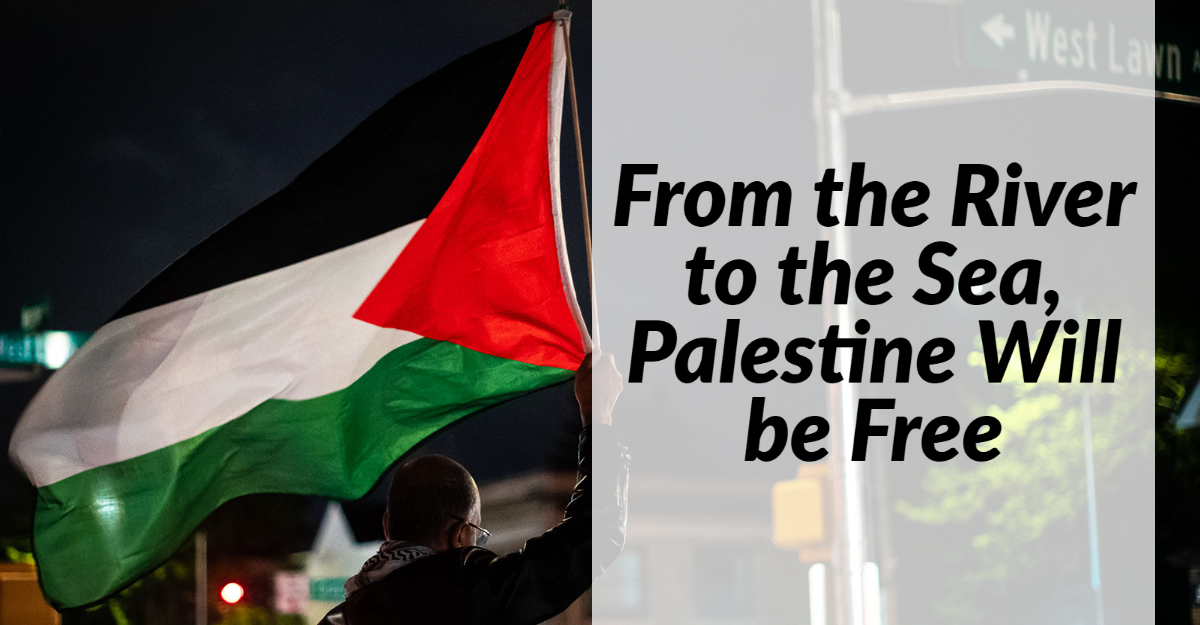
    This week Co-hosts Jen and Tessa introduce the new podcast of the Madison Area DSA, called Forward, Comrades. The episode highlights two speeches given at a Palestine Solidarity Rally by Ashley Hudson and Rowan. Speeches with resource links are posted on Red Madison, From the River to the Sea: Palestine Will Be Free.  Following the speeches is a section of an educational talk given at the late May general membership meeting by Brain Bean. To learn more check out Brain’s book Palestine: A Socialist Perspective (on haymarket books). The podcast closes with a list of upcoming events and a few things to check out around town.

    Listen below or listen here and follow us for the next episode on Podbean! Next episode comes out on 6/23 (Wednesday).

  • A Beginners Guide to Abolition

    A Beginners Guide to Abolition

    Written by the Abolitionist Working Group of the Madison Area Democratic Socialists of America (MADSA)

    For a nation that claims to be the “land of the free,” the U.S. leads the world in some highly depressing statistics. As of 2016, the United States has the highest prison and jail population (about 2 million1, just counting adults) and the highest incarceration rate in the world (655 per 100,000 people)2. As of 2015, there were around 10.35 million people in various forms of incarceration worldwide2. This means that the US holds about 21% of the world’s prisoners, despite only having about 4.4% of the world’s population 3,4. In our own community, there are 10 jails and prisons in Dane County, Wisconsin, serving a population of 522,837 people in an area of 1,197 square miles. There is 1 jail or prison per 52,283 people, and 1 jail or prison per 119 square miles. As of 2015, there were 13,401 total jail admissions, with a total jail population of 7575

    How did we get here?

    Along with incarceration, policing and surveillance are the other arms of the PIC. In America, the police department is the one-stop shop for all property, traffic, mental health, and public safety concerns. Modern police departments in the U.S. can trace their roots to southern slave patrols9. The present-day police department is ruled by racism10, excessive force11, and robbery12. The police face little to no accountability for their actions along with almost no real community oversight13. Between January 1, 2005 and June 24, 2019, 104 law enforcement officers (LEOs) were arrested for murder or manslaughter due to an on-duty shooting. Out of these 104, 35 were convicted of a crime, and only 4 were convicted of a murder charge14. Although 104 officers may sound like a lot, police on average fatally shoot about 1000 people a year15. This means that the vast majority of officers are not held accountable for the harm they cause. 

    Beyond the violence and trauma it creates, a critical component of the PIC is that the system profits off the people it imprisons. As previously stated, the U.S. prison system has grown exponentially in the last 35 years. Unfortunately—and unsurprisingly—politicians and private corporations have seen this growth as an opportunity to profit. The Atlantic described the PIC as the following:

    “It is composed of politicians, both liberal and conservative, who have used the fear of crime to gain votes; impoverished rural areas where prisons have become a cornerstone of economic development; private companies that regard the roughly $35 billion spent each year on corrections not as a burden on American taxpayers but as a lucrative market; and government officials whose fiefdoms have expanded along with the inmate population.”16

    Although there are many causes, a big one is the so-called “War on Drugs.” In the 35 years since the passage of the Anti-Drug Abuse Act of 1986, the United States prison population rose from around 300,000 to more than two million6. On top of this, the prison industrial complex (PIC)* treats people of different races very differently. While Black people make up nearly 40% of the prison population, they only make up 13.4% of the total U.S. population. Native Americans represent 2.3% of the incarcerated population and only 1.3% of the population. 58.7% of the prison population is white, which includes Hispanic Americans7. In 2015, Dane County jail admissions included 9 Asian prisoners, 304 Black prisoners, 46 Latino prisoners, 8 Native prisoners, and 382 white prisoners8. This prison population is not evenly distributed among the general population of Dane County. 

    The PIC has been allowed and encouraged to spiral out of control in the last few decades. Internationally renowned activist Angela Davis tells us that “the prison industrial system materially and morally impoverishes its inhabitants and devours the social wealth needed to address the very problems that have led to spiraling numbers of prisoners.”17 

    With all these glaring issues, a common “liberal” response is to try to reform the criminal justice system. To quote the prominent abolitionist and activist Mariame Kaba, “An institution grounded in the commodification of human beings, through torture and the deprivation of their liberty, cannot be made good.”18 No matter how many reforms are introduced to the PIC, the structural roots that cause the systemic issues will remain. That’s why we as socialists must be abolitionists. We need to challenge the false narrative that policing and prisons make our society safe. They don’t. Instead, they just concentrate the violence among the most marginalized members of our communities. 

    No matter how many reforms are introduced to the PIC, the structural roots that cause the systemic issues will remain. That’s why we as socialists must be abolitionists.

    Why doesn’t the PIC make us safe?

    For one, the PIC often traps people into a cycle of incarceration, driving them into further desperation and poverty. According to the Bureau of Justice, “in a 15 state study, over two-thirds of released prisoners were rearrested within three years.”18 Furthermore, there are commonly-drawn false equivalencies between legality and morality, crime and harm, that stand in the way of real change. We must remember that slavery was legal in the U.S., but it was obviously not moral. To quote Naomi Murakawa, a political scientist and Princeton professor in African-American Studies: 

    “It is clear that the criminal punishment system depends on a superficial view of violence, a facile view of good and evil based on the victim-perpetrator binary**. Simple stories of the perfect victim and the monstrous perpetrator bend reality to fit the pretexts for state violence, helping us to pretend that the physical, social, and civic injuries of prison are somehow justice.”19 

    It is abundantly clear that the current system fails at its stated goal of addressing harm. The PIC is not designed in a way to encourage people to take accountability for their actions. As Mariame Kaba points out, “Instead, our adversarial court system discourages people from ever acknowledging, let alone taking responsibility for, the harm they have caused.”20 

    So what should we do?

    One component that can be difficult to reckon with is that PIC abolition is a long, gradual process. We can’t simply decide to abolish the PIC and make it happen in one day, one month, even one year. Instead, abolition will be brought about by a radical restructuring of society, by deciding to focus on the benefit of people. We accomplish this through increased funding to schools, public works, and healthcare, instead of giving more money to big business, the military, or the police. We accomplish this by addressing harm through transformative justice# and reparations@ instead of state-sanctioned violence. We accomplish this by making sure that each and every person’s needs are met, a radical and effective way of preventing crime. As Angela Davis reminds us, “Rather than try to imagine one single alternative to the existing system of incarceration, we might envision an array of alternatives that will require radical transformations of many aspects of our society”21

    What can I do?

    Many people become overwhelmed when they look at the sheer size and power of the PIC. The most important thing to remember is that you are not alone in feeling this way. It’s always more effective to organize with others. A great first step is to join an organization with which you can perform direct action, like MADSA and many other growing groups such as Freedom Inc., Urban Triage, and JustDane, to name a few. Some local abolition causes that these groups are fighting are include the #DefundMPD campaign, the #DerailTheJail Campaign, and the #FireMattKenny campaigns. These campaigns are based on reducing harm, and ensuring accountability for perpetrators of state violence. In the fight for a better future, donating money and resources to groups on the front lines is always appreciated.

    Another major step you can take is to know your community. If your community is tight, you can solve issues without involving the state, and look out for each other against potential harms. This can start with something as simple as getting to know your neighbors22. Say hello to the people you see walking their dogs or going to the mailbox. Offer to shovel your neighbor’s sidewalk or take in their newspaper if they’re going out of town. Welcome new neighbors with a note and your phone number, and encourage them to reach out to you if they need help with anything. Small gestures like this build trust and solidarity, and can be great first steps to bridging the alienation and individualism that capitalism and the PIC contribute to and need to survive.

    Finally, educate yourself, your family, and your friends on abolition issues and why they’re important. A big holdup for many people is that they’ve been conditioned to assume that the current system is working, and that it is the only option. It’s not working for us, and it’s not the only option. You can find some initial recommendations for further reading in the linked resources  below. Humanity has existed before prisons, and humanity will exist after prisons. We must always remember that a better world is possible and is ours for the taking. 

    Further Reading: 

    Angela Davis: Are Prisons Obsolete? 

    Mariame Kaba: Prison Culture 

    Critical Resistance: Toolkit

    Bitchmedia: Abolition is a love story 

    Key Vocabulary:

    abolition: PIC abolition is a political vision with the goal of eliminating imprisonment, policing, and surveillance and creating lasting alternatives to punishment and imprisonment

    *prison industrial complex: “The prison industrial complex (PIC) is a term we use to describe the overlapping interests of government and industry that use surveillance, policing, and imprisonment as solutions to economic, social and political problems.”23

    **victim-perpetrator binary: “The criminal justice system upholds a distinction between victim and perpetrator. Its job is to identify perpetrators and punish them, partly as reparation to their victims. But these categories are more nuanced than the criminal justice system allows for and perpetrators are often also victims themselves”24

    #transformative justice: “Transformative Justice (TJ) is a political framework and approach for responding to violence, harm and abuse. At its most basic, it seeks to respond to violence without creating more violence and/or engaging in harm reduction to lessen the violence.”25 

    @reparations: Reparations are broadly understood as the compensation given to a person, group, or country to make up for an abuse or injustice. Reparations are given by the entity which caused the harm. In a modern U.S. context, reparations refers to the potential compensation given by the U.S. government to the descendents of enslaved people. 

    Sources:

    1. Correctional Populations in the United States, 2015
    2. World Prison Population List (11th edition)
    3. Population Clock
    4. The World Population Prospects: 2015 Revision 
    5. https://www.countyoffice.org/wi-dane-county-jails-prisons/ 
    6. Alexander, Michelle, The New Jim Crow: Mass Incarceration in the Age of Colorblindness 
    7. https://www.worldatlas.com/articles/incarceration-rates-by-race-ethnicity-and-gender-in-the-u-s.html 
    8. https://www.countyoffice.org/wi-dane-county-jails-prisons/ 
    9. https://lawenforcementmuseum.org/2019/07/10/slave-patrols-an-early-form-of-american-policing/ 
    10. https://www.academia.edu/43920154/The_Use_of_Lethal_Force_by_Police_in_the_USA_Mortality_Metrics_of_Race_and_Disintegration_2015_2019_ 
    11. https://www.nytimes.com/2014/06/09/us/war-gear-flows-to-police-departments.html 
    12. https://www.aclu.org/criminal-law-reform/civil-asset-forfeiture 
    13. https://mappingpoliceviolence.org 
    14. https://www.ojp.gov/pdffiles1/nij/grants/249850.pdf 
    15. https://www.washingtonpost.com/investigations/four-years-in-a-row-police-nationwide-fatally-shoot-nearly-1000-people/2019/02/07/0cb3b098-020f-11e9-9122-82e98f91ee6f_story.html 
    16. https://www.theatlantic.com/magazine/archive/1998/12/the-prison-industrial-complex/304669/ 
    17. https://www.colorlines.com/articles/masked-racism-reflections-prison-industrial-complex 
    18. Bureau of Justice Statistics Reentry Trends in the US: Recidivism 
    19. Murakawa, Naomi, foreword to We Do This ‘Til We Free Us by Mariame Kaba, Haymarket Books, 2021
    20. Kaba, Mariame, We Do This ‘Til We Free Us, Haymarket Books, 2021
    21. https://collectiveliberation.org/wp-content/uploads/2013/01/Are_Prisons_Obsolete_Angela_Davis.pdf 
    22. https://www.bitchmedia.org/article/mariame-kaba-josie-duffy-rice-rethinking-accountability-abolition?utm_medium=email&utm_source=engagingnetworks&utm_campaign=Abolition+Interview+4.16.2021&utm_content=Abolition+Interview+4.16.2021+A 
    23. http://criticalresistance.org/about/not-so-common-language/ 
    24. https://workingchance.org/latest/dismantling-victimperpetrator-binary/ 
    25. https://transformharm.org/transformative-justice-a-brief-description/ 
  • Statement on the Chauvin Trial

    Statement on the Chauvin Trial

    The Abolitionist Working Group of the Madison Area Democratic Socialists of America (MADSA) stands in solidarity with victims of police violence and in rage against the Prison Industrial Complex1 as we process the guilty verdict from the murder trial of Derek Chauvin, the former Minneapolis police officer who killed George Floyd nearly a year ago. While this verdict succeeds in holding Chauvin accountable for the lethal act of violence he committed, it is an anomaly in officer-involved shooting incidents and we must reject claims that it provides justice2. Justice would mean that George Floyd would still be alive.

    Justice would mean that George Floyd would still be alive.

    Justice would mean that Black and brown people could live their lives without the constant fear of being killed by police. American policing, known globally for its racist terror and violence, is incompatible with justice. If we consider the history of police in the U.S., this becomes even more clear. Modern policing can be traced back to slave patrols created in the seventeenth century to enforce slave codes, the laws explicitly designed to control and subjugate enslaved people3. Throughout the next few centuries, these laws have taken new forms – Black Codes, Jim Crow, Stop and Frisk, etc. – and the former slave patrols morphed into a system of policing and mass incarceration intended to protect property and capital while disproportionately criminalizing Black and brown people. With this history in mind, it is clear that convicting Derek Chauvin of murder does not provide justice. Justice looks like abolishing the Prison Industrial Complex. A system built with incentives to incarcerate Black and Indigenous peoples is not a system worth preserving or defending.

    George Floyd’s murder is just one example of systemic police brutality, yet as of this writing, U.S. police officers have killed 352 people in 20214. Since Derek Chauvin’s trial began on March 29, police have killed at least 64 people5 and perpetuated an untold, unrecorded amount of trauma on the communities they interact with each day. By no means is Chauvin the exception, nor is he just a “bad apple” cop. 

    Here in Madison, a so-called “progressive” city, the police continue to use excessive force and  perpetuate racism and classism with absolute impunity. In March of 2015, Madison police officer Matt Kenny shot and killed 19-year-old Tony Robinson. Despite widespread protests and calls for accountability, Matt Kenny faced no charges and is still employed by the Madison Police Department (training new officers, no less) more than six years later. The only action Robinson’s family could take was through civil court and they received a $3.35 million settlement from the city of Madison.  . Madison police officers have killed two additional people, Paul Heenan and Ashley DiPiazza, in the last ten years. Settlements pass off the cost of police brutality onto taxpayers, without providing real accountability for the violence taking place at the hands of police or the trauma experienced by victims and their families and communities. 

    These three incidents have cost taxpayers nearly $13 million in settlements and have increased the cost of the city’s insurance.6 Worst of all, MPD has not admitted to any wrongdoing in any of these cases. The Dane County District Attorney, Ismael Ozanne, declined to charge the officers involved in all three cases, to the disappointment and outrage of the greater community. Instead of seeking to address the systemic issues that led to these shootings, the city has continued to increase MPD’s budget. From 2015 to 2020, MPD’s operating budget increased by $18.5 million, a 27.1% increase that mostly provided for increased salaries and benefits.7 Why does our city reward its most dysfunctional (and deadly) department with an ever-increasing budget? 

    We recognize Chauvin’s indictment would not have been possible if it was not for the mass mobilization of the Black Lives Matter uprising.

    In a similarly outrageous use of taxpayer dollars, the Dane County Board of Supervisors have pushed through an expensive project to build a new Dane County Jail8. Despite widespread opposition from community leaders, incarcerated and formerly incarcerated people, and other county residents, the Board continues to increase funding for this project, which has exploded from $135 million in 2017 to $220 million in 2019. This project exemplifies the city’s unwillingness to confront systemic issues at the root. Instead of investing in community services to reduce poverty and cycles of harm, which would ultimately reduce the need for space in the existing jail, the Board is using our money to build new cages for MPD to fill with people. Many of the people in the Dane County Jail have not yet faced trial and are being held simply because they couldn’t afford to pay cash bail, despite the fact that they are presumed innocent. And as one might expect, the racial wealth gap and segregation here in Dane County means that disproportionate numbers of Black people occupy the existing jail. A new jail will only serve to increase these disparities and perpetuate cycles of harm in our communities8.

    We recognize Chauvin’s indictment would not have been possible if it was not for the mass mobilization of the Black Lives Matter uprising. It is important to acknowledge that the rights that Black and brown people, women, workers, LGBTQ+, Indigenous people, and immigrants have today were marched and fought for in the streets, courts, city halls, and in Congress. Rights are wrested from the powerful through civil disobedience, not freely bestowed by a benevolent state. The movement for Black lives is a continuation of the struggle towards greater liberation and a truly just society. 

    Abolition is a queer Black feminist vision, and as such we call on our comrades to support Freedom Inc, who have requested that Madison residents take the following actions:

    In solidarity,

    The Abolitionist Working Group of MADSA

    Footnotes:

    1. http://criticalresistance.org/about/not-so-common-language/ 
    2. http://bostonreview.net/race/michael-brenes-police-reform-doesnt-work 
    3. https://www.americanbar.org/groups/crsj/publications/human_rights_magazine_home/civil-rights-reimagining-policing/how-you-start-is-how-you-finish/ 
    4. https://mappingpoliceviolence.org/ 
    5. https://www.nytimes.com/2021/04/17/us/police-shootings-killings.html?action=click&module=Spotlight&pgtype=Homepage 
    6. https://madison.com/wsj/news/local/crime/city-insurance-costs-rise-with-police-shooting-payouts/article_322439f5-32ff-5aaf-a44a-00f47f12931a.html 
    7. https://wispolicyforum.org/wp-content/uploads/2020/06/Focus_20_12_Police_Spending-1.pdf 
    8. https://redmadison.com/2021/03/16/the-end-of-the-road-for-the-doyle-resolution-is-a-new-beginning-for-abolitionists/ 
  • Cash Bail in Dane County: Cruel and Unjust Punishment

    Cash Bail in Dane County: Cruel and Unjust Punishment

    By Dan Fitch

    This story was produced in partnership with Tone Madison.

    When the aliens come to Earth, nobody expects them to make first contact in a Dane County board meeting. The tech moderator is calling out names over the Zoom call, activists are talking about spending too much money on a jail, and then the moderating tech chokes on a new name. “Zer-zee… Zidj… Ziglax Liaison? You have three minutes.”

    “Greetings, humans. I will keep this brief. I am part of a team of liasons sent to run spot checks around your planet to verify if humans are ready to join the Galactic Society.”

    Not many people are listening live. These board meetings are usually deathly boring. But fortunately, the next day, someone digs a video link out of Legistar. We aren’t sure if it was some elaborate prank, but with folks from other cities around the world posting similar clips to social media over the next few days, it becomes clear that the prank was either global, or aliens really visited various municipal meetings all over the planet. Possibly the place we least expected them.

    Here in Madison, that video makes the rounds, and we hear the alien call us out in vibrating, computerized tones: “I have some questions, as you live in an area with major racial disparities in what you loosely term ‘criminal justice outcomes.’ Does it worry you at all that the leaders of your state justice system say everything is fine and try to cover things up, when their own experts disagree?”

    Silence sits heavy on the call. The facilitator hesitantly speaks up. “Zig… lacks… Liason? Are you still there?”

    “Sorry. Internet problems. Ahem… Does it concern you at all, that your jail is half full of Black humans, when anyone who has spent any time walking the streets of Madison can clearly see that Black people make up less than 7 percent of your county?”

    The alien makes a sustained staccato choking noise.

    “I apologize, our translator is not yet perfected. Lastly, the thing I am most concerned about today is the strange contradiction between your presumption of innocence and your practice of cash bail.”

    A loud, distorted bell rings. “Uhhhh, Ziglax Liaison, your time is up, if you would like to, umm, finish your point…” The moderator trails off.

    “You Earth people let rich humans accused of murder pay to walk free even when they break the terms of their agreement and your police crowdfund to get them out, but you disproportionately hold poor, presumed-innocent people before they even have a fair trial. Why? That is my primary question, for now. You all can reach me at firstcontact42@aol.com. I will be listening.”

    We assume it to be a joke, or some weird advertising ploy. We go on with our lives. But their shining ships materialize like glossy turtle shells in orbit a month later.

    Learning about bail in Dane County

    The first thing we all need to do is bone up on how exactly bail works in Dane County. We’re all law-abiding citizens! We never really thought about it! We’re so sure the system makes sense. But then, we start digging.

    Let’s walk through it, real quick. Let’s say you are arrested for disorderly conduct. The police decide if you are cited or if they should take you to jail. In a recent Nehemiah lunch and learn about arrests, Officer Lester Moore from the Madison Police Department explains: “Each arrest is a serious thing, because you’re dealing with someone’s life. At some point, people can possibly lose their jobs. When you make that arrest, this big ball starts to roll that has this huge effect on many parts of—not just that person’s life, but people who are connected to them as well. If you arrest the breadwinner… You have to think about those things when you deprive someone of their freedom. At that point, you have to ask yourself, what’s the effect?”

    If you are taken to jail, you wait for a charge and a bail hearing. If you’re judged to be “not risky” to release, you can sign something and walk out soon after, returning for your trial, paying a fine if you don’t. But if the judge thinks you might skip out, or a risk assessment thinks that you’re dangerous, you might get a cash bond (also known as bail) and have to pay fat stacks to get out of jail before your trial. Of course, the system promises to give that money back when you show up to court.

    When the Ziglax come back, we need to explain ourselves. What is happening when we hold people with bail? Searching the news, we find claims that downplay these possibly life-destroying effects of an arrest followed by bail. Dane County Circuit Judge Nicholas Judge McNamara claims that “Dane County is not routinely holding defendants on excessively high cash bail for low level misdemeanor charges.” That makes us feel better, for a bit. But what does “excessively high” mean? And what about race? Other reporting we’ve mostly ignored over the years shows that racial disparities have, if anything, widened over time.

    The 2018 bail report by Judge McNamara and his team did not break anything down by race or gender. The circuit court publishes some summary statistics, but bail is not included. The Criminal Justice Council (CJC) Pre-Trial subcommittee has been trying to report in more detail, after the county board passed 2020 RES-177 in September of last year, requesting specific details on cash bail “based on race, gender, and age”. Preliminary results were shared in a March 25 meeting, and there are more details in an April 27 presentation to the Public Protection & Judiciary committee (PP&J) (which starts at the 24 minute mark).

    But this report does not properly break down the numbers of who is getting bail and who can pay it, as RES-177 asked. Their statistics show the demographics of who has posted bail, but not the demographics of those who were able to pay compared to who was actually held on cash bail. This major missing piece is brought up in the Q&A at 1:05, and presenters Noemi Reyes and Colleen Clark-Bernhardt claim it was accidentally dropped from the slides.

    Again, these are people who have not had a trial. They are sitting in jail because they can’t pay, or choose not to pay in the case of some unhoused people.

    The Dane County Sheriff’s jail website also does not break down current holds by case status and race; the Sheriff’s Office only does that in quarterly reports. So who’s in jail pre-trial, and what’s their bail set to, right now? It should be easy to find out, but it’s not. The Sheriff’s site does not publish any bail information, and you have to delve individually into the circuit court cases. We found now-retired Sheriff Dave Mahoney treating people pre-trial like they were assumed guilty last summer, so the Sheriff’s Office might not be the most reliable source for this data in any case. What happened to the presumption of innocence? The Ziglax probably aren’t going to like that.

    As of April 26, there were 598 people in the Dane County jail system. 236 of them are pre-trial or pre-arraignment. How long have they been locked up? What is their bail set to? Going by booking date, the mean pre-trial “length of stay” is 50 days for misdemeanor-only cases and 174 days for cases involving felonies. If we instead use the most recent arrest date, those counts go down to 41 days and 138 days. Of those folks who have bail set, the amount is mostly between $250 and $400 for misdemeanor-only cases. 

    Again, these are people who have not had a trial. They are sitting in jail because they can’t pay, or choose not to pay in the case of some unhoused people. We shouldn’t forget there is a pandemic happening. But is this justice, for people to sit in cages for months before trial, on misdemeanor charges? In the past, Judge McNamara has said, “If people are looking in the wrong places for solutions, if they’re looking to fix something that’s not a problem, we’re not making progress.”

    But there are clearly real problems here—and a lack of solutions, let alone progress—if you can sit in jail for months on a misdemeanor charge waiting for a trial. Let’s dig deeper.

    Does bail make us safer?

    If we don’t keep all those people in jail before trial, what about dangerous people, you ask? Violent… “criminals?” Well, even if you buy into that logic, the recent RES-177 report to PP&J showed that from 2016 to 2018, 3121 of the 7288 people given cash bail were not charged with “violent crimes.”

    Judge McNamara said in the April 27 committee meeting that “In Wisconsin [bail] can only be set when it’s deemed necessary to ensure the defendant will reappear for future proceedings. We don’t set cash bail in Wisconsin based on risk of new crime, but the severity of an offense can drive cash bail partly because there’s a logical, common-sense kind of analysis that someone who’s facing serious consequences may be less inclined to return to court to resolve the case given serious penalties.”

    If imprisoning people kept us safe, our country—which has five percent of the world’s population and 25 percent of the world’s prisoners—would be the safest around. It’s clearly not.

    A common-sense kind of analysis.

    So we’re not keeping people in jail on bail for safety reasons. Plus, our current system doesn’t solve violence, sexual or otherwise. All that stuff is already happening right now, under the existing greed-fueled system, with our bloated carceral budgets and bail systems in America. It doesn’t take an alien expert to see that.

    If imprisoning people kept us safe, our country—which has five percent of the world’s population and 25 percent of the world’s prisoners—would be the safest around. It’s clearly not. Prosecuting and imprisoning people feels like it should keep us safe. We’re all taught that; we all assume it. But it’s just not true. Prisons make us feel secure, but they don’t make us safe.

    A new study (PDF) has found that choosing to prosecute misdemeanors can lead to more future misdemeanors, instead of reducing what we label as “crime.” (Crime is in scare quotes here, because the terms we use to define if actions are “criminal” are quite loose and open to interpretation. “Disorderly conduct” could easily apply to drunk people on State Street most weekends, but most of the folks in our jail charged with “disorderly conduct” are poor or… not white.) 

    Back to our focus: safety. Eliminating cash bail should not seem so radical, or unsafe. The federal criminal courts got rid of money bail across the U.S. in 1984. Was there a spike in crime? There was not.

    There are places in the U.S. that have eliminated cash bail at the state and local level, so we have before and after statistics. Does all hell break loose? It does not. In fact, in many cases, it reduces the average population of the local jail by half. That could save us a ton of money, and improve people’s lives to boot.

    We’ll explore the racial biases that influence who is locked up in the next section. But before we do, consider the Ziglax’s question: Is it worth holding all these presumed-innocent people in a cage, just for the vanishingly small chance that one of them might do something violent upon release? Does it matter who they are? Is this justice? Or is it just us trying to hide behind excuses?

    Jail and the wealth gap

    When we talk about bail, we’re talking about cash. In a country where wealth is unequally distributed along racial lines, Dane County is on the extreme end of that money gap. In 2011, well before a pandemic that has exacerbated racial disparities, over 54 percent of African American Dane County residents lived below the federal poverty line, compared to 8.7 percent of whites, meaning they were six times more likely to be poor than whites. Dane County African Americans were also almost 5.5 times more likely to be jobless than their white neighbors.

    Putting up $300 for bail might not sound like a big deal to you, but at a time where most folks are living paycheck to paycheck, surviving a pandemic where even more families are living on the brink and personal debt is at an all-time high, $300 can easily ruin a life. Those of us who have financial privilege might not really understand it, until we talk to people who went through hell to pay bail.

    Public Defender Catherine Dorl explained in an April 7 pre-trial subcommittee meeting that “[During the last six months or so], it’s holding steady as to who gets cash bail and who doesn’t. But as far as the amounts? Lately we’ve seen a trend where a small amount of bail is set, presuming the person can post it, maybe two or three hundred dollars, and then they don’t. […] There’s an intent there to make an amount that people can post, but then the reality is that they can’t even post a small sum.”

    Dane County District Attorney Ismael Ozanne keeps claiming, as he did again in that same meeting, that “we release some 80 plus percent on recognizance or signature bonds already.” But that number is years out of date, includes traffic cases, and as noted earlier did not break anything down by race. So what’s actually happening in the remaining 20 percent right now? Does the DA even care? The residents of Dane County haven’t forced him to care yet, but we should.

    Judge McNamara went on to say: “As the decision maker for those [bail] questions, I have almost zero factual information about a defendant’s ability to pay. I can make inferences from whether that person qualifies for a state public defender representation. […] There’s a strong inference that can be drawn from that about poverty, but […] we rarely ask, what can you afford? We really don’t do that. We should, perhaps…”

    What purpose is cash bail actually serving, if our judges do not even know if people can pay it? Simple: it serves to keep poor people in jail. This is what any alien observers would be angry about. This is what we should be questioning.

    More details about race, ethnicity, gender, and age were revealed in the report for RES-177, but unfortunately that research did not examine how cases were chosen to have cash bail or not. They essentially narrowed down the number of cases to the “20 percent” with cash bail, and then broke down demographics within that subset. This does not reveal the whole story: we can have a fairly even distribution of amounts across races in that 20 percent, but still be assigning cash bail far more to Black people. (We are.)

    What purpose is cash bail actually serving, if our judges do not even know if people can pay it? Simple: it serves to keep poor people in jail.

    We need to demand that the people driving our justice system continue this research, but we also need to start looking ourselves.

    The Ziglax liaison’s point seems pretty simple, when we step back and look at the system. Rich people walk out. Poor people sit in jail as their lives unravel. How is that justice?

    Fairness in bail

    Still, there is more to understand. 99 percent of the growth of U.S. jail populations in the last 15 years has been in pre-trial holds—for people who are legally innocent. Who gets held with bail and who does not? Here in Dane County, prior to 2016, we don’t really even have the statistics. It all differs by case and judge and jurisdiction, so let’s look at some recent numbers.

    We wrote some code to look at the 384 Dane County criminal cases we could find in WCCA with only misdemeanor charges, from 2019 to 2021. (WCCA sometimes blocks access to cases, so this analysis from outside the system is, unfortunately, an incomplete look.) 155 of those misdemeanor-only cases have “Caucasian defendants.” 211 have “African American” defendants. 13 of the 155 Caucasian defendants were given cash bonds and held pre-trial. 59 of the 211 African-American defendants were given cash bonds and held pre-trial. That’s 28 percent of African-American defendants to only 8 percent of Caucasian defendants. 

    We are jailing three to four times as many Black people on misdemeanor charges, before trial, and that’s before adjusting for population. In a perfect world where everything was even by population distribution and the rate of cash bail given was the same, given 155 Caucasian misdemeanor-only cases, we would expect to see 11 African-American cases, with one African-American defendant held in jail. Instead, over the past two years, we’ve jailed at least 59 African-American people pre-trial.

    The CJC committee and leaders like Judge McNamara may not consider this a problem, and see these additional people held in our jail as something of a drop in the bucket. But why is allowing (and perpetuating) this disparity even an option?

    Next, let’s draw cross-product comparisons between cases with similar charges, across felonies and misdemeanors from 2019 to 2021. 

    Within one year of recent cases, I found 1,378 pairings where African-American defendants were jailed, while Caucasian defendants with similar charges were given signature bonds and walked free. I found only 156 pairings where Caucasian defendants were jailed and African-American defendants were released on signature bonds for similar charges. 

    We have a clear picture of systemic bias in Dane County: we arrest more African Americans for misdemeanors, then we give them cash bonds instead of signature bonds at a rate much higher than their Caucasian counterparts. When we see that, we start to worry: what are we going to tell the Ziglax Consortium? It looks bad. How will we explain this to an outside observer?

    How do judges assess risk?

    Now, digging further, how do we actually choose to either give someone cash bail or let them sign something and walk away? Part of it is judges’ discretion, and part is based on risk assessment reports.

    In the Wisconsin Department of Corrections’ arrest intake flowchart, we can see the acronym “COMPAS” all over. The place we’re interested in here for bail is near the top, “Decision #3.” What is COMPAS, exactly? It’s an artificial intelligence statistical system for supposedly predicting “high risk” defendants. With all the recent press around racial bias in algorithms, this sounds like it might be a bad idea.

    An American Bar Association journal article about risk-assessment algorithms from 2017 quotes Angel Ilarraza from the company that created COMPAS, as “[thinking] that this concern is ill-founded. ‘There’s no secret sauce to what we do; it’s just not clearly understood.’” But the algorithm is secret: we are not allowed to know fully how it works, because it’s a private company’s intellectual property. 

    So, great. It is not going to please the Ziglax to find out that these systems are “not clearly understood,” the public are not given details of what’s in the box, we’re paying big bucks for it, and we’re using it to make decisions that can ruin people’s lives. The Atlantic had coverage from Ed Yong in 2018 of a Dartmouth study that showed COMPAS is no better at predicting crimes than groups of random people on the internet.

    What exactly is in the COMPAS box? Is it a correlation where the system simply feeds itself, by relying on past charges? Since the current system incarcerates Black people far more than white people, do we end up using risk assessment algorithms to perpetuate cash bonds on more Black people? Or does COMPAS actively discriminate against Black people in other ways, even though race is never directly entered? 

    The systems are so opaque, there might not be a way to explain to the Ziglax what’s actually going on. We begin to discuss the repercussions amongst ourselves… at least it seems unlikely that their enlightened society would throw us on a prison planet for our systemic misdeeds.

    Even from what little we do know, this confusing exploration into COMPAS is a reminder that systems which are “not clearly understood” are being used to make important, life-altering (and in many cases, life-ruining) decisions for people in our community. 

    It’s time for radical solutions

    We want our justice system to meet some definition of fairness. But we’ll never know what fair means if we, the public, can’t understand what our justice system is doing. From what we can see through the cracks, there are massive disparities in who gets cash bail for what charges. The life-ruining hammer of cash bail falls on poor people, where judges don’t even know who has the ability to pay.

    And does bail make us safer? There’s little evidence it does. Plenty of places have done away with cash bail, often reducing their average jail population by half in the process, with no measurable impact on safety.

    Task forces, minor reforms, and attempts at change have failed, as disparities in Dane County have simply gotten worse. More task forces and more signalling for change without actually changing systems is not going to solve anything. Reform-focused committees studying “pre-trial release” or “repeat offenders” have no imagination; they assume the existing system of cash bail is necessary.

    Let’s lay it on the line. We’re choosing to jail people before they have been proven guilty. There’s an even easier way to fix the resultant racial and class disparities: we can do away with cash bail, while working to ensure we don’t build the newest Jim Crow and increase e-carceration. We can reduce the number of people in the supposedly-necessary giant new 225-million-dollar jail our leaders seem set on building, fix some major racial disparities, and save some taxpayer money to boot—money that we can spend on programs that actually help people.

    In the April 7 meeting, chair of the pre-trial committee Judge McNamara commented on the unfairness of bail: “It’s all just very loose. […] It’s not a good process in that way. Money in this whole business is an unpleasant feature in lots of ways.” He went on to claim that “the legislature’s really kind of the decision maker” when it comes to bail. Now, we are not lawyers, but we can see our statutes, as written, seem to give judges entire control of giving bail or not, for misdemeanors or felonies. We’ll have to ask him why the legislature is the scapegoat here.

    Judge McNamara went on to point out that Illinois and other jurisdictions are actively eliminating cash bail right now, “taking that whole set of questions out of the [process].”

    Dane County judges could decide right now that cash bail is unfair, cruel, and racist. They could agree that it feeds a cycle of poverty and jail time, and we should decide not to use it any more. If they keep using it, we need to ask: Why?

    As we log in to hear the next county board meeting, with some possible answers in hand, we hear the unsettling voice of the alien liaison again: “I’ve gotten some feedback explaining your choices to jail poor people pre-trial. Some of you still can’t imagine what’s wrong with the system, and I implore you to look deeper. Try to imagine a system that is more fair. It would be hard to imagine building a system that was less just. Next, I have some questions about those people living in tents in your park…”

    A distorted bell rings out, as the facilitator interrupts the meeting. How are we going to explain ourselves? It’s time to learn more.

    Let’s lay it on the line. We’re choosing to jail people before they have been proven guilty. There’s an even easier way to fix the resultant racial and class disparities: we can do away with cash bail, while working to ensure we don’t build the newest Jim Crow and increase e-carceration.

    In the meantime, if you’d like to help get people out of the cages we have put them in pre-trial, people who our system supposedly considers “innocent until proven guilty”… There are people who may be held in jail on bail as low as $200 or $300, so please contribute to the Free the 350 Bail Fund. (If you’re unfamiliar with the concept of a bail fund: Your money pays to get people out, then cycles back into the fund to free more people. We should Free Them All!)

    If you or someone you know has experienced the unfairness of cash bail, call in and tell your story to the Dane County Jail Listener Hotline at 608-200-3096. Folks will forward your message to county board and committee meetings about the jail.


    You can also join the conversation about prison abolition in general: the Madison Area Democratic Socialists of America (MADSA) Abolitionist Working Group meets every other Wednesday. Check our calendar. You don’t need to be a DSA member to come to these meetings. Come imagine what a world without jails looks like, together.

  • From the River to the Sea, Palestine Will be Free

    From the River to the Sea, Palestine Will be Free

    Collection of pieces from Palestine Can’t Breathe – Save Sheikh Jarrah Protest at the Madison Capitol building on 5/15/21

    Rally Report

    By Scot McCullough

    Approximately 150 people gathered in Madison on Saturday, May 15 in solidarity with Palestinians for a rally called Palestine Can’t Breathe – Save Sheikh Jarrah. The rally came as the Israeli state escalated attacks against Palestinians living in Jerusalem’s Sheik Jarrah neighborhood. The attacks are meant to force people from their homes to make way for Israeli settlers and further military attacks on Gaza. Over a hundred have been killed in Palestine, dozens of them children, and homes and other civilian infrastructure have been demolished by airstrikes from Israel.

    People at the rally came together under a unified message of fighting to free Palestine. Slogans through the event included ‘A free Palestine in Our Lifetime’ and ‘End Israeli Apartheid’. Many also drew the similarities between the actions of Israel and the actions of the US, with signs reading ‘From Turtle Island to Palestine, Occupation is a crime’, and ‘From Palestine to Mexico, all the walls have got to go’.

    Rowan Atalla, who is the Treasurer of the Madison-Rafah Sister City Project, spoke at the rally about the situation that Palestinians face. “I think the important thing is that people understand that what is happening right now in Sheikh Jarrah and Gaza is not new, and it is not unique. What we are seeing is a slightly ramped up version of what happens in the West Bank and in Gaza all the time. It is extremely unusual for a significant amount of time to pass in Gaza without an air strike or snipers shooting from the top of the wall at the people in Gaza. It is unusual for a week to pass without incident in the West Bank.” The full text of Atalla’s speech is here.

    These attacks from Israel are not just about violence and destruction, but dispossession, as Atalla explains. “Families are moved, forcibly, out of their homes. The IDF and the settlers confiscate anything of value, pay no attention to the welfare of livestock, destroy the house, and make the family pay for the demolition of the house, and then the land is turned over for the construction of new settlements. This is ongoing. We are hearing about it more in the  last couple weeks, but this is really an escalation above and beyond the rate at which it normally happens, and that is the only reason that it has risen to the level where it captures media attention in the west.”

    Photo by Josiah Wampfler

    For decades, mainstream narratives have framed the issue one of Palestinian terrorism and Israeli self-defense. President Joe Biden said last week that “Israel has a right to defend itself when you have thousands of rockets flying into your territory”, and the White House released another quote from Biden that he “condemned the rocket attacks by Hamas and other terrorist groups” in a conversation with Israeli Prime Minister Netanyahu.

    Ashley Hudson of Madison-Rafah Sister City, an organizer of the event, spoke about how Palestinians have the right to resist the occupation of their homes, but are charged as violent instigators when they do so. “When Palestinians respond to the literal daily super-power-sanctioned-and-funded terrorism of their homes, villages, and people by Israel with rocks or rockets, liberals and conservatives respond in lockstep with each other – perhaps using different rhetoric, but the sentiment is the same: If the Palestinians just stopped responding to the bully, who continues to indiscriminately target them and their children, the bully would leave them alone,” Hudson said. “Therefore, the continuation of the Israel-Palestinian ‘conflict becomes the sole fault, and therefore responsibility, of the Palestinians to ‘fix’.”

    Even when Palestinians try to resist the occupation in other ways, they are vilified. As Hudson explained, “Many will say, ‘Perhaps the Palestinians should try a nonviolent response’. Oh, you mean like boycotting, divesting from, and sanctioning corporations and weapons manufacturers sending child-killing bombs to Israel? Like the tactics used to end South African apartheid? ‘No, not like that either,’ we are told.” We are pleased to publish the full text of Hudson’s speech here.

    Photo by Josiah Wampfler

    The parallels between the Israeli occupation of Palestine and the treatment of Black people in the United States were brought up throughout the event.

    Black Umbrella Global, a local Black Lives Matter group that formed out of the rebellion of the last year, was involved in organizing the event and an organizer from Black Umbrella, spoke at the rally. As they put it, “It is the same government that is funding the murder and genocide of the people of Palestine – they are funding the tanks, the bullets – it is the same government that is funding the tanks, the bullets that murdered Ma’Khia Bryant, that murdered Tony Robinson. And last summer, Palestinians stood in solidarity. I remember watching the footage last year of Palestinians in the street … and they stood, and they said George Floyd’s name with us in the street calling for liberation.” They ended their speech with a call for “Free Palestine! All power to the people! Black Power, Free Palestine!”

    After the rally, the group had a spirited march around Capitol Square. The march was mostly without incident, but one vehicle with a few people waved an Israeli flag out of their window as they sat at an intersection that the march crossed.

    May 15th, the day of the rally, marked the 73rd anniversary of Nakba, or translated as “disaster” or “catastrophe”. The day commemorates when over 750,000 Palestinians were forced from their homes and their villages were destroyed by Israel in 1948.

    The rally brought together a coalition of organizations including Reshaping Madison Together, the Madison-Rafah Sister City Project, the Wisconsin Muslim Civic Alliance, Our Wisconsin Revolution Dane County, Jewish Voices for Peace, Allies for Black Lives, Black Umbrella Global, the Democratic Socialists of America, and Socialist Alternative Madison.

    If we’re going to go, we go nowhere quietly

    Rally Speech given by Ashley Hudson 

    Photo by Josiah Wampfler

    I’ll start by saying I’m not really here to provide a newsfeed or a history lesson. Some of our speakers may do some of this — and this is important — but this is not my goal for today. My goal is helping folks understand that our struggles here and in Palestine are connected, that solidarity is absolutely critical for liberation, and that we have a right to resist!

    However, for a brief update – Late Friday night/early Saturday morning in Palestine, Israel continued to bombard the Gaza Strip killing several children and women at a refugee camp. As of 1am today, a UN report says that 10,000 Palestinians have been forced out of their homes in the Gaza Strip, as the death toll from Israeli strikes reaches 137, including 36 children. A total of 920 wounded, so far — and this has all just been since Monday.

    In the last 20 years, Israeli forces have murdered at least 3,000 Palestinian children and it seems like every time I turn around, Israel is dropping bombs on Gaza again — but you don’t hear about it — not really — not much until now. I get that propaganda is a powerful tool — and I get that we are all subject to it. It can be difficult if not impossible to even begin to break through these duplicitous narratives regularly vomited out by both so-called liberal and rightwing media, so I’m sympathetic, to a degree.

    For too long, all we ever heard was “news about the Palestinians terrorizing the Israelis and Israel ‘defending itself’”. And that’s pretty much a lot of what we still hear — but in recent years this narrative made a “progressive” shift to talking about “both sides” as being problematic. But frankly I am tired of hearing the Israel-Palestine “issue” infantilized — reduced to the idea of two kids who simply like to fight and can’t be controlled. And I believe this framing is intentional, as it allows the world to simply tune out — why wouldn’t they? If “the kids fighting” is nothing new, then it isn’t news — at least not news worth tuning into. The big kid who always walks around in SWAT gear carrying an AK-47 shooting the small kid walking around with rocks in his pocket elicits barely even a pause as you scroll through your newsfeed (the big kid, by the way, who gets a big allowance from the U.S. and other countries to upgrade their killing machines whenever they want). You think to yourself “well, maybe the small kid shouldn’t be carrying around or throwing those rocks”. 

    “What I’m talking about should resonate with everyone here, because this abuser dynamic that many of us have unfortunately experienced on an interpersonal level is also precisely the dynamic of our government and its people — of the Israeli government and the Palestinian people — of every oppressive regime.”

    Ashley Hudson 

    If you still find yourself wishing that both kids should just “stop the violence”, let me go a little further. Have you ever been wronged, like *really* wronged, and wanted to fight back? Why did you want to fight back? Most of the time, it isn’t because you’re simply out to “cause trouble” or “be divisive” — no. You want to fight back because most of us have a natural yearning for some semblance of our conception of “justice” — because this is how we make sense of the world. We each have our own frameworks of what we believe is right and wrong. But by not addressing the wrongs — by staying silent in order to maintain someone else’s bastardized idea of “peace”, that line between our conception of what’s right and what’s wrong begins to disappear, making it increasingly difficult to identify or understand when we (or when others) experience injustice. By the way, whether you’re coercing or guilting someone into silence because you don’t want to “deal” with them, or because perhaps you don’t want others to know how you treat them behind closed doors — either way, that’s called abuse! 

    What I’m talking about should resonate with everyone here, because this abuser dynamic that many of us have unfortunately experienced on an interpersonal level is also precisely the dynamic of our government and its people — of the Israeli government and the Palestinian people — of every oppressive regime.

    We see it play out time and again — at home and abroad — and many us know all too well the reality of struggling to stay sheltered, to stay fed, to stay safe and healthy — to have our most basic needs met — nevermind trying to be happy, we’re forced to spend all our energy on simply not dying. I’m doing a kindness to Israel by saying that Palestinians are merely second-class citizens, because doing so suggests that Israel actually acknowledges the humanity of Palestinians, when they have done literally everything to show us that they see Palestinians as nothing more than rats under the floor, pests occupying “their” homes without permission — the Palestinians hoping they don’t get forced out or worse, killed simply for existing. 

    For those of you who didn’t know, today is the 73rd anniversary of al-Nakba, which marks the mass forced expulsion of Palestinians from their homes in 1948. Since then, the territories in which Palestinians have been allowed to continue living have been dramatically shrinking — surely with the goal of “no more Palestine”. The reality is that every day is Nakba day, and what’s happening right now in Sheikh Jarrah is just one example of what happens to Palestinians every day. But as I said I’m really not here to give you all a history lesson, but instead to provide context for understanding that Palestinians have a RIGHT TO RESIST occupation. 

    So when Palestinians (who are the small kids in my earlier analogy) respond to the literal daily super-power-sanctioned-and-funded terrorism of their homes, villages, and people by the big kid (i.e. Israel) with rocks, rockets or other acts of aggression, liberals and conservatives respond in lockstep with each other — perhaps using different rhetoric — but the sentiment is the same: If the Palestinians just stop responding to the bully, who continues to indiscriminately target them (and their children), the bully would leave them alone — therefore, the continuation of the Israel-Palestinian “conflict” becomes the sole fault, and therefore responsibility, of the Palestinians to “fix”. “Perhaps the Palestinians should try a nonviolent response, then” many will say. “Oh, you mean like boycotting, divesting from, and sanctioning corporations and weapons manufacturers sending child-killing bombs to Israel? Like the tactics used to end South African apartheid?” — “no, not like that, either”, we’re told. 

    Recently, co-founder of the publication “Electronic Intifada”, Ali Abunimah, said in an interview, “people who find excuses to condemn an occupied people for resisting are people who would like Palestinians to die quietly while Israel does what it wants to do.”

    MLK Jr.R said that peace is not merely absence of tension, but the presence of justice — so where is the justice for Black and brown Americans, for Palestinians, and for the oppressed around the world in “dying quietly”?

    Ashley Hudson 

    There are striking parallels of the treatment of the Palestinian people to poor, Black, and brown folks here in the U.S. and around the world. American police are trained to use the very same tactics IDF [Israeli Defense Force] uses to regularly brutalize and murder Palestinians. When Americans rose up in mass, unprecedented numbers last summer to protest police brutality, we were long past the point of “asking nicely” that our poor, Black and brown friends, families, and neighbors be treated like human beings — to not be *murdered* simply for existing in a body that makes people uncomfortable. But the protesting made people uncomfortable — and a lot of y’all were more concerned about damaged property than murdered PEOPLE. You would have preferred a more peaceful demonstration, devoid of the tension brought about these protests. But isn’t that the point? If you weren’t bothered by the protests, would you have heard the collective cries of millions in the streets? And if you wouldn’t have heard those cries, the raw manifestations of systemic suffering would not have been laid bare for the world to see. 

    MLK Jr.R said that peace is not merely absence of tension, but the presence of justice — so where is the justice for Black and brown Americans, for Palestinians, and for the oppressed around the world in “dying quietly”? Know this — if we’re going to go, we’re going NOWHERE quietly. Palestinians have risen up against their U.S.-backed oppressor in ways I’ve never seen before. I don’t know if what’s happening is a third intifada — but I do know that our standing here today in solidarity with the Palestinians in Palestine will only strengthen their resolve, knowing that we see them — that we’re with them — that they’re not alone. 

    I want to be clear: the U.S. — the Biden administration, the Trump administration, the Obama, Bush, and Clinton administrations, and every administration before them — is wholly complicit in the genocide of the Palestinian people. It seems like each year our military budget exponentially increases, along with our financial, political, and military support for an occupying force.

    But frankly, I’m not really here to talk about the nuances of the so-called “solutions” inside of an intentionally narrow discourse that has been set for us by the ruling class, because not only are these “solutions” completely unrealistic under capitalism — they both intentionally escape the responsibility of the role of “oppressor”. Ultimately, the more mainstream “two-state solution” becomes the Middle East’s version of America’s Jim Crow-era “separate but equal” — and a “one-state solution”, which involves right of return, IS what is just — but just as Americans reside on the land we stole from the indigenous tribes long ago, there is no simple way to repair glass that has been shattered into hundreds of little pieces. It isn’t fair — and I’m so sorry. I don’t know the solution here or in Palestine — but I do know that we must first recognize our part in the oppression and genocide of these peoples. This is the first step. Without ALL of us (including the Israeli working class) taking this step, we’re just kicking a can down the road. 

    In the meantime, I want you all to raise your voices and keep them raised. Do not stop speaking up for Palestine and for our friends and neighbors here at home. You have to be willing to risk things — including your job — to do what is right. It’s scary, I know. But if you don’t, the brutalization will never stop as we give our tacit approval to every genocidal regime we elect and support, willing or (usually) unwillingly. We must stop funding Israel! We must speak up about and participate in BDS! We must put an end to laws that prohibit us from being able to boycott genocide! 

    When you leave here today, use the hashtags #FreePalestine, #SaveSheikhJarrah, and whatever else makes sense here. This is how we keep our voices raised in 2021.

    Falastine hurra! Free Palestine!

    What is Happening in Gaza is Not New

    Speech given by Rowan Atalla

    Photo by Josiah Wampfler

    My name is Rowan Atalla. I am the treasurer of Madison-Rafah SIster City Project. I am also one of the hosts on Salamat, a half hour weekly show on WORT showcasing Arab and Arab American news, culture, issues, music, art…and food. It’s on Sundays at 6. 

    Today is May 15th. Nakba Day. Nakba means “catastrophe.” This is the day Palestinians commemorate losing our homeland. 

    As we speak, 73 years after the Nakba, Israel is engaged in a military campaign against Gaza at the same time it is trying to expel people who are already refugees from Sheikh Jarrah in East Jerusalem. 

    What is happening in Gaza is not new. The scope and scale of the military campaign is larger than average. But the airstrikes are not new. The snipers are not new. This is what happens in Gaza. There is never a complete cessation. 

    What is happening in Sheikh Jarrah is not new. It is the continuation of 73 years of settler colonialism. 

    What is Sheikh Jarrah, beyond being a neighborhood in East Jerusalem? The families living in Sheikh Jarrah are already refugees. They lost their original homes in 1948 during the Nakba. 

    “It is important to understand – and to spread the word – that the situation in Sheikh Jarrah is not unique. This pattern is not new. It is not an anomaly or a one-time thing. The pattern is the same one that has been repeated all throughout Palestine”

    Rowan Atalla

    “In 1956, the Jordanian government moved 28 Palestinian families into Sheikh Jarrah who were displaced from their homes in Israeli-held Jerusalem during the 1948 War.This was done in accordance with a deal reached between Jordan and UNRWA which stipulated that the refugee status of the families would be renounced in exchange for titles for ownership of the new houses after three years of residency.” This is from Wikipedia.

    Well, it didn’t happen obviously – but these families were promised titles to the land where they relocated to from their rightful homes 

    And then of course 1967 happened

    In the years since, settlers have been encroaching on these homes, as they have been all across the West Bank and East Jerusalem. 

    It is important to understand – and to spread the word – that the situation in Sheikh Jarrah is not unique. This pattern is not new. It is not an anomaly or a one-time thing. The pattern is the same one that has been repeated all throughout Palestine. Expel the family with the backup of the military. Take everything of value for themselves. Raze the house. Shrug and move on. 

    This happens. All. The. Time. 

    And in a country that claims to be the only Western-style democracy in the Middle East, the court, which nominally exists to make sure that the law is observed, overwhelmingly and unfailingly supports the settlers. Why? 

    This brings us to a discussion of Apartheid. 

    Apartheid refers to the implementation and maintenance of a system of legalized racial segregation in which one racial group is deprived of political and civil rights. Apartheid is a crime against humanity punishable under the Rome Statute of the International Criminal Court. This is from the Cornell Law School Legal Information Institute

    On Friday, 12 December 2019, the United Nations Committee on the Elimination of Racial Discrimination (CERD or ‘the Committee’) adopted the Al-Haq legal agency’s Concluding Observations on Israel, which highlight, for the first time, Israeli policies and practices of racial segregation and apartheid over the Palestinian people on both sides of the Green Line. 

    This is an important point – on both sides of the Green Line – on both sides of the 1967 border. It’s not only in the West Bank, it’s not only in East Jerusalem. It’s throughout Israel. 

    These conclusions include some of the following: 

    “… disproportionate and adverse restrictions imposed by the Citizenship and Entry into Israel Law , which suspends the possibility, with certain rare exceptions, of family reunification of Israeli citizens or residents of East Jerusalem with Palestinian spouses living in the West Bank or Gaza Strip.” 

    “The tide of racist hate speech in public discourse, in particular by public officials, political and religious leaders, in certain media outlets and in school curricula and textbooks;” 

    “The proliferation of racist and xenophobic acts that particularly target nonJewish minorities, especially Palestinian citizens of Israel, Palestinians residing in the Occupied Palestinian Territory and migrants and asylum-seekers of African origin;” 

    “Reports that the judiciary might handle cases of racial discrimination by applying different standards based on the alleged perpetrator’s ethnic or national origin.”

    These from the Al Haq Conclud.ng Observations document referenced above.

    So most of you are already aware of what the situation is. Let’s talk for a bit about how you (and by extension everyone you know) can help.

    How can you support Palestine? 

    “Don’t keep quiet. Ask people to deconstruct the narrative they read and take a closer look. LET PEOPLE KNOW. If you boycott, tell people why. If you divest, tell the fund manager why. When you call and write to your representatives, ask others to do the same. When you donate to a humanitarian project, ask others to join in.”

    Rowan Atalla

    Learn more. Look beyond the usual sources. 

    Follow those who speak out. Rashida Tlaib, Angela Davis, Linda Sarsour, Noura Erekat, Ali Abunimah of the Electronic Intifada.

    Stay abreast of developments by following media sources that are not Fox News or CNN – Middle East Eye, Al-Jazeera. 

    If you are already well informed – become a resource. Learn as much as you can. Share what you learn. When someone tells you they don’t know enough (I’ve heard this plenty), tell them you can help. Offer to steer people toward resources that will help better educate them about the situation. 

    Make sure your elected officials hear your voice. 

    Call your representatives. Call or write a letter – these carry the most weight. Start with those in the federal government. 

    Senator Baldwin – I would like to think that in Madison we could elect a strong progressive on all fronts. I don’t want to belabor that point too much. Senator Baldwin has been disappointingly quiet on this issue. 

    Representative Mark Pocan – Representative Pocan has been to Gaza – well, he tried to go to Gaza and they wouldn’t let him in. This was a turning point for him as far as our cause – usually if you call Representative Pocan’s office it will be to thank him. But this is important too: when our leaders speak out on our behalf, they need to know that we appreciate their efforts. They need to know they have our support as well. 

    Of course the federal government is only part of it – you need to be prepared to contact your representatives in the state government as well, because there are multiple state level initiatives to muzzle us, especially when we talk about Boycott, Divestment, and Sanctions

    And if your municipality has anything to say on the subject, and any of you who are familiar with the past of Madison-Rafah Sister City Project will know that this can be an issue even at the municipal level. But make your voice heard on all levels. 

    Be prepared for pushback. Be prepared for apathy. Be prepared for the same things you hear from apologists for white supremacy here in the US. 

    If you understand that Black Lives Matter, you understand how the narrative in the US is spun against them. When it comes to police interactions, white men are “shooters”, Black men are “killers”. White men are mentally ill. Black men are called criminals by virtue of their second cousin twice removed’s conviction for double parking.

    The rhetorical tactics are the same. Israelis are “killed”. Palestinians “die”. Passive voice. 

    When they talk about our children, they put it in quotation marks as if teenagers automatically deserve condemnation for looking like adults. How many times have we seen this weaponized against our own in the US? 

    It is described as a “conflict”. Only one of the two sides has tanks, jets, drones, and warships. And a wall with snipers. Only one side receives millions in military aid from the US. They say “eviction” like people are in arrears on their rent. It’s an expulsion. 

    If you understand this, if you understand these rhetorical devices and how they are used against us as Palestinians and how they are employed against Black and Indigenous people in the US – I invite you to invite people you know who have questions or are taking the media accounts at face value to reread those reports in the Western media with the same critical lens applied. 

    Circling back around, of course – discussion of Apartheid goes hand in had with discussion of BDS, right? 

    Boycott, Divestment, Sanctions. 

    Vote with your dollars. It’s super-easy to rationalize your way around this, but we need to boycott the companies that make the Occupation possible. Companies that supply the occupation of the infrastructure. Companies that operate in the settlements. Companies that profit from the settlement. 

    Stop buying Hewlett-Packard. Even if it’s only inkjet refills. Throw your Hewlett-Packard all-in-one out the window and enjoy the sound of it crashing on the ground. 

    And stop eating Sabra hummus. Buy local, or make your own. 

    Also Puma, Caterpillar, SodaStream, Ahava, and others. 

    Go to bdsmovement.net for more information 

    Divest – more voting with your dollars. Just slightly different from retail.

    “DIVESTMENT campaigns urge banks, local councils, churches, pension funds and universities to withdraw investments from the State of Israel and all Israeli and international companies that sustain Israeli apartheid.” This is from bdsmovement.net.

    Several faith-based organizations have adopted resolutions to divest from companies supporting the occupation. You can do the same, and encourage others to follow suit. 

    “SANCTIONS campaigns pressure governments to fulfil their legal obligations to end Israeli apartheid, and not aid or assist its maintenance, by banning business with illegal Israeli settlements, ending military trade and free-trade agreements, as well as suspending Israel’s membership in international forums such as UN bodies and FIFA.” 

    You are all here, and I thank you again for being here. Of course it does imply that I am preaching to the choir. THANK YOU for being part of the choir. And now I am going to ask you as individuals to do what a choir is intended to do. Sing. Quietly if that is where you are. But sing.

    Don’t keep quiet. Ask people to deconstruct the narrative they read and take a closer look. LET PEOPLE KNOW. If you boycott, tell people why. If you divest, tell the fund manager why. When you call and write to your representatives, ask others to do the same. When you donate to a humanitarian project, ask others to join in.

    When you go to an event, bring a friend. Tell them to bring one too.

    Thank you.

    Photo by Josiah Wampfler

  • Dear Friends and Neighbors

    Dear Friends and Neighbors

    By Brian BB Benford

    I hope that you are all well and finding joy.  As I type this note, I join countless housing activists and advocates in mourning what has become of Madison.  At its Tuesday, May 4th meeting, the Madison Common Council failed to pass a budget amendment to allow the City of Madison and Dane County to purchase the old Gander Mountain/Savers building on Zeier Road in order to build a temporary men’s homeless shelter.  During the meeting, I saw that most of us alders were safe at home, roof over our heads, internet, phones, food, maybe a loving, supportive family around, and here we were – talking about if we should buy a property for a men’s temporary homeless shelter.  

    Some of you might know about the type of work that I have done for the last thirty years.  Within many community-based settings, I have served vulnerable and marginalized children, parents, families and communities.  There has not been a day that has gone by during the last three decades that I was not thinking about someone facing  houselessneess.  Even now, with my work for the UW-Madison Odyssey Project, each day I support people frantically searching for housing security.  I have never needed to read a position paper or some memo detailing the plight of being houseless in Madison. I talk to our vulnerable neighbors each day. 

    For years I have witnessed housing advocates, some faith-based institutions, community-based organizations, and other non-profits work tirelessly to serve our homeless neighbors.  They serve with hardly any recognition and even less pay.  For over 35 years, these dedicated, selfless community servants have pushed local government to respond to the growing houseless population.  Under new leadership, city staff attempted to find and secure a site that could be a beautiful, transformational place of healing.  Countless hours were spent  and numerous sites were considered during  the  desperate search to find a place that had the potential to save lives. City staff worked knowing that there was no such thing as the “perfect” location because no matter where the shelter was considered, we would see the same, oftentimes racist and ignorant opposition. 

    I am bewildered by hearing so many say they care about homeless men because it appeared to me they were saying, “as long as if we don’t have to see or interact with them.”  I have heard more contradictions over this issue, all coming across to me as putting money before people.  While there was concern stated about the city not having done an economic impact assessment on the businesses around East Towne, there were no demands for an economic analysis to measure the human carnage of the men experiencing houselessness.  As I witnessed feeble attempts at rationalizing racist and bigoted beliefs, it became clear to me that Madison’s collective values or morals offer little hope for these men.  

    I suspect that within each of our families we all have a family member that is battling either alcohol and other drug abuse or unresolved mental health issues,or both.  Is there anyone out there who has never had a family member, experience being houseless in their lifetimes?  If so, you are lucky.  I have experienced it. Nobody wakes up at 15 and says, “Dang! Someday, I want to be homeless in Madison WI during the middle of February amid the worst public health crisis in our history.”  But trauma and life happens to the best of us!

     I must confess that in my lifetime I once subscribed to the misguided notion that all men can lift themselves up by their bootstraps. You know, the false, often racist narrative of the American Dream. Even though I am Black, I was spoon fed the notion that if you worked hard, played by the rules, you could achieve all the rewards of being successful.  This fake dream that has become the American Nightmare for far too many vulnerable and marginalized people across this country!

    In examining my own biases, I have come to realize that for decades, living in a capitalist society, homelessness in Madison, like in every major city in America, has been a growing unresolved issue. Much has been said about most Americans being just two paychecks away from the possibility of losing their homes or housing security.  Perhaps less has been presented about the horrific impacts of mental illness, addiction, racism, and trauma in being instigating factors leading to homelessness among the men that we are trying to support.  These men are someone’s brothers, fathers, uncles, grandfathers, our sons and cousins.  

    While I understand how some might feel as if the Zeier Rd. site could be in a more ideal location; be closer to downtown; or we should build many shelters; I would say that as a long-time family advocate, those arguments are not grounded in reality. Truth be told, the State Capitol would make the best site, but that ain’t going to happen!  We had a site.  We have a sustainable partnership with the county, we have community-based organizations and housing advocates with long, rich histories of  helping marginalized neighbors.  

    Please remember when anyone asks for specifics about services, even before we have a building, it should be noted that the city nor county provides services directly. They partner with other key stakeholders, including those that are skilled in providing evidence-based programming. Many of the arguments that I have heard in opposition appeared to support all the reasons that we need wrap-around vital services,exactly in this location. The greatest need in addressing the challenges that houseless men face is shelter.  All healing begins with a warm, safe, supportive place to lay your head at night.  

    You would have to be completely naïve to think that no matter where we –hopefully in my life-time-build a shelter, people are still going to panhandle and ask for money where they perceive there are people with disposable incomes-like by a mall, Willy St. Coop or State Street. What we should be worrying more about is, will the services be culturally competent and under one roof – a cafeteria of services. Free bus passes would be needed no matter where the location is.  This should put to rest any concerns about men having to ride a bus to the Beacon or great distances to jobs and services.  

     As a community graced by many generous individuals and businesses, we could have come together to build a sustainable public and private partnership to make this a beautiful, transformational place of healing. Wee could have collectively built a sustainable, unique facility with public art, gardening, and other therapeutic features. Instead our shortsightedness was blinding. We as a city failed to support everyone’s right to dignity, respect, and safety.   We had a site, hopefully we have the political, and more importantly,  the moral will to support our neighbors soon.  The clock ticked itself to death years ago. We cannot wait and we must not put more lives at risk during the pandemic and hardships in store for us in the months and winters to come.  

    Best wishes

    Brian BB Benford

    Alder District 6-City of Madison

  • Corporate Control of Madison Media

    Corporate Control of Madison Media

    By Mary Croy

    We have all seen the biased coverage of BLM protests and other important issues by the mainstream media here in “progressive” Madison. The media, as in other parts of the country, has become concentrated in the hands of a few corporations, which spend most of their time celebrating capitalism and fear-mongering about movements which challenge the rule of the one percent.

    Media OutletOwning Corporation
    Capital TimesCapital Newspapers (co-owned by Capital Times Company and Lee Enterprises)
    Wisconsin State JournalCapital Newspapers (co-owned by Capital Times Company and Lee Enterprises)
    Madison.comCapital Newspapers (co-owned by Capital Times Company and Lee Enterprises)
    NBC 15Gray Media Group
    WISC-TV/Channel 3000Television Wisconsin (Morgan Murphy Media)
    Madison MagazineTelevision Wisconsin (Morgan Murphy Media)
    Fox 47Sinclair Broadcast Group
    WKOW 27Quincy Media (to be divested by by Gray Media Group, which is acquiring Quincy Media)
    1310 WIBA RadioiHeartMedia

    In addition to the two major newspapers in Madison, Capital Newspapers owns 15 other newspapers throughout Wisconsin in places such as Reedsburg, Portage, Baraboo, and Shawano.

    Sinclair, which owns Fox 47, has a notorious right wing bent, owns 191 television stations, and is worth an estimated 4.2 billion dollars. For example, take a look at the “Sinclair Supercut,” which derided one-sided journalism on social media through a scripted message read on all Sinclair stations. This message echoed the anti-media propaganda being pushed by then-president Donald Trump.

    Quincy Media, parent company of WKOW 27, is “family owned” and has 21 television stations throughout the Midwest and Arizona. Gray also gobbled up Quincy for $925 million early this year. Gray Television which owns NBC 15, has 93 markets throughout the country, with assets of over 4.2 billion. The CEO is Hilton Howell, Jr.

    Both Wisconsin 3000 TV and Madison Magazine are owned by Television Wisconsin, which in turn is owned by Morgan Murphy Media. This “family owned” media company has tv stations in six markets and 11 radio stations. But this is small potatoes compared to iHeartMedia, Inc., which owns WIBA. iHeartMedia has over 860 radio stations in 153 markets across the country (including 10 stations in Madison alone). With a gross income of over two billion, iHeart dominates radio throughout the U.S.

    It is clear that this concentration of media is homogenizing the news and is preventing all but a narrow range of views from reaching the public. Any serious critique of capitalism is ignored, and the same stale narratives are pushed year after year. We see it here in Madison when protests are framed as “riots” and everyday issues such as housing insecurity and police violence are ignored. Capitalism and its dysfunction are not ever questioned.  We need to break the control of corporate media and have community based media which reflects a wide range of voices.

  • The Landlord Doesn’t Always Win

    The Landlord Doesn’t Always Win

    By Dayna Long

    Maggie Cousin and her roommates have been living in the same seven-bedroom rental house in Madison for two years now. It’s an older house and it’s not in the best shape, but there’s room for everyone, and the basement offers an amenity for this group of housemates—a place to play music. Cousin is a musician, as well as a student at University of Wisconsin-Madison. Their housemates are also musicians. Though the house is not ideal, the setup works well for the group for now. That’s why they decided to sign on for a third year when it came time to renew their lease in the fall of 2020. They were happy to lock in housing at the same rate, $3,645 a month, for the 2021-2022 rental year. 

    But by the end of January 2021, what seemed like a straightforward arrangement between a landlord and repeat tenants was turning into a struggle. Cousin’s landlord informed her and her roommates that the lease they had signed was turned in past the deadline and was therefore invalid. According to emails shared with Red Madison, under the terms of the new lease, the rent would be $4,175 a month, an increase of $530, or $6,360 more over the course of the whole year. Nothing about the house had changed. There were no improvements to the property that could explain the sudden increase in rent. In fact, Cousin explains, it was sometimes a struggle to get a response to basic maintenance requests. 

    The new, higher rent was a bad surprise. It was enough of a hike that the housemates weren’t sure if they could make it work. 

    “At the time, it might have even meant that we couldn’t all live together anymore because there are not that many seven-bedroom houses on the market still in January.” Cousin says. “So we were looking at splitting up. I was talking to other people, like ‘What’s your living situation like? I don’t know how I’m going to figure this out.’ It just wouldn’t have worked.”

    But Cousin was also skeptical of the sudden change and talked with friends and contacts on social media about what seemed like a sketchy development. Enough people agreed that the rent hike seemed questionable that Cousin felt encouraged to reach out to the Tenant Resource Center (TRC) for more formal advice. Their consultation with the TRC confirmed that the landlord’s actions were potentially illegal. Per Wisconsin statute ATCP 134.02, a rental agreement can be oral or written—and it can’t be violated by either party. Though staff at the TRC are not attorneys and cannot provide legal advice, Cousin felt confident, based on the information the TRC provided, that they had already entered into a rental agreement with their landlord and that the new lease with its new, increased rent was a violation of that initial agreement. Not only had they signed the original lease, but they had entered into an oral agreement even before that. 

    Cousin and her roommates decided to push back on the unexpected rent hike. They started by sending their landlord an email that included some of the legal information they received from the TRC, and explaining that they would not agree to the new, higher rent. 

    “We just said that we knew what he was doing was illegal and that the reason it was illegal is that we had already signed the other lease. So that agreement was already in place and he is responsible for honoring it.” Cousin explains. 

    But Cousin also says that they and their housemates knew that having the law on their side wouldn’t be enough by itself to win. Cousin credits this recognition to her involvement in Socialist Alternative and her Marxist understanding of capitalism and its power dynamics. The relationship between landlords and tenants is wildly unequal. Tenants usually have far fewer resources at their disposal to enforce the law from their end.

    “[Our landlord] doesn’t care if he’s right in the law because he’s going to use whatever power he has, his money, his lawyer, his economic situation, the fact that he owns the property—he’ll use all that to his advantage,” Cousin explains. “So we have to use whatever power we have to our advantage, too. We can’t just wait around for the law to come and help us.”

    “I think he was maybe hoping that we weren’t coordinating as much as we were. I think if we weren’t really organized amongst ourselves, he could have been able to have this different set of negotiating going on.”

    In fact, their landlord continued to insist on the new lease and the higher rent even after receiving the email from Cousin and their housemates. He voided the original lease. He told them that he was talking with his lawyer about the situation, a common refrain from landlords who are confident that their tenants do not have lawyers and will be too intimidated by the mention of the landlord’s lawyer to pursue their rights any further. He suggested that there were prospective tenants who were ready to rent the house at the new, increased rent (a dubious claim: when a friend of the housemates’ called the landlord to inquire about the property, they were told that it was still available). Their landlord also contacted certain housemates individually in what appeared to be an attempt to weaken group resolve. 

    “I think he was maybe hoping that we weren’t coordinating as much as we were. I think if we weren’t really organized amongst ourselves, he could have been able to have this different set of negotiating going on,” Cousin says. 

    But the housemates held firm, knowing that their unity was an important strength in the fight. Cousin viewed their landlords’ scrambling as a sign that he knew he was in the wrong. And finally, when the landlord texted Cousin to attempt to negotiate a third agreement with the rent landing in between the original rent and the new, more expensive rent, the housemates saw victory on the horizon.

    “I sent that—a screenshot of that—to everyone. And I said, ‘I think if he’s negotiating, it means that he’s wrong and we shouldn’t take him up on it,’ and people agreed. Then the next day he sent out a new lease that was a copy of the original price.” Cousin says.  

    Cousin’s experience is commonplace and falls in among the milder, garden-variety landlord-tenant disputes in the city. In February, Cailyn Schilz wrote about property managers profiting off of the unsafe, poorly maintained housing they rent to students. Madison Tenant Power’s Eviction Court live tweeting further illuminates the unfair circumstances and dire straits that lead some tenants to lose their housing altogether.

    Cousin’s story reveals a lot about the tenant-landlord relationship and the entitlement of the landlord class. Cousin’s landlord, who owns multiple properties in Madison, stood to rake in over $6,000 more over the course of a year from Cousin and her housemates while providing absolutely no increased value to the tenants. There were no improvements made to the house that he owns and no new amenities added. As far as the tenants are concerned, nothing about their rental experience was going to change at all. 

    While landlords themselves have nothing to offer except to rent their surplus housing supply at exploitative rates, artists, actors, and musicians like Cousin do increase the quality of life in a city like Madison.

    Often landlords will cite rising property taxes as a reason for raising rents. But with property taxes tied to the value of a property, it is unclear why tenants should cover that cost. A tenant receives no benefit from the value of a property they do not own and can never profit from. Of course, in Wisconsin landlords are free to raise the rents as they please without any justification at all. But in this particular case, the landlord stated that they were entitled to this increase in profits simply because a lease was returned late.

    Furthermore, Cousin’s story illustrates the connection between affordable housing and the vitality of our city’s creative life. While landlords themselves have nothing to offer except to rent their surplus housing supply at exploitative rates, artists, actors, and musicians like Cousin do increase the quality of life in a city like Madison. But when landlords raise rents arbitrarily, it can jeopardize housing and rehearsal space, and disrupt the creative, collaborative relationships that can form between housemates.

    Cousin’s story also teaches us that even though landlords have an enormous advantage over tenants (especially in Wisconsin, where landlords in the Republican-controlled state legislature have codified an even greater imbalance of power into law), it is not true that they will always win. If tenants fight back, it is possible to beat the landlord. 

    “Landlords have a lot of power over us, undeserved power. But they also really rely on making you think that they have more power over you than they do,” Cousin explains. “A big part of the way that they operate is they’ll just openly do illegal stuff and know that nine times out of ten, they can get away with that. So if you’re in any kind of situation like that, just be ready to take ownership of the power that you do have.”


    If you have a landlord story you would like to share with Red Madison, please send us an email at redmadisondsa@gmail.com. We are especially eager to hear from tenants who have won disputes with their landlord or rental company in the hopes that these stories will encourage others and break through some of the isolation and atomization that makes renters vulnerable.

  • A Guide to Joining the Fight Against Line 3

    A Guide to Joining the Fight Against Line 3

    by Jakob Gingrich, Xerxes Minocher, and Rachel Niesen

    A note from Rachel: We have been called out by two Indigenous activists in Madison for having used art in this article that was not made by a Native artist. I engaged with Moselle (the artist) after having seen it shared on #stopline3 social media pages and did not take the time to question whether this was the right art for this particular project before I made the decision to reach out to Moselle about using their art.  Moselle is an incredible artist and a strong ally to the Stop Line 3 movement but we should not have highlighted an allies art over the art of an indigenous person. I am deeply sorry and realize now that by doing this I contributed to the erasure of native people from an issue about native rights. I thank the Indigenous activists who took the time and energy out of their week to inform us of our mistake.

    We write this as a small affinity group that is beginning to organize more closely for Line 3 resistance. We’re sharing some info about Line 3, our experiences, what we learned from them, and how you can help in the fight. We want to first acknowledge that this article was written by non-Indigenous people and as a result lacks nuance that it might otherwise have. Additionally, as non-Indigenous activists, the knowledge we are sharing pertains most to other non-Indigenous activists.

    What is Line 3

    Line 3 is a pipeline expansion project set to double the amount of oil currently traveling from the Alberta Tar Sands through to Minnesota and into northern Wisconsin. The Line 3 expansion project is a symbol of the way that wealthy, white, elite interests control decision making on a global scale. Line 3 is not just an investment in the fossil fuel industry and climate destruction, but also in direct and tangible harm to Indigenous communities. Line 3 expands the police surveillance of Indigenous communities, and creates a predatory environment through the building of what Indigenous leaders call “man camps” (locations near tribal land where large groups of out of town workers stay) which have been linked to the epidemic of Missing and Murdered Indigenous Women and Two-spirit people. In short, Line 3 is an investment in the  continuous colonial project that is the United States of America. 

    Indigenous groups out of Minnesota like Honor the Earth and Giniw Collective have been fighting against Line 3 for over seven years. In recent months, the front-line resistance to Line 3 has extended a call for allies to increase their engagement in the movement due to increasing construction as Enbridge gets ready to drill under sacred waterways (like the Mississippi river). Indigenous leaders have been employing the tactic of nonviolent direct action at Enbridge’s construction sites as a method of slowing down construction and, as a result, making the project less profitable. In addition to the direct actions occurring at construction sites, there has been and continues to be a movement to “Defund Line 3” which has resulted in numerous protests across the country at Chase Bank, Liberty Mutual, Citi Bank and some of the other major investors in the Line 3 project.

    Ways to Support Indigenous-led resistance to Line 3

    • Donate
      • Donate via venmo to @Taysha-Martineau to support Camp Migizi, a Line 3 water protector camp.  Taysha runs Camp Migizi and is also the leader of Gitchigumi Scouts, a group that patrols and searches for missing and murdered Indigenous women and Two-spirit people.
      • Donate to Giniw Collective to support Indigenous leaders on the front lines) 
      • Donate to the Line 3 Legal Defense Fund to help pay bail and other legal fees for water protectors
      • Donate to RISE Coalition, a group of Indigenous women organizing against Line 3.
    • Join a direct action
      • You can find out about some public actions and events by following Giniw Collective, Camp Migizi or the Welcome Water Protector Center on social media or by following StopLine3.org. 
      • Other actions are advertised via a rapid response network, which you can learn more about after attending a direct action orientation, held on Sundays and Tuesdays.
    • Support a camp:
      • You can do camp chores and projects to help Indigenous water protectors maintain camps so that they have more time to focus on strategy, action, and leadership. Types of chores could include chopping wood, art projects, building platforms for tents, fixing the muddy roads, or even doing dishes. Miscellaneous chores arise frequently at the camps.
        Our Experience: When we went up at the end of the week of action, there were actually no direct actions left to happen (which we only found out when we got there), but it’s still possible to pitch in and contribute to make your stay feel balanced.
    • Watch/scout the pipeline construction.
      • Help scout out sites where Enbridge may be drilling early, or developing sooner than anticipated. This helps keep an eye on the pipeline construction, helps leaders plan for actions and is something you can do on your drive back to Wisconsin, if you have time available.
        Our Experience: We suggest going in a minimum of pairs – some sites are empty, and some have security guards in pickup trucks watching you and waiting to drive up and speak to you if you intend to cross onto property.
    • Join the Pipeline Legal Action Network.
      • Any attorneys, in particular attorneys who are interested in treaty rights, environmental issues or activist campaigns should reach out. Additionally, there is a need for people willing to do coordination and logistic support regardless of whether or not you have a legal background. 
    • Host a Defund Line 3 action in Madison.
      • You can plan an action on your own or with an affinity group, or you can join an organization talking about Line 3 Resistance to learn more. Local organizations include Extinction Rebellion, 350 Madison, WI Student Climate Action Coalition, and DSA.

    Art by Moselle Singh

    Going Up to Resist Line 3

    Once you have done a Line 3 orientation and a direct action training, you will need to think about where you will stay when you join Line 3 resistance in person. You could choose to stay at one of the Water Protector camps or you could stay at a nearby campsite or hotel.

    • The camps:
      • The Welcome Water Protector Center “culture camp”is open any time for anyone to visit.
      • Camp Migizi “action and culture camp” currently has an open call for people to come and support but this might change. Message them on facebook or at campmigizi@protonmail.com receive permission to come.
      • Email giniw@protonmail.com to express interest in supporting Giniw Collective actions and staying at their camp. However, in a recent Line 3 NVDA training it was stated that Giniw is unlikely to be extending invitations to visit right now. 
        We have not listed other camps that are not “open” at this point to our knowledge
    • Camp nearby or find a motel 
      • Some of the areas where Line 3 actions have been  happening are Aitkin County, MN, Palisade, MN, Park Rapids, MN, Bemidji, MN and Duluth, MN. See a map of the pipeline to plan your lodging.
    • Things to consider when deciding where to stay:
      • A rule of thumb to be guided by is to at all times be making sure that you are providing more in terms of labor, resources, and support to the Indigenous fight against Line 3 than you are taking.  This is a question to take into consideration when deciding where to stay and why. 
      • The sheriff’s departments in the counties where the pipelines are being built are being funded by Enbridge, so there’s extra incentive to harass and surveil water protectors.  Depending on your numbers and sense of safety, this may be a reason to stay at one of the camps 
      • The towns surrounding the pipeline construction tend to be fairly “conservative.”  They may not be particularly friendly to someone they have pegged as having come to the area to fight Line 3.  Additionally, as Indigenous leaders have said, pipeline construction tends to increase the rate of Missing and Murdered Indigenous Women (MMIW). Depending on your numbers and sense of safety, this may be a reason to stay at one of the camps 

    Build an Affinity Group

    Indigenous organizers have recommended that allies wanting to engage in the Line 3 resistance on the front lines form an affinity group. An affinity group is a small, informal group of people that have come together for a specific purpose, in this case to support the larger Stop Line 3 movement. If you would like to be a part of an affinity group but do not know who to connect with or where to start, please feel free to reach out to us.

    Some considerations and suggestions for affinity groups:

    • Coordinate and plan for being self-sustainable with other activists from your community (it can help to bring your own water, snacks/food, stove).
    • Plan like you’re camping independently, with food support provided by the camp.
    • Share emergency contacts and jail support info.
    • Discuss and prepare for the “level of risk” that each party is willing to take.  
    • Support each other logistically (sharing cars, food) and emotionally (debrief with each other after an action).
    • If you would like to be a part of an affinity group but don’t know who to connect with or where to start- feel free to reach out to us to get connected. 
    Art by Moselle Singh

    Security Culture in Northern Minnesota

    You are likely not going to have all of the information that you want to have when going to an action. Try and trust that the reason for this is that it provides greater protection for leaders of the Line 3 resistance. Here are some practical steps you can take protect yourself and other activists.

    • Use encrypted messaging apps when coordinating/planning ways to support Line 3. Set a timer to delete messages after a few days or weeks for direct action threads.
    • Don’t take pictures at actions without explicit permission from Indigenous leaders
    • If you have a car with leftist bumper stickers, you will stand out as someone who came to support water protectors which will draw attention from law enforcement and the surrounding community.  If there are ways to cover up these bumper stickers, consider doing that. 
    • If you are going to an action where you know there is a risk of arrest- make sure that you have deleted all information, messages, etc. from your phone with any information about Line 3 resistance.
    • Make sure that you and someone else is aware of your risk level prior to going to the action. Risk levels can range from red: expecting to be arrested to green: not willing to be arrested. 
    • Make sure you have written down important phone numbers on your arm (emergency contact, jail support) prior to going to the action.